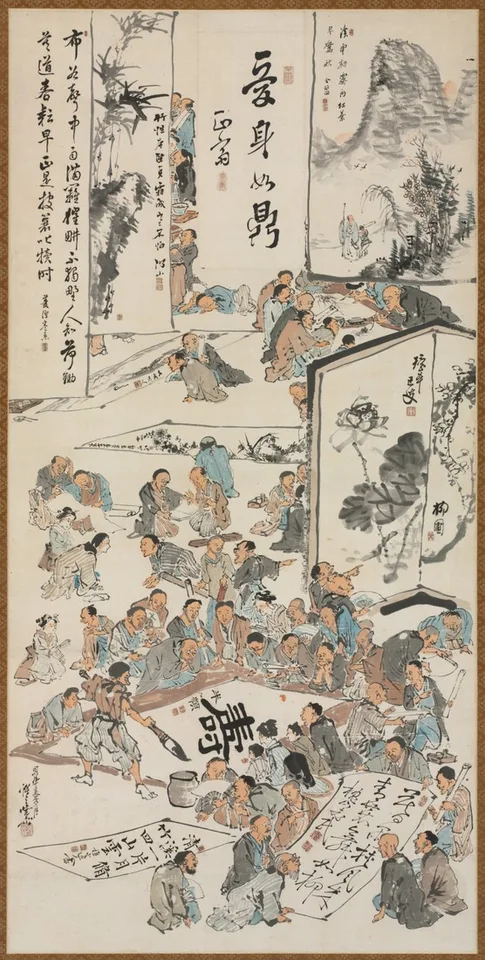
A busy gathering becomes a real collaboration when different artists complete the pictures and calligraphy shown inside the picture.
The room is full of things being made and things being shown. People cluster around sheets on the floor, point toward finished works, or look past a folding screen. Large calligraphies and landscapes rise above them, creating a picture filled with smaller pictures. The different scales encourage a changing rhythm: read a large character, find a small conversation, then move to another gathering.
This is not simply one painter inventing a group of artists. Kawanabe Kyōsai painted the people and the outlines of screens and scrolls; ten other literati artists completed the works within them. The museum identifies the enormous “longevity” character with physician and calligrapher Nakane Hanrei and names contributors to the plum and lotus paintings. Collaboration is therefore built into the object’s actual making. The lively image also includes a sleeping participant, gently complicating any idealised picture of constant creative activity.
The scene is an artistic construction, not a photograph of an event. Identifying contributors relies on signatures and the museum’s research rather than matching every face by appearance.