Objects with more than one life
A finished appearance can conceal several histories. Compare repaired and reconstructed ceramics with a deliberately irregular tea bowl, then look at paintings that stage ownership and collaboration. The aim is to distinguish original making, later intervention and the social lives imagined around objects.
Begin the journey ↓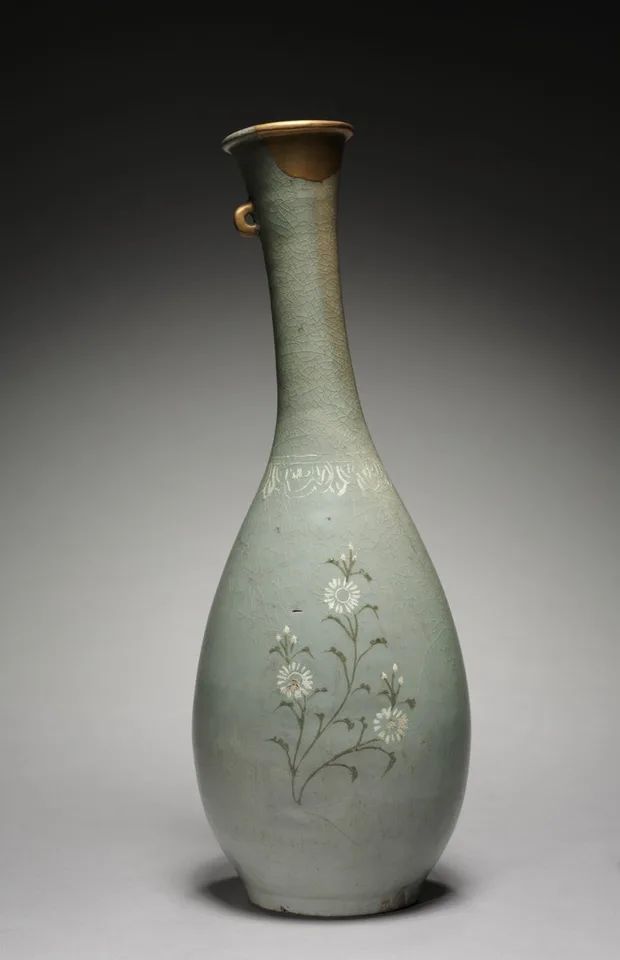
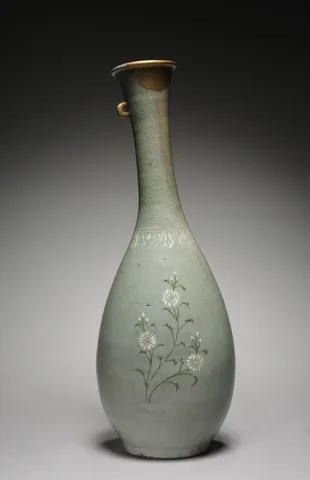
Distinguish repair from decoration
Gold lacquer at the lip belongs to a different moment from the inlaid flowers. Its visibility records continued care, though the museum does not securely date this individual repair.
Carry this question: What makes the repair easy to separate from the original inlay?
Open the artwork ↗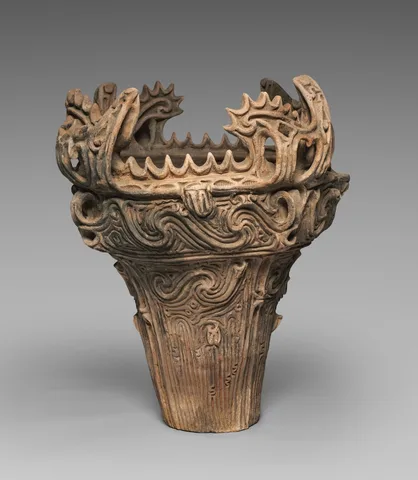
Question the present proportions
The lower section came from another vessel during modern reconstruction. That finding changes the apparent height, so a visually complete object cannot automatically be treated as an intact ancient design.
Carry this question: Which conclusions about the ancient form must now remain qualified?
Open the artwork ↗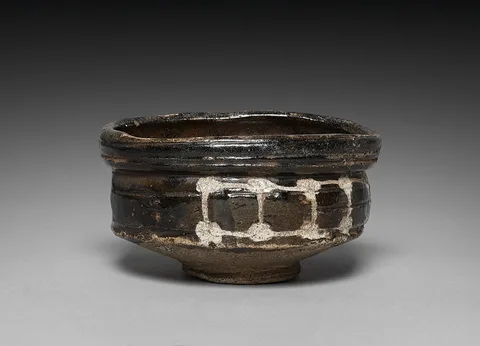
Recognise intended irregularity
The oblong rim and loose pale marks belong to an aesthetic of deliberate variation. Unlike the reconstructed vessel, its uneven appearance should not be assumed to result from damage.
Carry this question: What evidence helps separate irregular design from accidental change?
Open the artwork ↗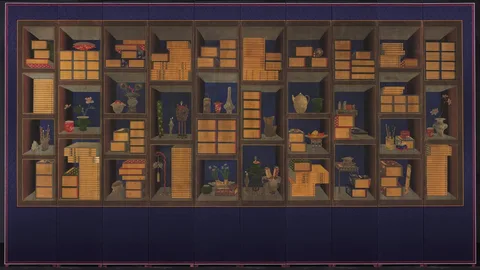
Paint the appearance of possessions
Angled shelves and dark recesses offer a cabinet without real depth. Books and accessories construct an ideal of cultivation, not a securely identified inventory of one owner’s study.
Carry this question: How does painted depth make ownership appear tangible?
Open the artwork ↗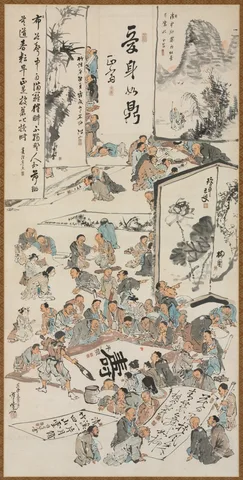
See collaboration inside a picture
The lotus screen was contributed by another artist within Kyōsai’s larger composition. The represented gathering and the actual division of work overlap, making authorship more complex than a single signature.
Carry this question: Where does the depicted activity become evidence of actual collaboration?
Open the artwork ↗Look at a pair more closely
- Repair, reconstruction and original form
Two ceramic histories with different consequences
Read with the sources
Historical context follows the individual museum records linked on each artwork page. These routes make original comparisons of visible form; resemblance alone is not evidence of shared meaning or direct influence.