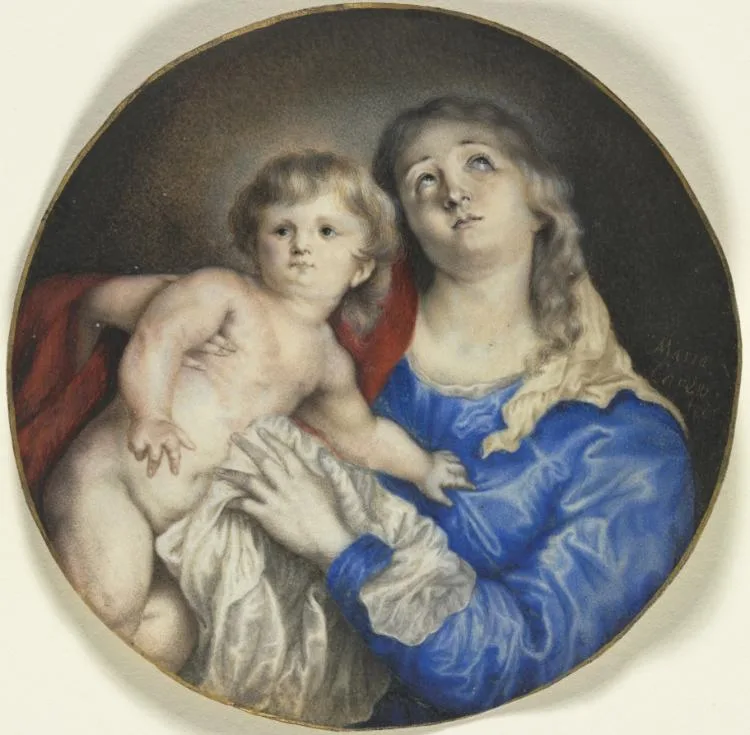
An intimate circular image turns a larger painted model into a miniature encounter, where scale and copying become creative choices.
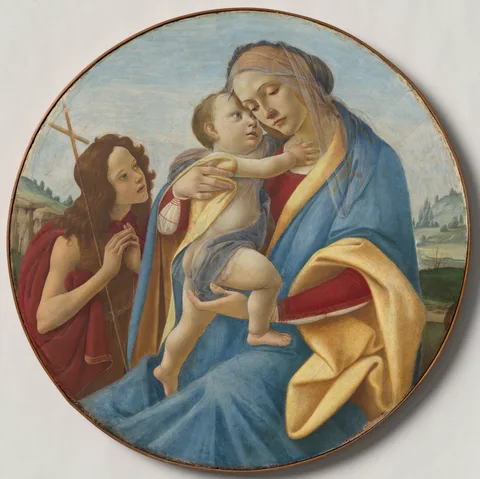
The circular boundary brings the figures unusually close. Mary’s upward gaze, the child’s sideways attention, and the meeting hands give different directions to a compact group. Brilliant blue clothing occupies much of the lower right, balanced by pale flesh and fabric on the left. On a screen the work can seem quite large, but the original measures only a little over twelve centimetres across.
Anna Maria Carew made this cabinet miniature after a composition by Anthony van Dyck. The museum explains that such works copied larger paintings for display or storage in more private domestic settings. Copying here is not hidden: it is part of the object’s identity and function. Carew used watercolor heightened with gum on vellum, with gold, rather than simply shrinking an oil painting mechanically. The quiet religious subject also differs from the dramatic narrative moments often favored in cabinet miniatures, allowing a familiar devotional pairing to become a small, carefully worked possession.
The maker is Carew, working after Van Dyck; these roles should not be collapsed into a single unqualified authorship. Enlargement on a screen changes the experience of a miniature and can obscure its intimate original scale.