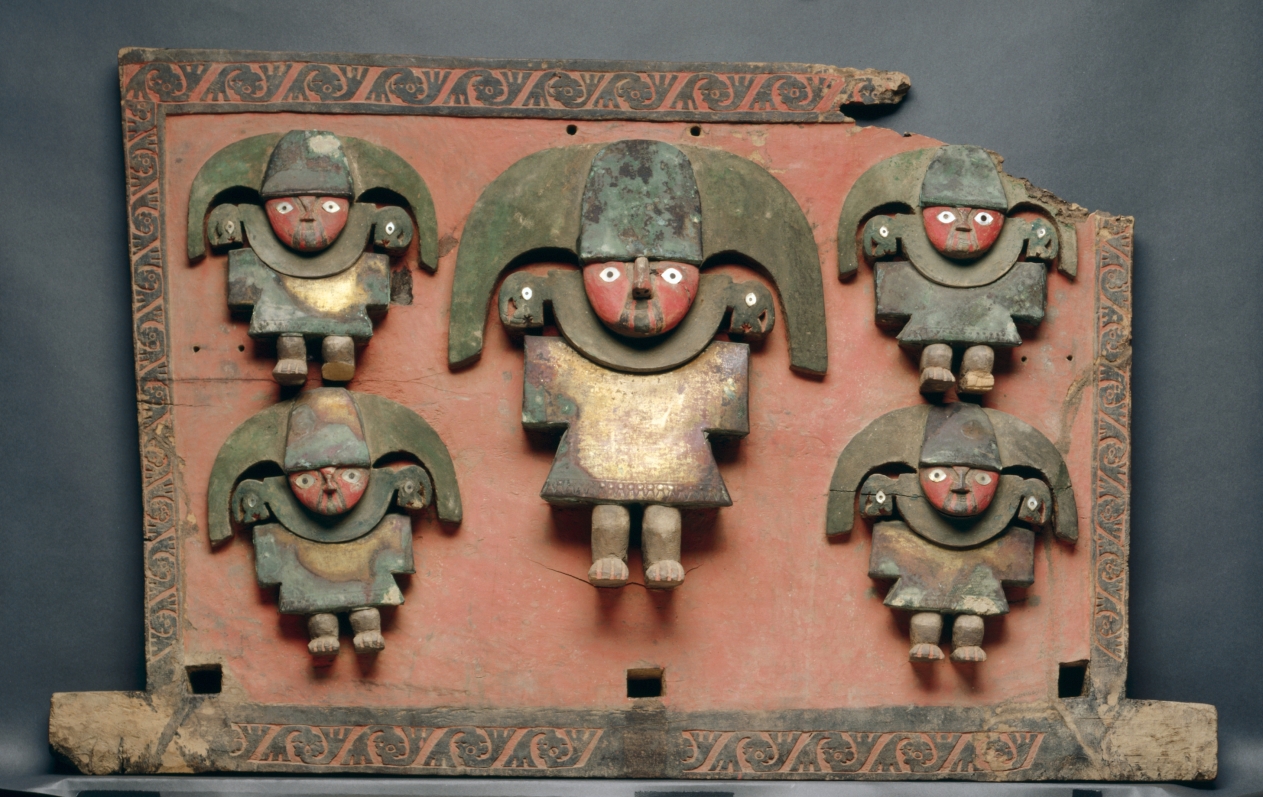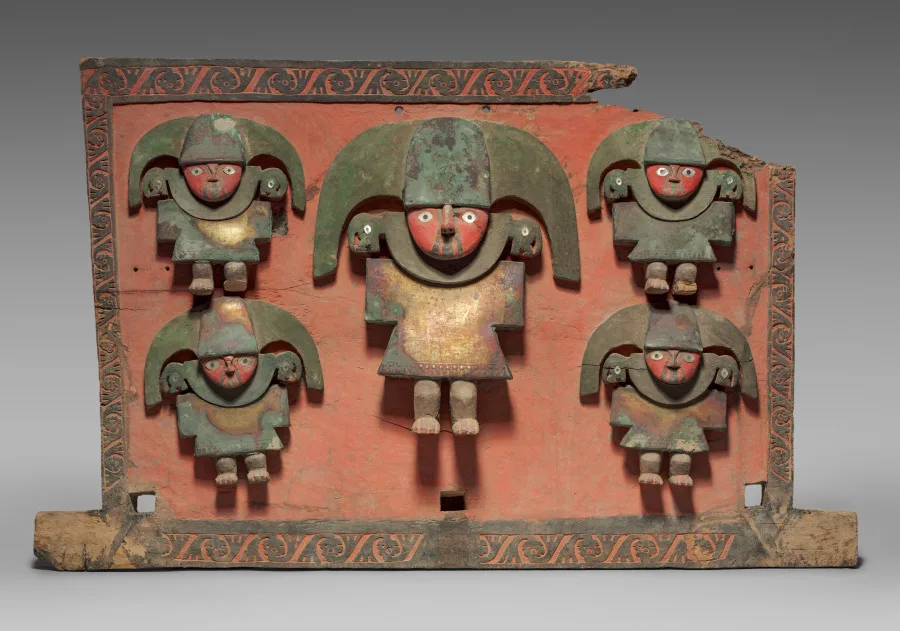
Five brightly dressed figures occupy a litter backrest, where a larger central body and lower attachment holes tell different stories of rank.
The central figure is larger, but the surrounding four repeat many of its forms. Crescent headdresses, broad collars and short tunics create a coordinated group, with size making a difference within repetition. The red background and metal-covered areas would have made the figures highly visible, even though corrosion has altered their present color relationships.
The museum identifies the object as the back support of a Chimú litter, a seat carried by human porters. Its figures may represent a lord and officials, an identification that remains qualified. Holes near the lower edge probably attached a beam supporting the seat. The object therefore combines an image of hierarchy with construction for a privileged mode of travel. It is neither a complete litter nor simply a relief made to hang on a wall. The surviving panel lets us connect represented status, bodily transport and mixed-material workmanship while acknowledging the parts and exact identities that are missing.
The figures' identities as a lord and officials and the lower holes' precise function are probable, not certain. Corrosion changes the original metal appearance, and the complete litter is not preserved in this view.