Figures of standing
Size, headdress, equipment and precious materials can give a represented figure emphasis. These works come from different American societies and periods, so their signs should not be treated as one shared code. Follow the visible choices that distinguish a person, then notice where the museum proposes an identity or role and where it leaves a name unknown.
Begin the journey ↓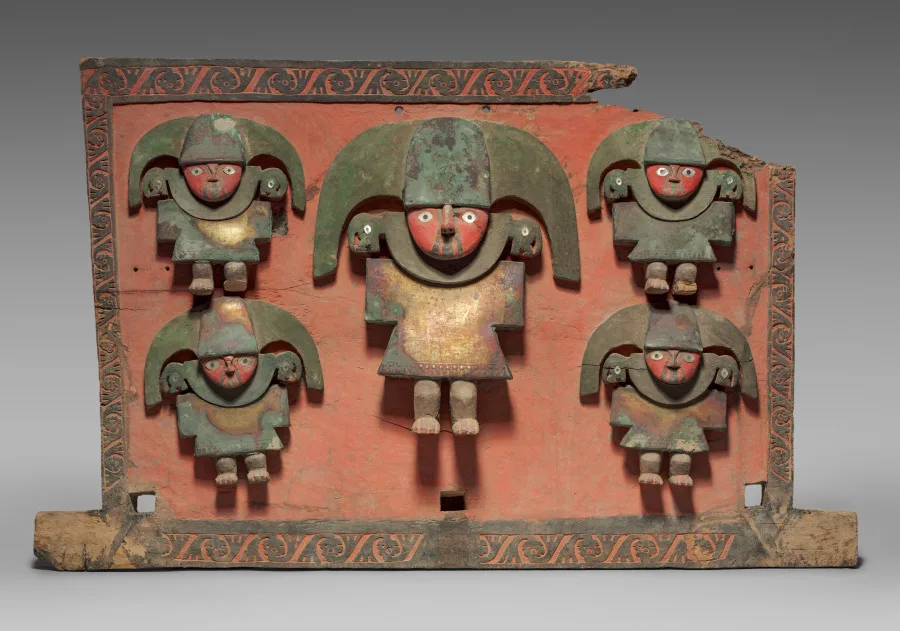
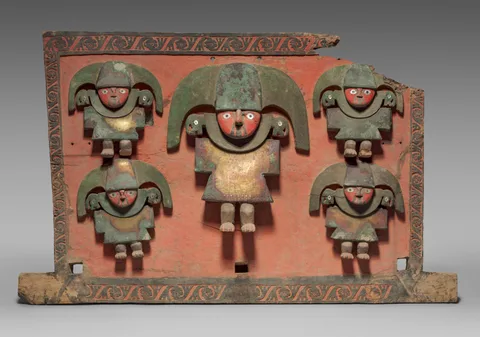
The largest of five
The central figure exceeds four companions in size, although they share related dress and headdress forms. The museum proposes a Chimú lord with officials. The arrangement makes hierarchy plausible without yielding personal names, and the panel once belonged to a larger transport structure.
Carry this question: What stays similar across the figures, and what changes with the central one?
Open the artwork ↗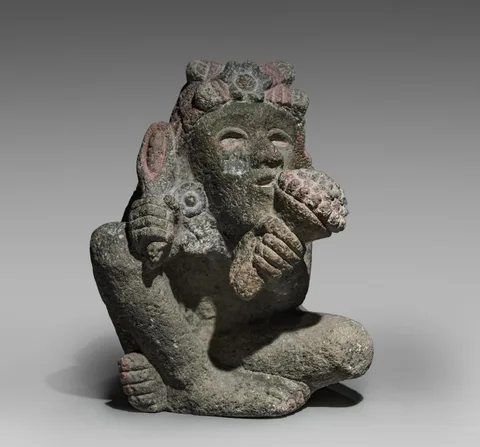
Attributes without a single settled name
The seated figure holds a flower-like cone near the face. Its attributes support the museum’s discussion of Macuilxochitl or Xochipilli, rather than one unqualified identification. The maize carried behind the figure is less accessible from this view, reminding us that a photograph selects evidence.
Carry this question: Which attribute is clearest from this angle, and which needs another view or the record?
Open the artwork ↗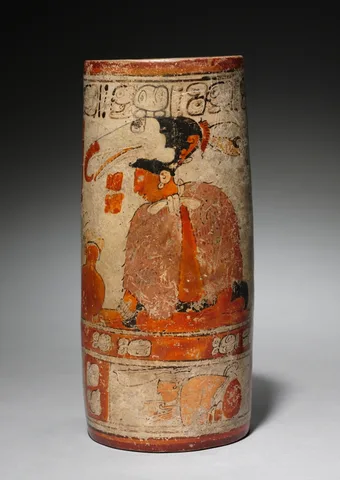
Headgear fills the available field
A large bird headdress rises above the person shown on the vessel. The museum describes a larger scene with attendants continuing around the cylinder. The selected photograph emphasizes one figure while the vessel’s curvature withholds part of the surrounding visual relationship.
Carry this question: How does the headdress enlarge the figure without changing the scale of the face?
Open the artwork ↗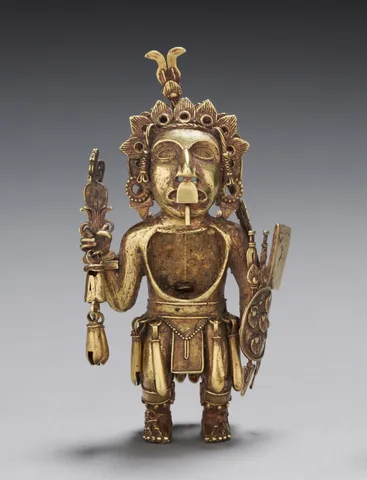
Equipment makes a role visible
The shield and slender darts beside the body support the identification of a warrior. Ear ornaments, headgear and the lip element also suggest elevated status in the museum’s reading. A large chest cavity remains unexplained, even within this richly specified figure.
Carry this question: Which features identify an activity more securely than the gold colour alone?
Open the artwork ↗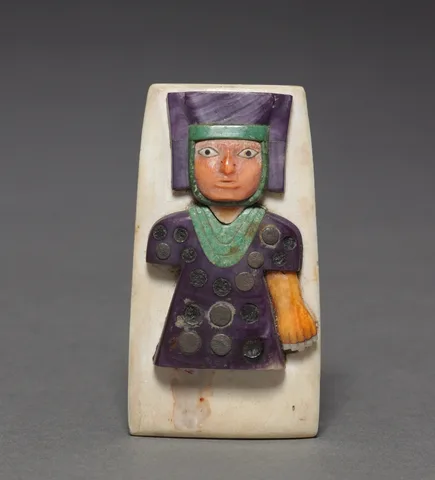
A person assembled from materials
Different colours of shell and stone articulate a dignitary’s face, headdress, clothing and ornaments. The museum identifies the dark tunic spots as probably once-bright pyrite. The person’s present appearance therefore combines the original assembly with changes in the materials’ surfaces.
Carry this question: Where do changes of material become changes of clothing or body part?
Open the artwork ↗Look at a pair more closely
- Images from fitted pieces
An Egyptian vulture element and a Wari figure make assembly visible.
- Carrying and representing rank
A Chimú litter part and a Wari vessel show two relationships with transport.
Read with the sources
Historical context follows the individual museum records linked on each artwork page. These routes make original comparisons of visible form; resemblance alone is not evidence of shared meaning or direct influence.