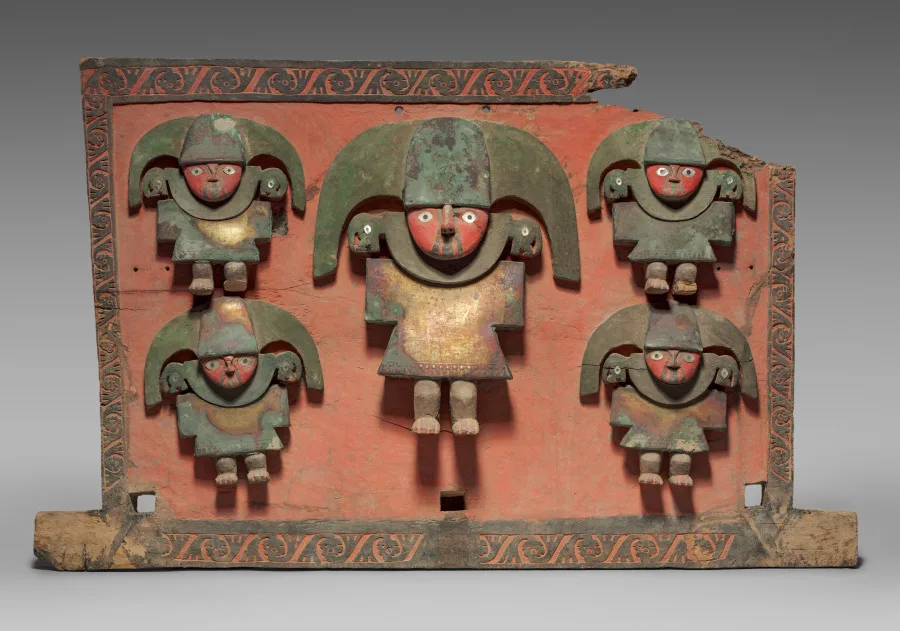
 Central Andes, North Coast, Chimú people, late Intermediate period · 1185–1275 (radiocarbon date, 95.4% probability)
Backrest of a Litter
Maker unrecorded
mixed media: wood, gold alloy, pigment, shell inlay
One object belonged to a litter; the other represents a litter on top of a vessel. Both use unequal figure sizes to make a hierarchy visible. Follow their central figures, then shift attention to the material and human support beneath them, keeping the two societies and object types distinct.
Central Andes, North Coast, Chimú people, late Intermediate period · 1185–1275 (radiocarbon date, 95.4% probability)Maker unrecorded
mixed media: wood, gold alloy, pigment, shell inlay
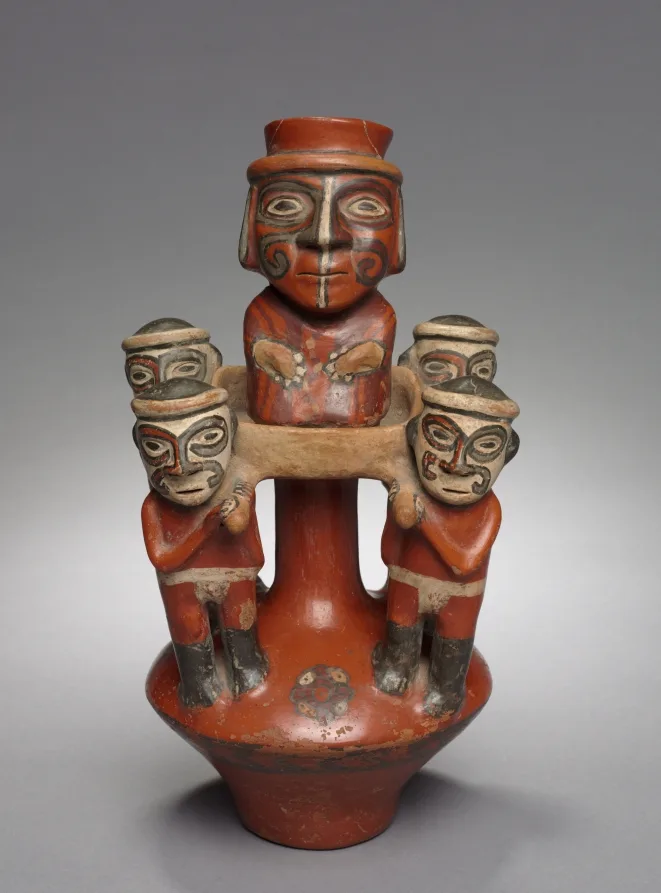 Central Andes, central highlands, reportedly Wari Wilka, Wari style, 6th-10th century · 600–1000
Maker unrecorded
ceramic and slip
The Chimú panel places a larger figure among four smaller ones, interpreted as a lord and officials. The Wari vessel raises a larger dignitary above the carrying platform. Size organizes rank in both images without identifying the individuals by name.
Small holes near the Chimú panel’s lower edge may have secured a supporting beam. On the Wari vessel, four people carry the litter. One detail belongs to a real object’s construction; the other depicts human labour within a miniature scene.
The Chimú panel combines a wooden form with metal, pigment and shell. The Wari scene rises above a rounded ceramic chamber. Comparing those details keeps a decorated piece of transport equipment distinct from a container representing transport.
The panel and vessel come from different Andean societies and dates. Their shared emphasis on a carried dignitary does not make their uses, institutions or imagery interchangeable.
The comparison of visible choices is our own reading. Follow either artwork page for its full context, uncertainty note and image-rights record.
Who is made visible, and on what terms?
Five American works make a person’s presence conspicuous.