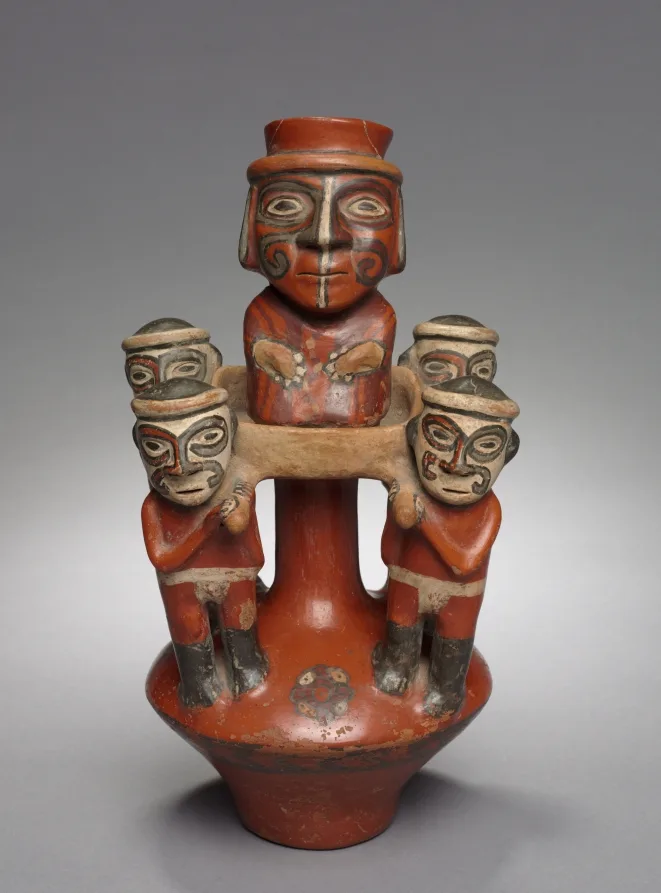
A large seated dignitary rides above four smaller porters, turning the structure of a vessel into a lesson about rank.
Count the faces before deciding what the group is doing. Four smaller figures support a platform, and a much larger person sits above them. The front porters grip the structure near their shoulders, while two more faces appear behind. The arrangement makes a litter, a conveyance carried by people, visible in a small ceramic scene.
The museum identifies the central figure as a dignitary and the work as Wari in style. Being carried was a privilege of high status, so the image joins bodily labor, transport and authority. The vessel is also more complicated than a sculpture perched on a pot: its liquid channel passes through the dignitary's body. That construction is reported by the museum and cannot be fully traced from this frontal photograph. The work was reportedly found at Wari Wilka, a highland water shrine, but the location is qualified in the record. Both its social scene and its practical engineering deserve attention.
Wari Wilka is a reported findspot rather than a confirmed excavation context in the cited description. The internal liquid channel is known from the museum record, not fully visible in this single front view.