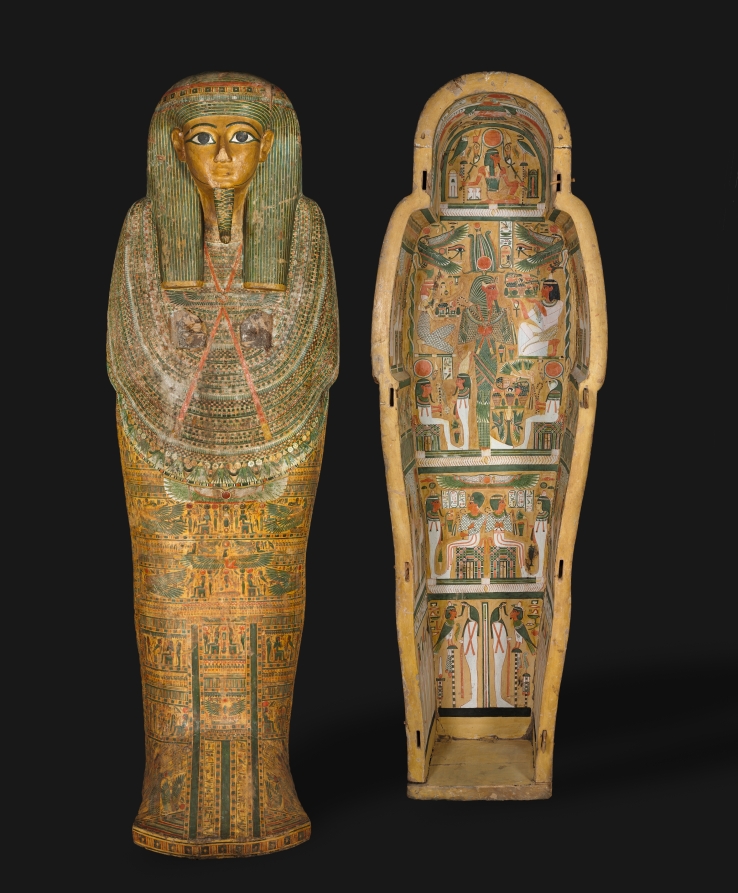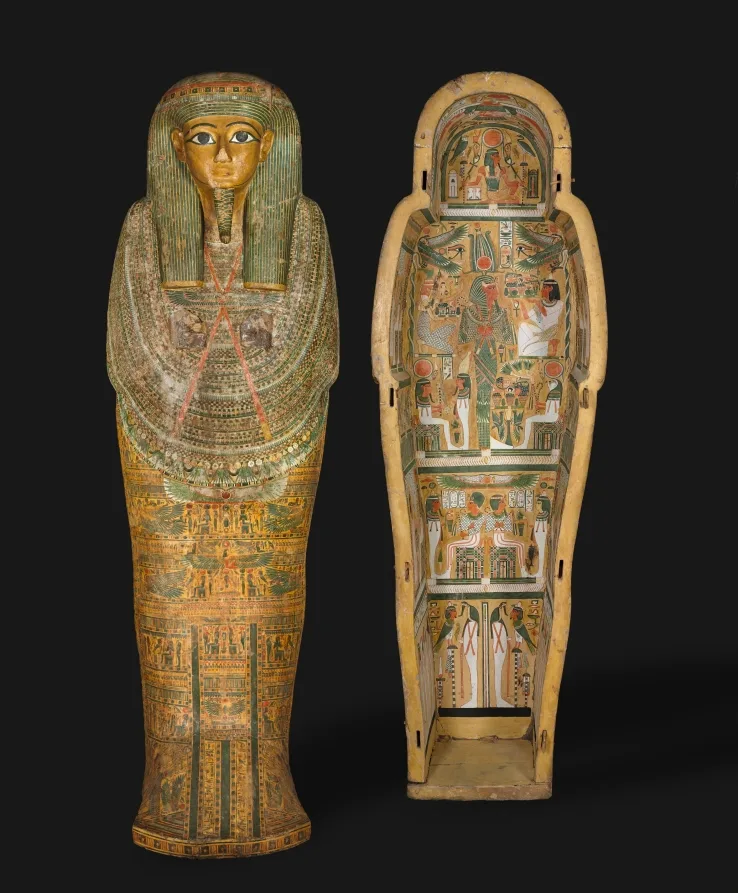
The painted outer body and crowded inner scenes turn a coffin into a protective environment, not merely a decorated container.
The photograph presents two different surfaces together: the body-shaped exterior at left and the painted interior at right. Begin with the large face and collar, then move down through increasingly dense figures and signs. The interior repeats neither the outside's structure nor its exact imagery. Opening the coffin changed the images available to a viewer.
The museum identifies Bakenmut and places the coffin among elaborately decorated Theban examples made for priests of Amen and their families. In this period, attention once given to decorated tomb chapels could be concentrated on coffins placed in less conspicuous tombs. Painted protective imagery surrounded the deceased. The interior includes deified earlier kings, connecting an individual's funerary environment with remembered royal authority. A smaller coffin originally fitted inside this one, so even these two extensive views do not show the complete burial arrangement. Distinguishing present display, original layers and documented imagery is essential.
The photograph combines exterior and interior views but does not reproduce the complete nested burial. Some attached elements are lost, and the small painted scenes require zoom and the museum's contextual identifications.