Read the
Picture
An open collection
Egypt, Greco-Roman period (332 BCE–395 CE), Ptolemaic dynasty (305–30 BCE) · Metalwork

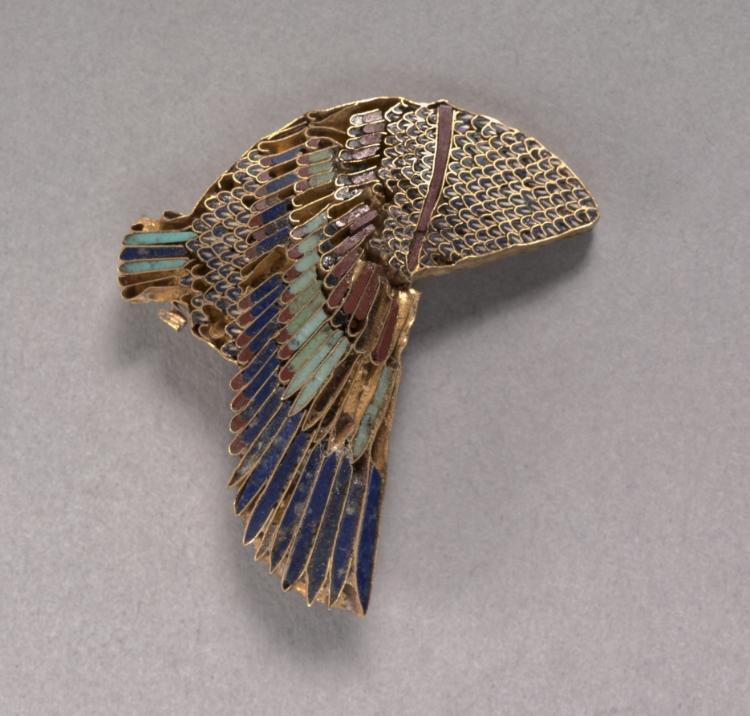
Vulture Headdress Inlay

Maker unrecorded · 100–1 BCE

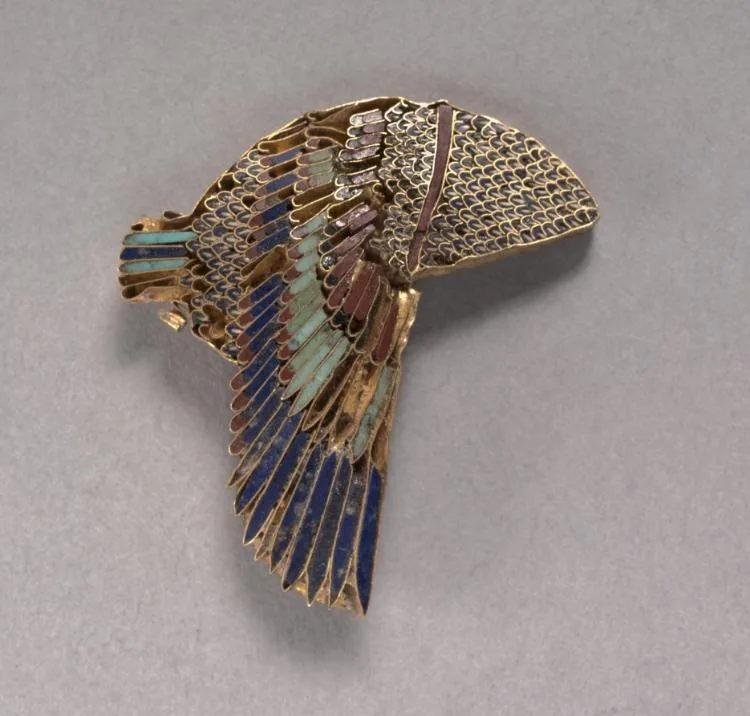
A small curved inlay shaped like a vulture headdress is shown at an angle. Long dark blue feathers descend from a densely patterned upper section. Pale blue, red and white elements alternate among them. Thin gold lines separate the individual pieces. A short striped tail-like projection extends from one side of the rounded body.
100%

Drag to move · Pinch or +/− to zoom · Arrow keys to pan · 0 to reset

The Cleveland Museum of Art · 1920.1991 · Image: CC0Museum image ↗
A little context

Tiny gold partitions separate many colored pieces, turning the feathers of a royal headdress into a lesson in fitted construction.

The bird's feathers are also a map of its construction. Long tapered pieces define one area, smaller repeated forms fill another, and fine gold partitions keep the colors separate. Look where a feather narrows to a point: the shaped insert and its metal boundary had to work together. This is a fitted assembly, not a single colored surface painted to resemble stones.

The museum identifies a vulture headdress form associated with goddesses and queens. More than a hundred pieces include lapis lazuli, turquoise, petrified wood and an unidentified white material. A resin-like adhesive helped secure them. The small object therefore combines repeated pattern with exact material selection and cutting. Its survival allows close examination of craft even though the larger figure or arrangement to which it belonged is not reconstructed in this view. The image should not be used to name an individual queen merely because the headdress type had royal associations.

A careful reading

The white stone is unidentified in the museum description, and the larger original setting is not established here. A headdress type associated with queens and goddesses does not identify one particular wearer.
Try your eye

Which description best matches the visible making method?

Where this reading begins

  • Vulture Headdress Inlay: collection record — The Cleveland Museum of Art. Object identification, attribution, materials, historical context and stated uncertainties; observations independently checked against the museum photograph. Museum record updated 2026-05-29; accessed 2026-11-13.

Our observations describe the supplied museum photograph. Historical identifications and context follow the cited collection record; interpretive limits are stated above. This is an independent guide, not a museum endorsement.

Image rights & attribution

Vulture Headdress Inlay, 100–1 BCE. Egypt, Greco-Roman period (332 BCE–395 CE), Ptolemaic dynasty (305–30 BCE). Gold and semi-precious stones; overall: 3 x 2.8 cm (1 3/16 x 1 1/8 in.). The Cleveland Museum of Art, Gift of the John Huntington Art and Polytechnic Trust, 1920.1991

Individual API record marked CC0; checked 2026-11-13. CC0 1.0 dedication. Record date: 2026-05-29 05:29:02.155000. Web JPEG downloaded unchanged; responsive WebP and zoom derivatives resized and recompressed; numbered annotation overlay separate from image.