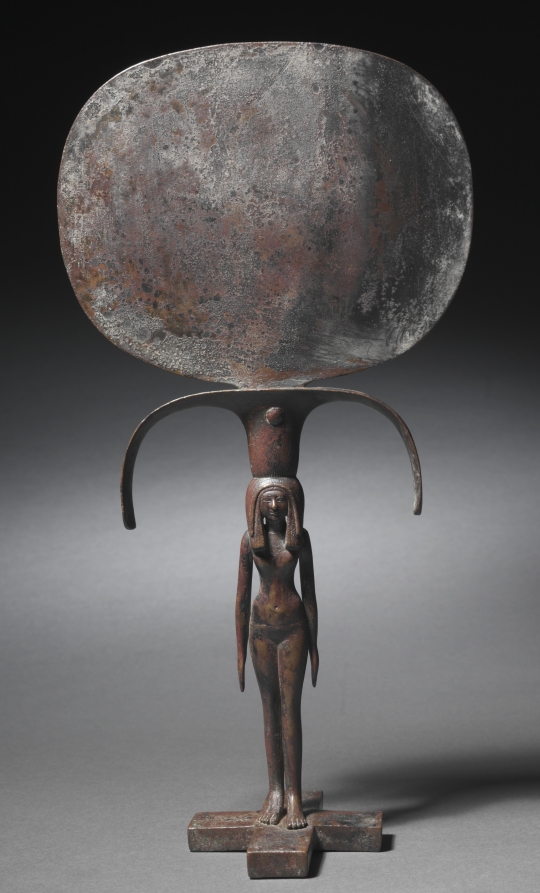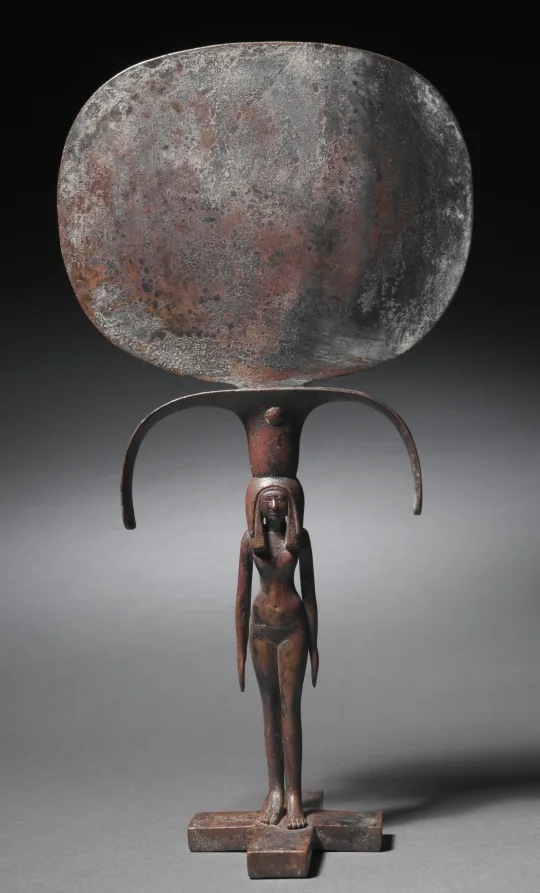
A small standing woman supports a great oval disk, joining a useful reflective surface with an image of beauty.
The mirror's proportions make the small figure seem to carry an enormous rounded surface. A flaring plant form bridges head and disk, linking the human support to the object used for looking. Below, the long body and small base form a narrow vertical axis. The handle is an image as well as a place where the object could be grasped.
The museum connects the young female form and papyrus support with Hathor's associations with beauty. Its present mottled surface can obscure a basic fact: the metal was originally polished to reflect. Burial and time produced the patina now visible. Reading the object therefore requires separating its current appearance from its original working condition. The museum identifies bronze while qualifying a possible black copper inlay. Those material details matter, but the photograph alone cannot test reflectivity before burial or settle a tentative technical identification.
The possible black copper inlay remains uncertain in the materials record. The present patina is not the original mirror finish, and the connection with Hathor does not securely identify the standing figure as the goddess herself.