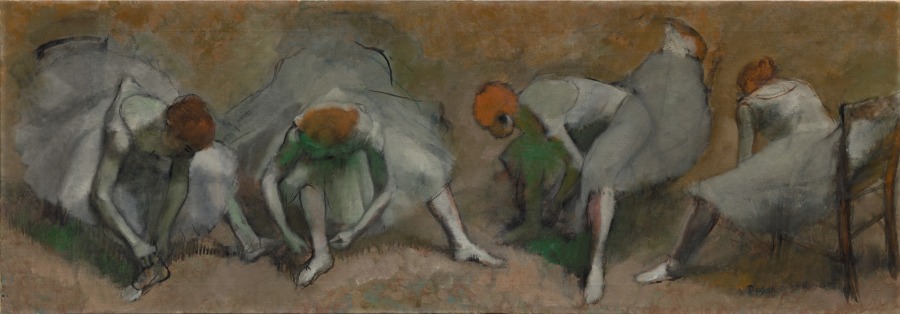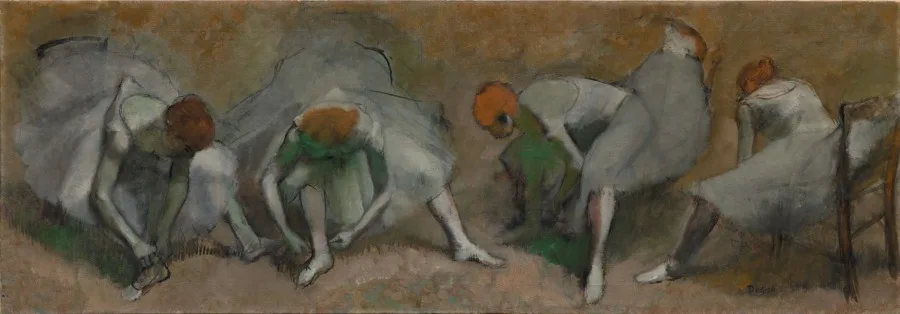
Four bending figures may be four views of one dancer, turning preparation into an experiment in repeated movement.
The long format asks the eye to travel sideways. Four bent figures repeat a task rather than forming a conventional stage performance: heads lower, hands reach, and pale skirts spread around concentrated bodies. The setting offers few clues beyond a floor and loose color. Degas makes the work of preparing to dance more prominent than the public spectacle of ballet.
The museum suggests that these may be different views of a single dancer. It also proposes a possible connection with Eadweard Muybridge’s photographs, while leaving that influence uncertain. The canvas is roughly six feet wide, so its sketchlike handling originally appeared at a substantial scale. Thin paint runs, emphatic outlines, and thumb-made circles complicate any expectation of polished finish. Compare the repeating activity with the changing silhouette of each skirt: the image explores how one action can generate multiple shapes without needing a developed narrative or richly described room.
The single-dancer reading and the possible photographic influence are museum proposals, not established facts. Four visible figures do not by themselves prove either four separate people or successive moments of one continuous action.