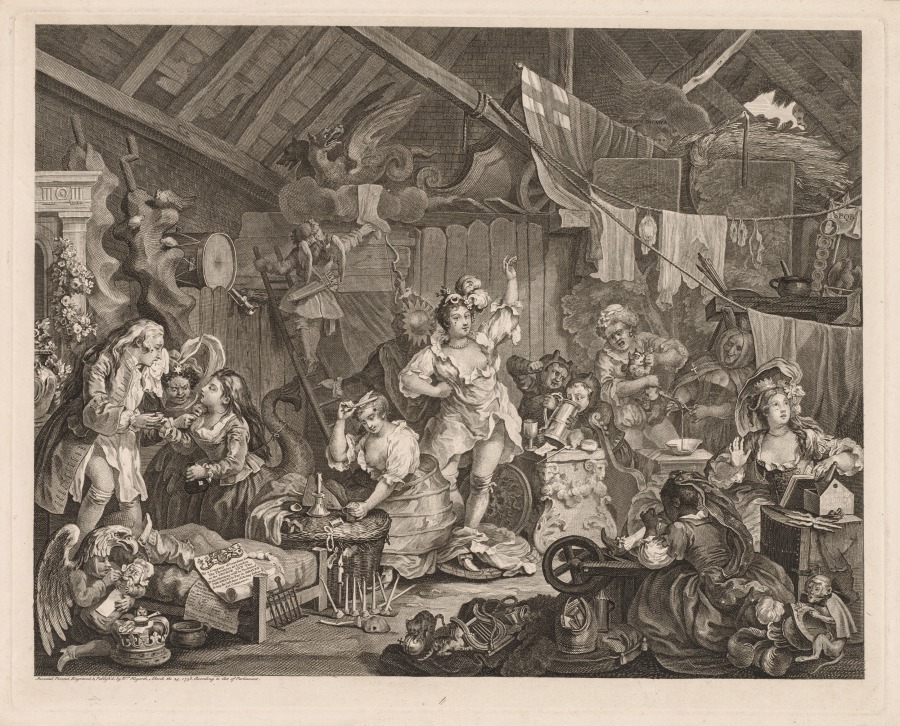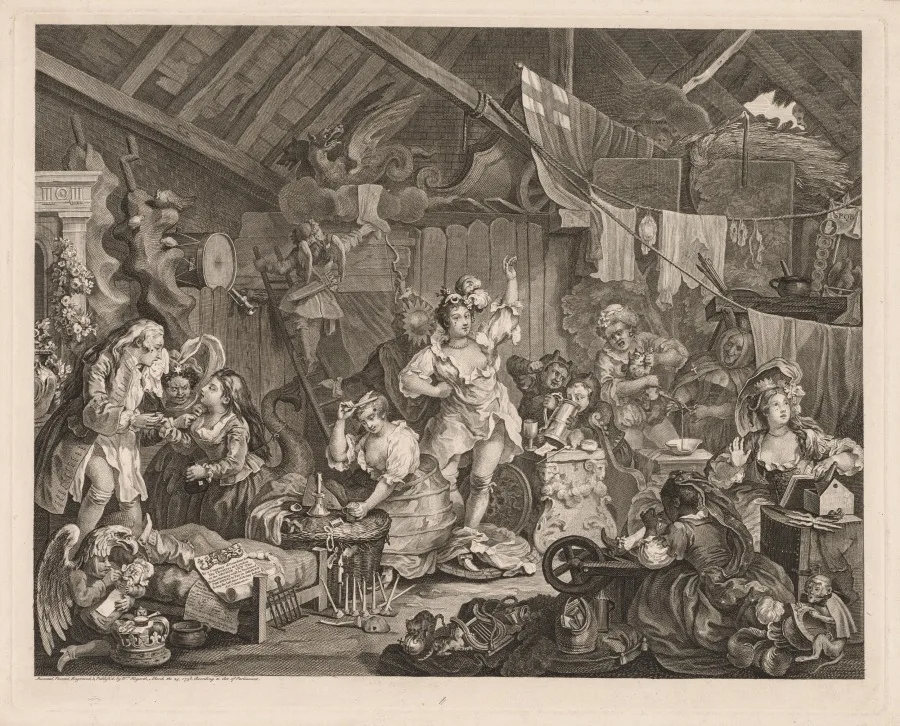
Theatrical grandeur meets a makeshift backstage, where a crown on the floor also points to government control of the stage.
The image rewards wandering rather than a single glance. A raised arm near the center competes with dressing figures, hanging fabric, containers, stage scenery, and animals. The barn’s rough structure encloses representations of a much grander world. Hogarth makes the gap between theatrical illusion and the conditions of preparing it both funny and uncomfortable.
The museum explains that the print protested the Licensing Act of 1737, which strengthened government censorship of theater. A reference to the act appears on the large crown in the left foreground, near a playbill. At the same time, the artist satirizes the performers’ conduct and disorder, so the scene is not a straightforward celebration of everyone represented. Compare elevated costume and mythological scenery with the objects underfoot: political authority, practical work, and irreverent comedy occupy the same crowded space. The many details make the print’s argument cumulative rather than dependent on one isolated emblem.
The crowded scene is satirical and constructed, not a neutral report on all traveling performers. The political reference depends on the museum’s identification of the inscription and context; not every tiny mark is legible at overview scale.
What makes the print more than a humorous backstage inventory?
Practise looking at Strolling Actresses Dressing in a Barn →