The work behind a scene
A performance depends on practical activity and arranged surroundings, and paintings can make those conditions visible. This route begins with preparation for dance, moves through a court entertainer’s formal portrait and a satirical backstage, then ends with a myth assembled through material effects. These are distinct contexts, connected by a question about how a scene is made legible.
Begin the journey ↓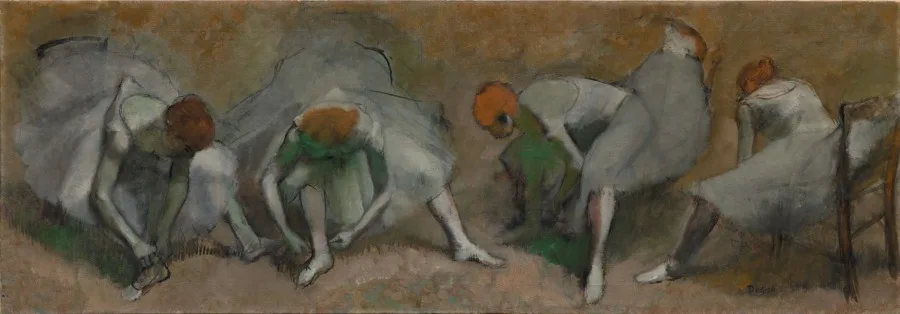
Preparation becomes the subject
Bent bodies repeat the practical task of lacing shoes. The picture withholds a climactic performance, directing attention toward changing silhouettes. The museum proposes multiple views of one dancer, but the visible repetition does not conclusively establish the figures’ identities.
Carry this question: How does repetition change a small practical task into a composition?
Open the artwork ↗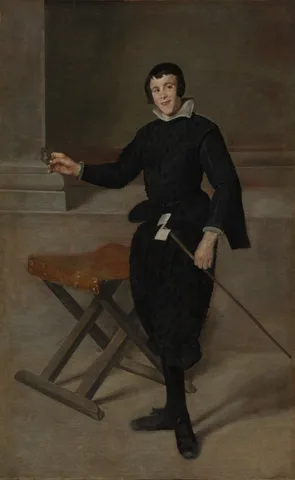
A prop interrupts formality
A pinwheel complicates the grand full-length portrait format. The museum links it with another object to suggest a particular reading, rather than assigning it a universal meaning. Neither the prop nor the sitter’s expression licenses a medical diagnosis.
Carry this question: How does the pinwheel change the tone of the formal portrait?
Open the artwork ↗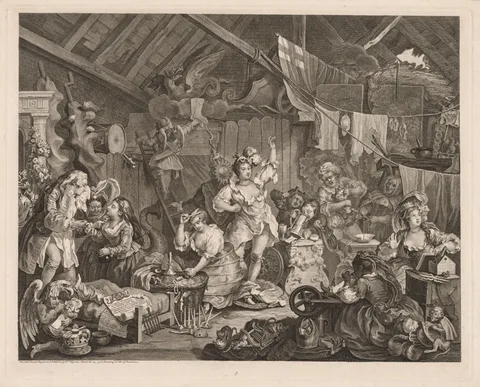
The machinery of illusion appears
Rafters, makeshift spaces and theatrical materials surround performers preparing a grand subject. The satire exposes practical conditions and political pressures, but should not be treated as a neutral survey of every travelling company. Watch how setting alters the performers’ gestures.
Carry this question: Where do ordinary materials interrupt the illusion of grandeur?
Open the artwork ↗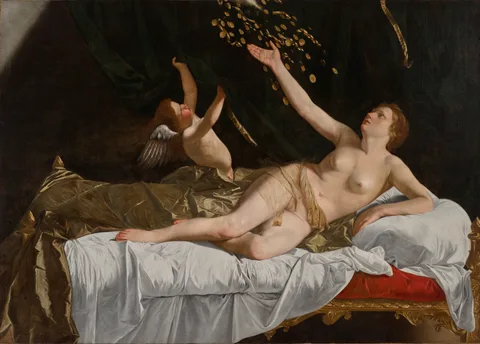
A familiar prop enters a myth
The thin scarf offers a studied material effect within a mythological encounter. The museum identifies it as a recurring studio prop. Its recognisable texture reminds us that an extraordinary narrative can be constructed through close study of ordinary things.
Carry this question: How does the transparent cloth help make the imagined scene tangible?
Open the artwork ↗Read with the sources
Historical context follows the individual museum records linked on each artwork page. These routes make original comparisons of visible form; resemblance alone is not evidence of shared meaning or direct influence.