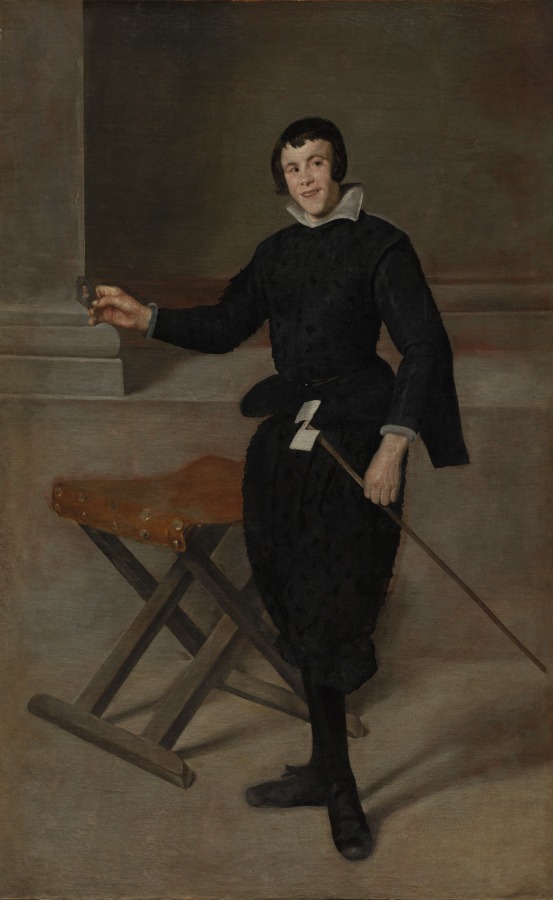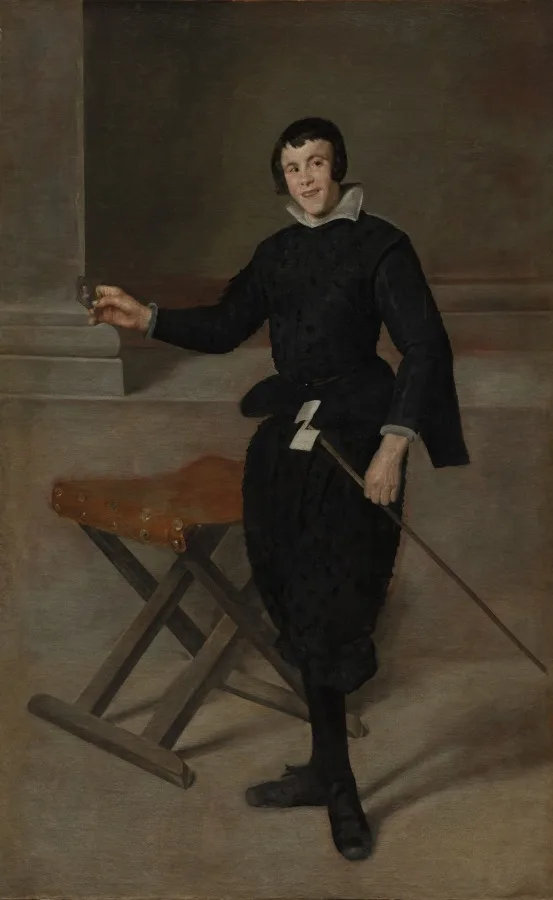
A court entertainer receives the full-length format of an official portrait, with a pinwheel adding a second, less solemn register.
The black costume and full-length pose initially suggest the conventions of an imposing court portrait. A large column anchors the left, and a stool stands behind the figure. Yet the sitter’s smile, extended hand, and pinwheel create a different encounter from a ruler’s display of command. The sparse surroundings allow those differences to remain easy to notice.
The museum identifies Calabazas as a jester at the court of Philip IV of Spain and discusses disability as part of his historical situation. The image should not become an invitation to diagnose a person from appearance. Its more useful comparison is between the sitter’s position and the formal language used to represent him. Velázquez gives an individual usually placed at the social margins of court culture a substantial pictorial presence. The museum interprets the pinwheel and miniature portrait together as an allusion to unstable love, adding a contextual reading to the visible play of objects and gesture.
Do not infer a medical diagnosis or mental capacity from the portrait. The museum provides historical context about disability and court employment; the objects’ suggested meaning is an interpretation, not a statement of Calabazas’s private feelings.