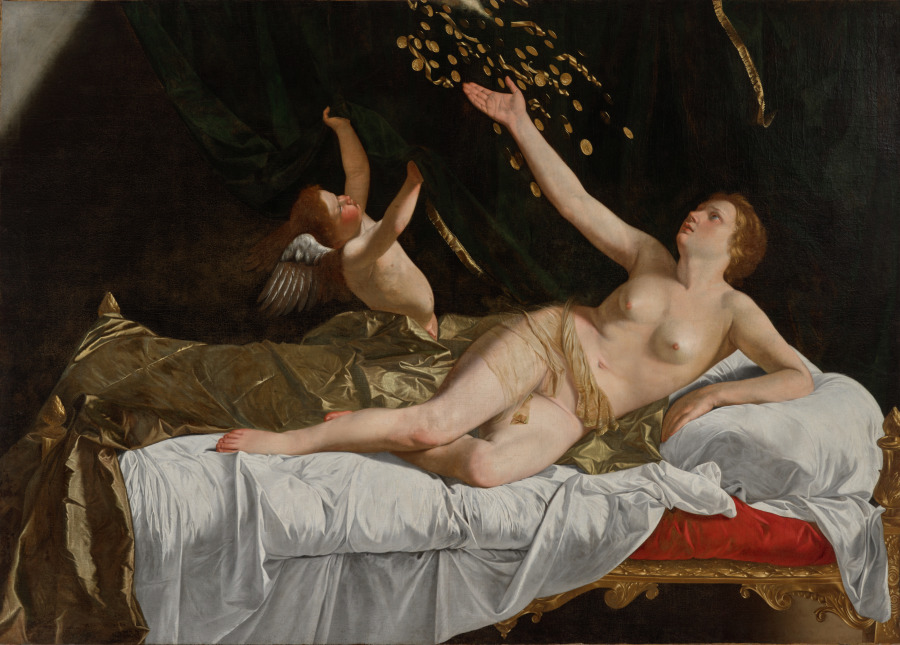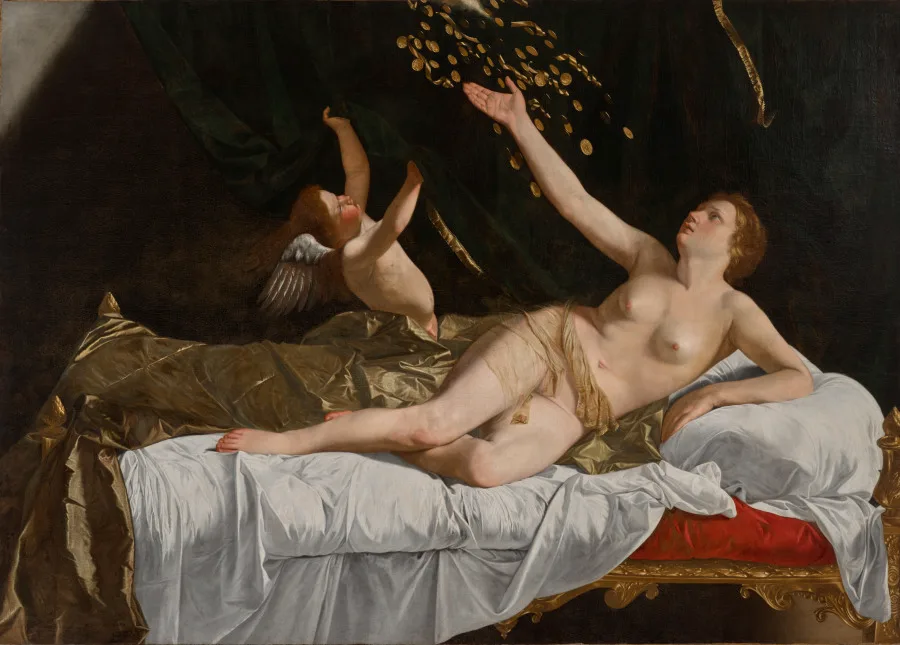
Falling coins explain an otherwise puzzling gesture, while the bed’s fabrics make a mythological encounter feel close enough to touch.
The raised hand leads the eye toward a shower of gold. Danaë reclines among white sheets, dark gold fabric, and a red cushion, while a winged child pulls back the curtain. The body and bed are placed close to the picture’s front edge. Materials seem tangible, yet the descending coins announce that this is not an ordinary bedroom scene.
The museum recounts the myth: Danaë’s father confined her because a prophecy warned that her son would kill him, but Jupiter reached her in the form of streaming gold. The story supplies the identity of the visitor who is not shown as a human figure. Gentileschi’s use of models and close placement relates to Caravaggio’s approach, while the graceful gesture and finely handled cloth have their own character. Compare the extended arm with the folds beneath it: the myth becomes legible through movement and substance, joining an impossible event to carefully observed bodily and material effects.
This is a mythological narrative, not a historical bedroom scene. The gold’s identity depends on the story, and the figure’s gesture should not be used to infer a fully documented psychological response or resolve the myth’s power relationships.