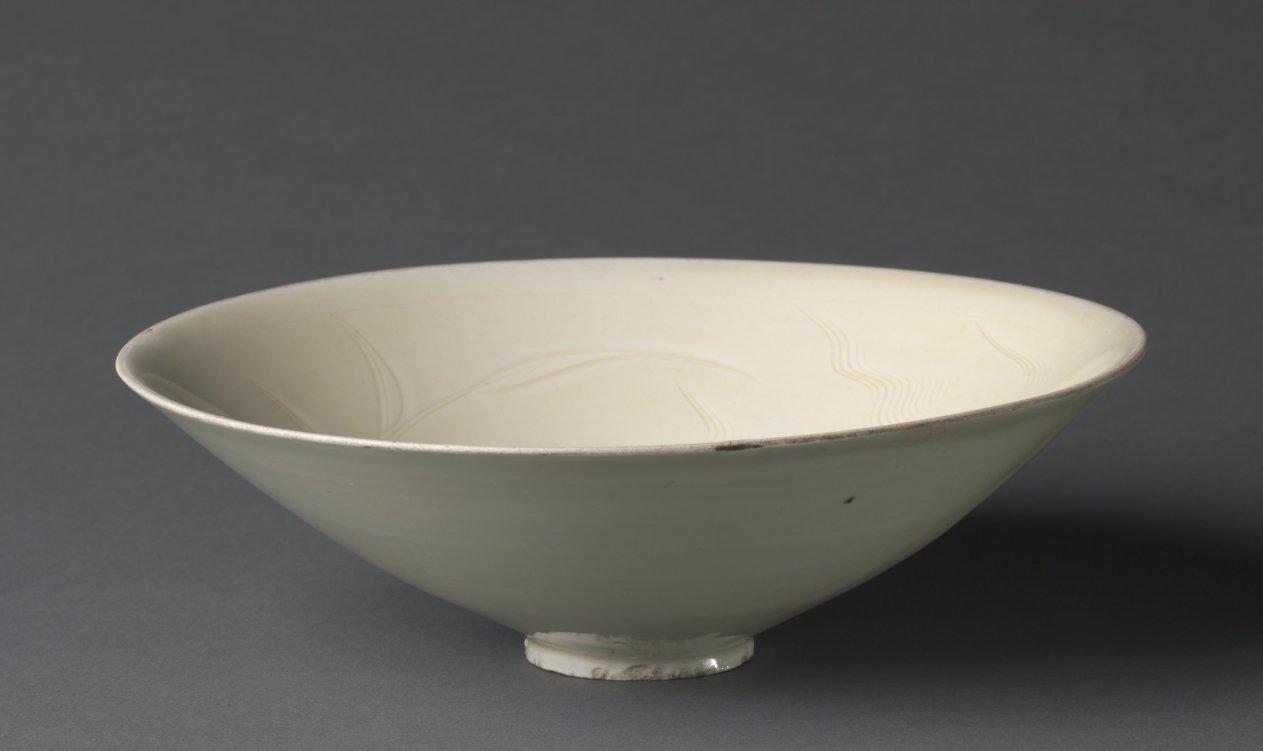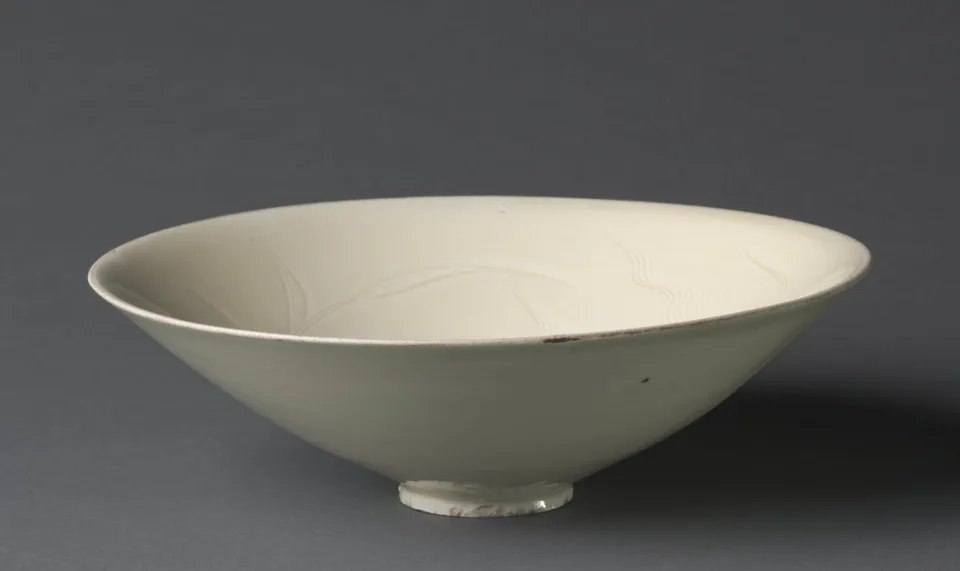
A nearly white bowl asks for slow looking: shallow incisions, a thin rim, and a small foot carry its design.
At first the bowl may look almost undecorated. Change your attention from colour to shallow lines: incisions move across the inner surface, visible where light catches them. The museum’s title identifies ducks among waves and reeds, although this oblique photograph does not expose the full interior design. The low profile and small foot matter as much as the ornament, giving the vessel a wide, lightly supported opening.
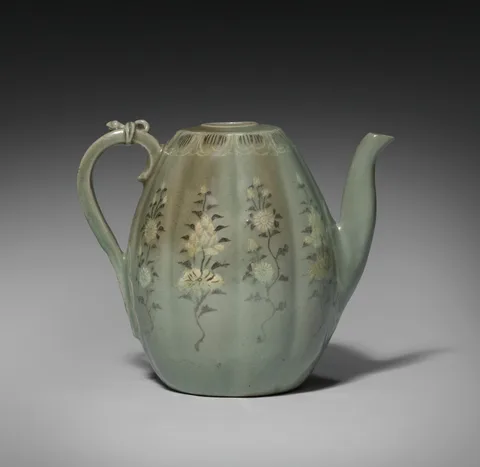
This is Ding ware, made with a thin white body and a transparent ivory glaze. The museum explains that especially fine examples were selected for Northern Song imperial use. Such vessels were fired upside down, leaving an unglazed rim that could be bound with metal. Those technical decisions help explain an edge that differs from the smoothly glazed body. Compare this restrained decoration with the Korean Prunus Vase: both invite attention to pale surfaces and subtle marks, but incising a design and inlaying contrasting slips are different processes.
The photograph reveals only part of the incised interior, so the complete duck-and-reed arrangement cannot be reconstructed from this view. General information about imperial selection does not prove a specific owner for this bowl.