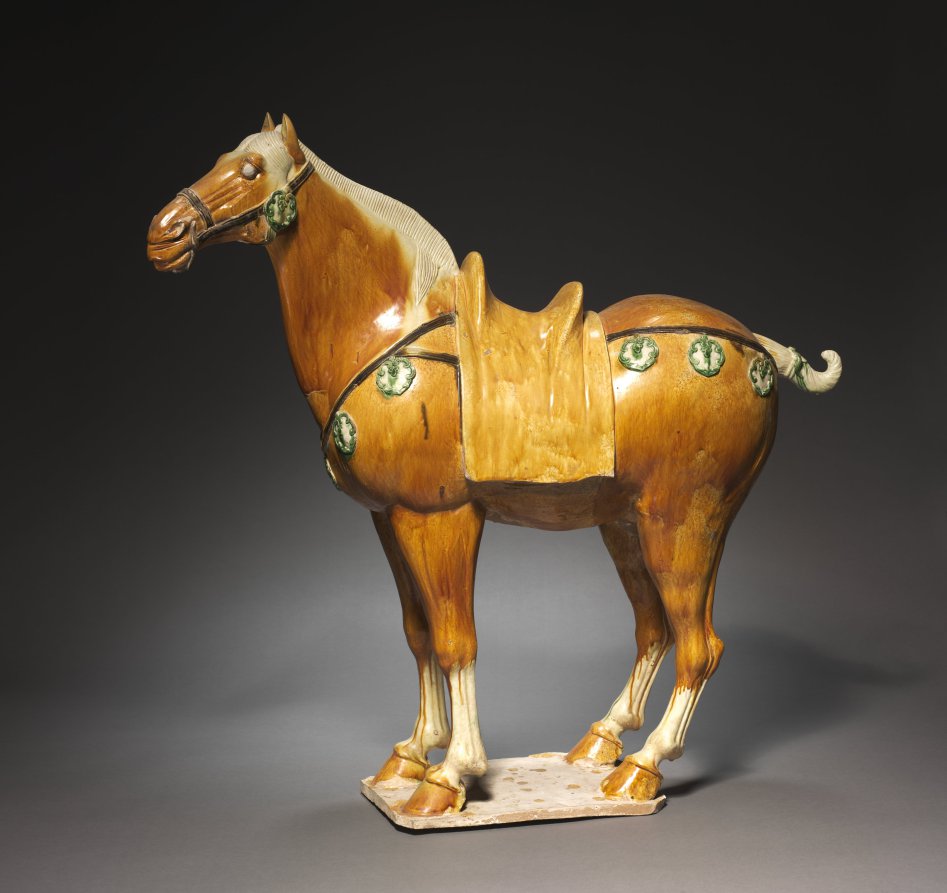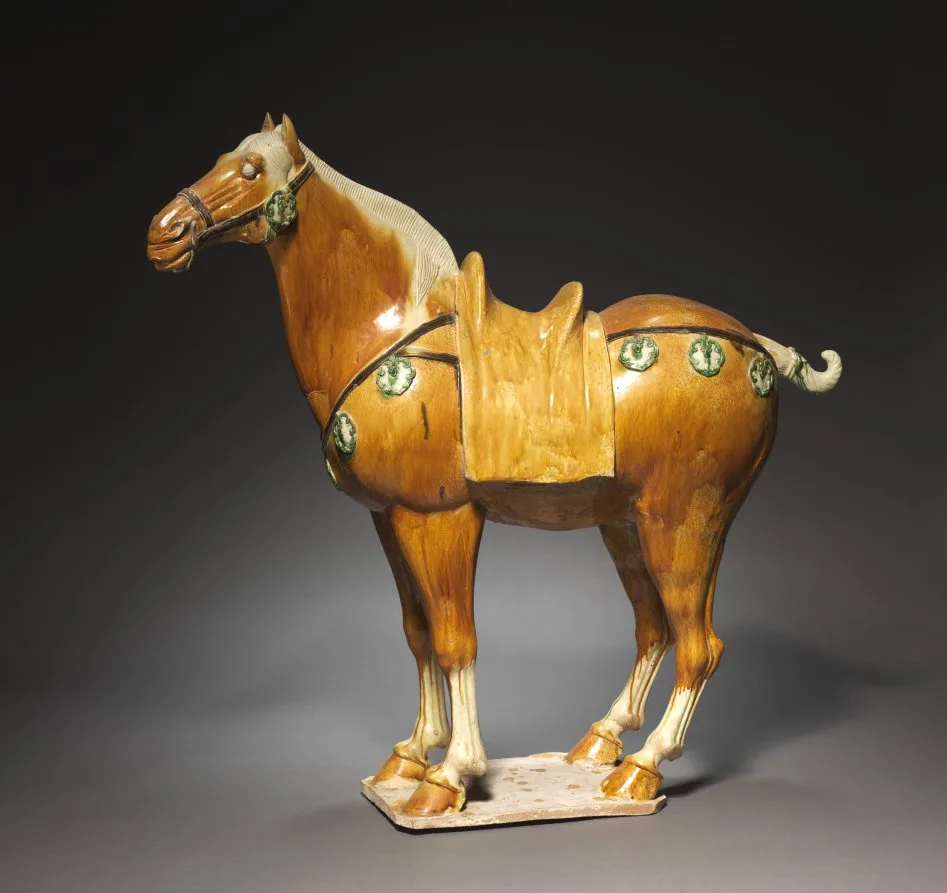
A saddled ceramic horse preserves a tomb’s idea of status and transport through bright glaze and carefully modelled equipment.
The horse stands ready for use, already saddled and harnessed. Green round ornaments interrupt its amber body, while pale areas distinguish the mane and lower legs. The saddle cloth creates a broad vertical shape across the middle, giving the animal more than an anatomical identity. Equipment makes the horse part of a human social world.
The museum records this figure as belonging to a procession placed in the tomb of a high-ranking person. In that setting, a horse could provide transport for an imagined afterlife as well as declare worldly status. The three-colour glaze tradition, called sancai, gives the body a lively surface. Follow the harness lines before the glaze runs: one describes equipment, the other records ceramic making. Compare the Haniwa Horse’s applied straps and bells with these glazed harness ornaments. Both clay horses belonged to funerary settings, but their distinct construction and surfaces should be studied in their own historical contexts.
The museum describes a tomb procession, but this isolated photograph does not show the complete original group. Glaze colours communicate material and status here; they do not establish the natural coat colour of an actual horse.