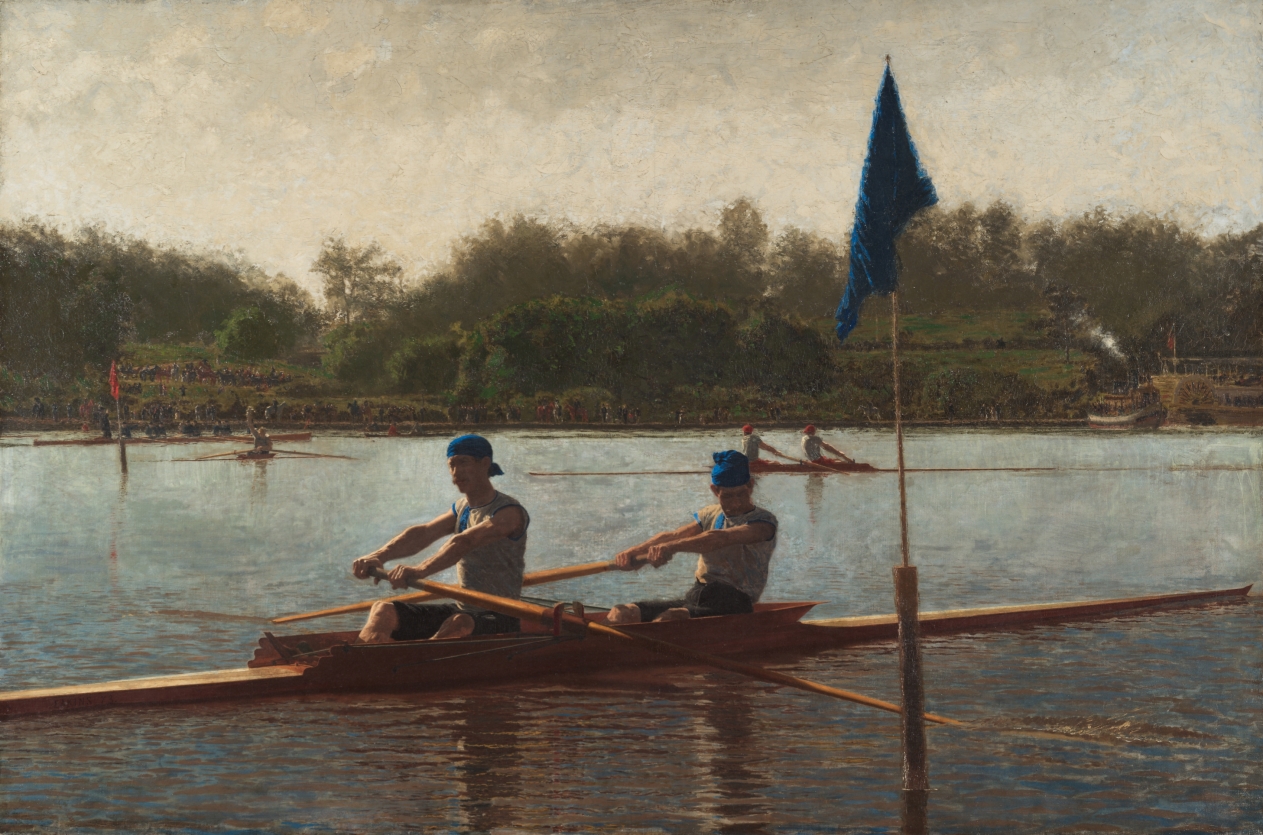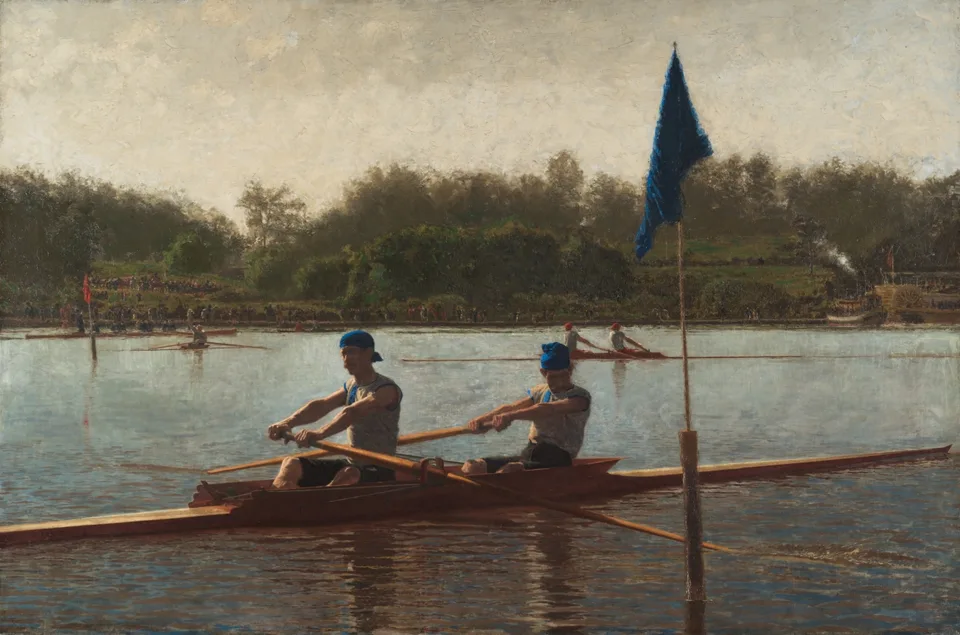
A turning stake interrupts the river’s long horizontals, making teamwork visible at a technically demanding point in a real race.
The boat stretches almost the entire width, but its progress depends on two bodies working together. The brothers’ arms and oars create related diagonals above the low hull. A tall stake with a blue flag cuts across that horizontal movement, marking a point they must negotiate rather than simply pass in a straight line. Spectators form a thin band along the far bank.
The museum identifies the event as a May 1872 race on Philadelphia’s Schuylkill River. Barney and John Biglin are rounding the halfway stake; their competitors remain farther back. The brothers won the contest, though that outcome is historical context rather than something one moment alone could guarantee. Eakins developed his compositions through careful figure and perspective drawings. Compare the rowers’ coordination with the geometry of boat, oars, and marker: athletic action is made persuasive through a planned spatial arrangement as well as recognizable bodies under effort.
The museum documents the race and its winners. This painted moment does not independently predict the result, and the precise arrangement reflects Eakins’s prepared composition rather than an unmediated snapshot of the contest.