Everyone hears the same music, but the barn door divides who shares the room and who listens outside.
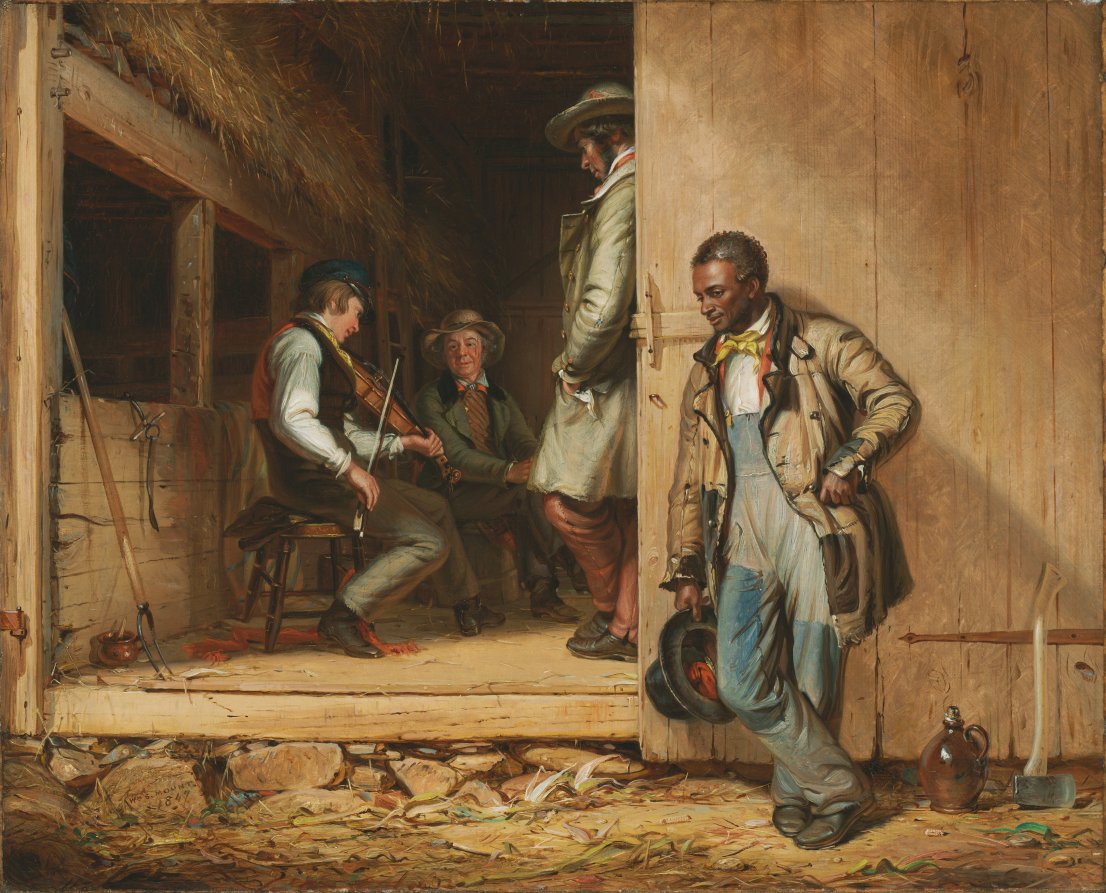
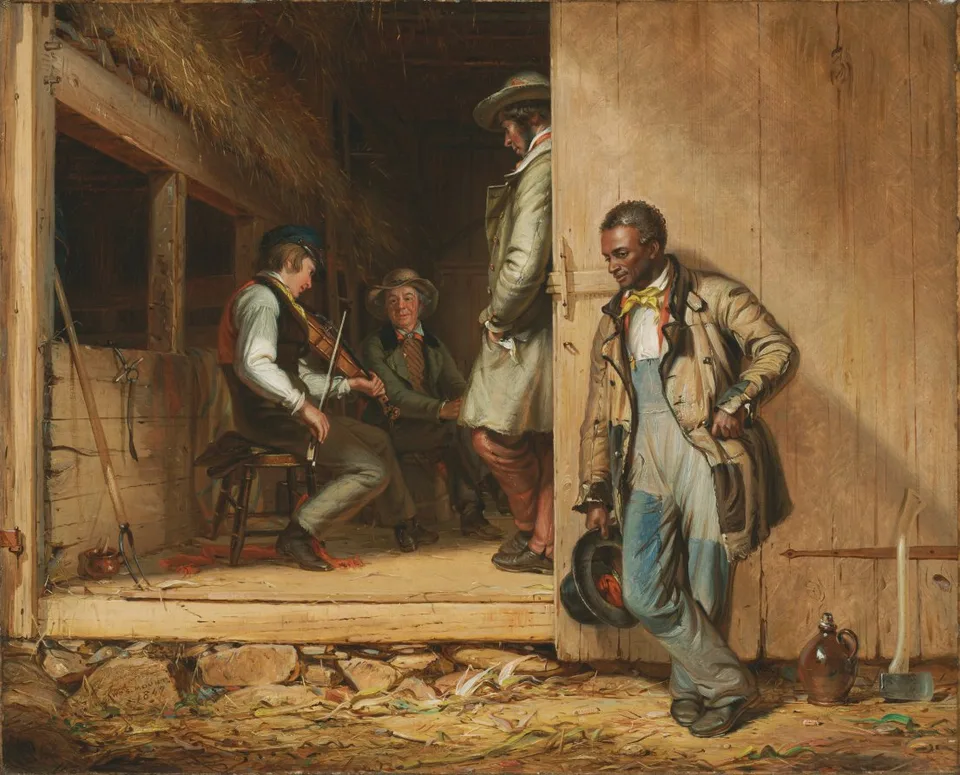
The music crosses a boundary that the figures do not. A fiddler and two listeners occupy the barn’s interior, while a Black laborer stands outside beside the broad door. His inclined head and relaxed pause make listening visible even though sound itself cannot appear. Tools, straw, and work clothes place the encounter within ordinary rural activity.
The museum situates the scene on Long Island before the Civil War and emphasizes its double structure. Shared enjoyment of music suggests a common humanity, while the division between inside and outside embodies racial separation. Both aspects need to remain present. Calling the scene harmonious without looking at the doorway would miss its central spatial fact. Compare the fiddler’s group with the solitary listener: the same event connects them, but the painting distributes access, company, and position unequally. The door is therefore more than a piece of scenery; it organizes the social meaning of the encounter.
Shared enjoyment does not erase the racial separation the museum identifies. The painting is a constructed genre scene, not proof of these figures’ complete relationships or a neutral portrait of every Black laborer’s experience on Long Island.