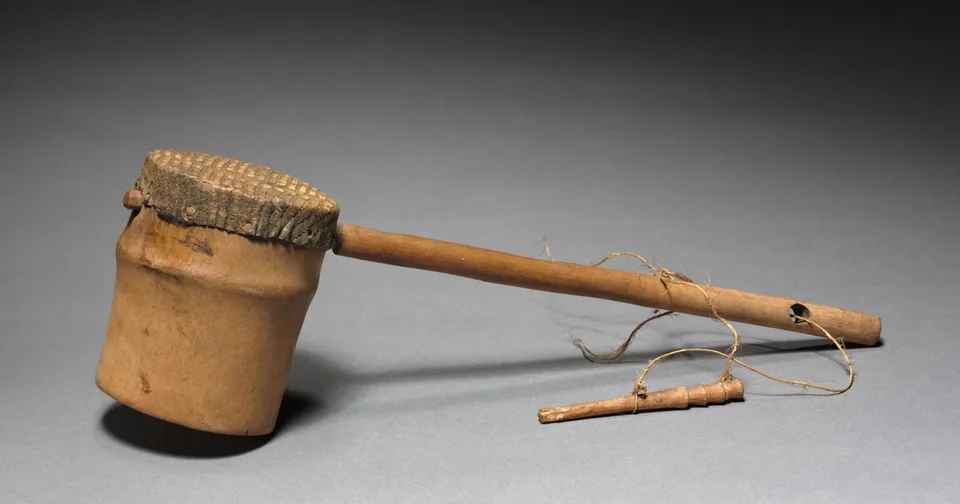
A skin-covered cylinder and a long wooden neck preserve the structure of a one-string instrument, even with its bow missing.
The endingidi, also called iningidi in Rwanda, is a single-string fiddle. The museum cites scholars who believe it reached the Kingdom of Buganda between 1904 and 1907 and later spread into Rwanda. A horsehair string once ran from the neck over the reptile-skin covering of the tubular sound box. A curved bow, now missing, set the string vibrating while a player held the instrument vertically. The surviving object is therefore only part of a working musical arrangement.
Its photograph separates the broad resonating cylinder from the long neck with unusual clarity. The mottled skin contrasts with the smoother wooden sides, while loose components near the far end reveal the present interruption of the playing system. The museum records acquisition by Paul Travis in 1928, reportedly in Rwanda, on behalf of the African Art Sponsors and Gilpin Players. That history helps locate its collection, without converting a still, incomplete instrument into a recording of a particular performance.
The bow is missing and the string arrangement is no longer intact. The image cannot establish the instrument’s former pitch, sound or the identity of its musician.