Surfaces made to work
Surfaces do more than carry decoration. They can join separate strips, produce a woven pattern, vibrate with sound or retain a repair. Follow five objects whose construction becomes clearer when you look at a small interruption or change in texture. Their distinct cultural settings remain essential; a similar visual rhythm does not mean that they shared a use.
Begin the journey ↓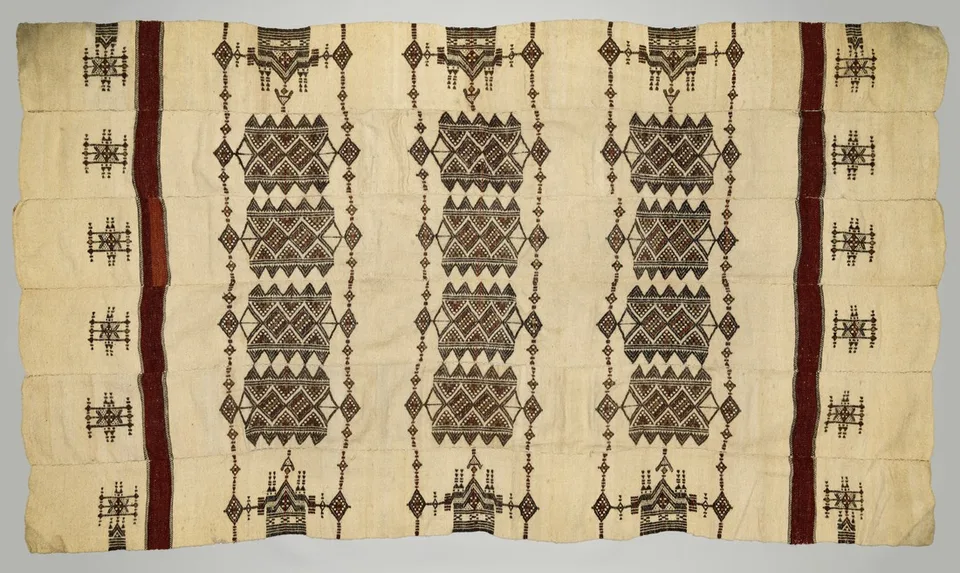
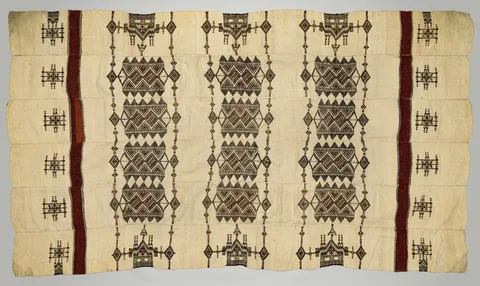
A seam across a pattern
Find the horizontal join crossing a patterned column. The blanket’s separately woven strips and its decorative arrangement run in different directions. Distinguishing those two systems reveals how a broad textile was assembled.
Carry this question: Does the seam follow the strongest decorative direction?
Open the artwork ↗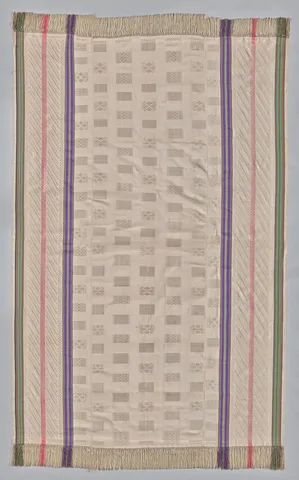
Pattern carried by sheen
Here the design emerges through subtle differences in the pale silk. The museum identifies extra weft threads producing the motifs. Colour contrast is only one way to make a woven pattern legible.
Carry this question: Which rectangles appear when you follow changes in sheen?
Open the artwork ↗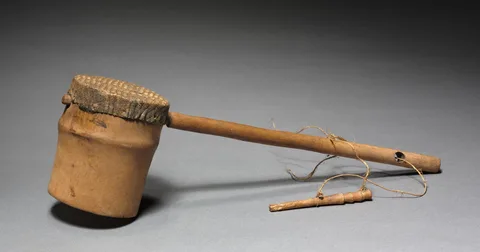
A surface made to vibrate
The skin spanning the sound box had a working relationship with the instrument’s single string. The missing bow and displaced components prevent a complete performance reconstruction, but the contrast between skin and wood remains informative.
Carry this question: How does the stretched skin differ from the wooden sides?
Open the artwork ↗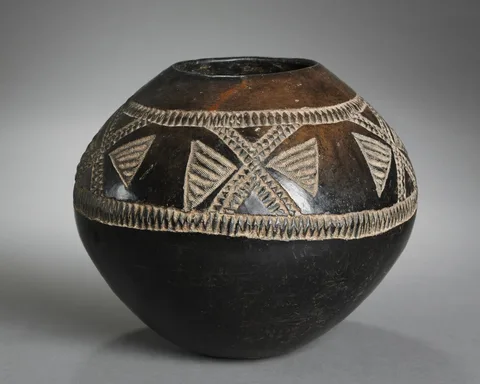
A patterned belt on a rounded form
The decorated shoulder interrupts the smoother body of the pot. Compare the density of marks with the opening and belly: the vessel offers different surfaces for handling, containing and concentrated ornament.
Carry this question: Where does the textured band give way to smoothness?
Open the artwork ↗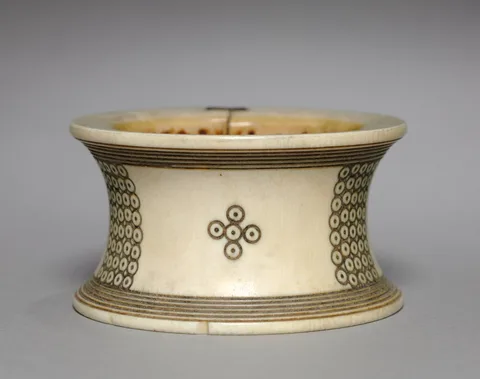
A repair within the design
The repaired edge adds another episode to the bracelet’s patterned surface. It is evidence of an intervention, although neither its date nor the person responsible is recorded. Maintenance belongs to an object’s visible history.
Carry this question: How does the repair interrupt the surrounding pattern?
Open the artwork ↗Read with the sources
Historical context follows the individual museum records linked on each artwork page. These routes make original comparisons of visible form; resemblance alone is not evidence of shared meaning or direct influence.