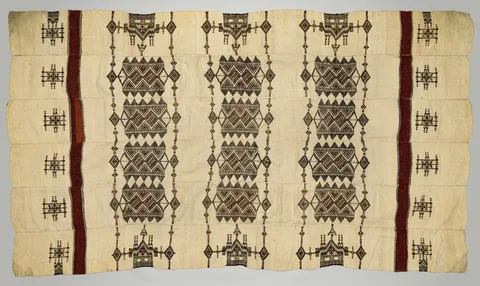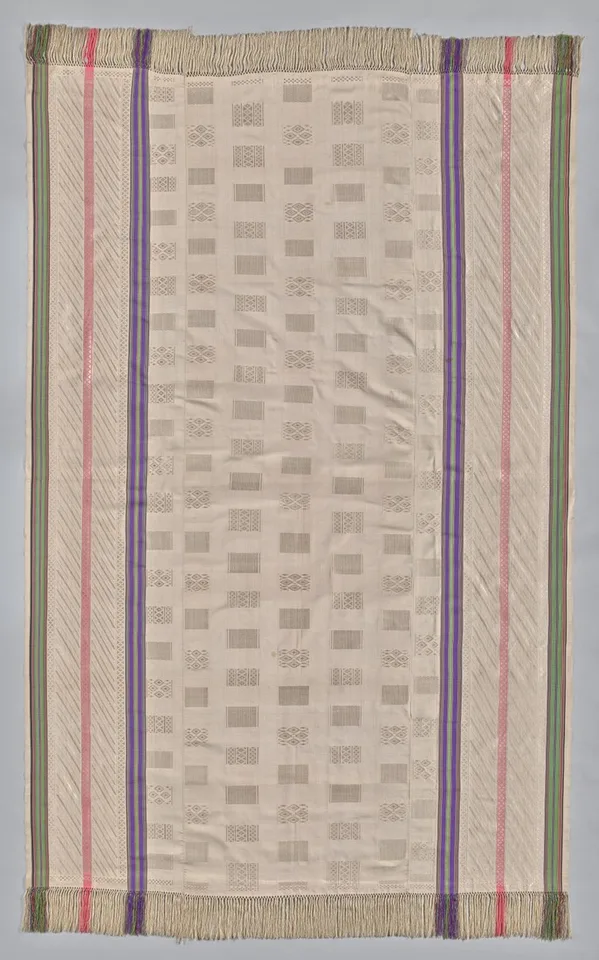
A pale silk field looks almost plain until its alternating woven rectangles begin to catch the light differently.
A lamba is an untailored textile worn across Madagascar by people of different ages, genders and social positions. This Merina-style silk example is a lamba akotifahana, named for the extra-weft patterns woven across its surface. The museum dates it to 1860–90, a period spanning the adoption of Christianity as the Merina Kingdom’s state religion in 1869. It connects the subsequent preference of elite churchgoers for white silk lambas with that change.
The central rectangles offer a quiet effect: woven differences catch the light within an almost monochrome field. Coloured stripes give the sides a stronger rhythm, and the fringe extends the textile beyond its rectangular woven body. The museum connects its rows of knotted fringe with Malagasy enthusiasm for Chinese-made Manila shawls. These details make the wrapper evidence of changing local taste and wider exchange. Neither its pale colour nor its imported stylistic reference reduces the object to a single occasion or a single source of influence.
The date spans major religious change, and the record does not identify a wearer. White silk suggests a documented fashion, but does not prove use at a particular church service.