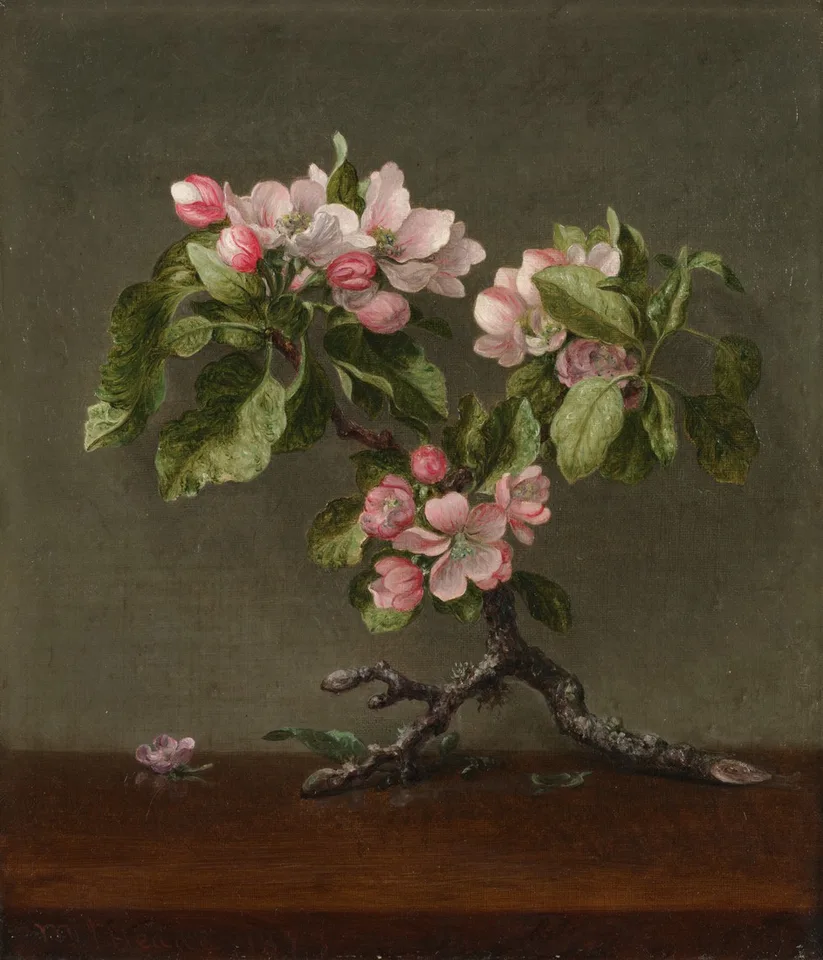
A cut branch balances on a tabletop without a vase, letting blossoms, bark and a fallen petal share a spare indoor stage.
Martin Johnson Heade painted many floral still lifes, but this example uses an unusually spare arrangement. A single apple branch rests on a tabletop and leans against a plain wall, with no vase to organize the display. The museum emphasizes this simplicity. The branch itself must supply the picture’s structure, spreading into several groups of blossoms and leaves above a knotted lower support.
The flowers vary from deep pink buds to pale open petals, making different stages of growth visible within one cut stem. Broad leaves give darker weight to the upper clusters, while the rough bark turns sharply near the table. A fallen blossom introduces a small separated echo below. The plain wall makes these details easy to compare without prescribing one symbolic meaning. The painting’s appeal can begin with how Heade balances soft petals, heavy leaves and angular wood, all held in a quiet arrangement that would not stand in the same way outdoors.
The record does not assign a specific symbolic meaning to the fallen blossom. This is a deliberately arranged indoor still life, not a complete botanical account of an apple tree.