Arranging attention
A painting can make ordinary objects feel close enough to touch or turn a crowd into a field of coloured marks. These four works organize attention through different means: staged overlap, a pale symbolic object, a supported branch and a repeated painted rhythm. Compare those visible decisions before assigning a hidden meaning to every item or gesture.
Begin the journey ↓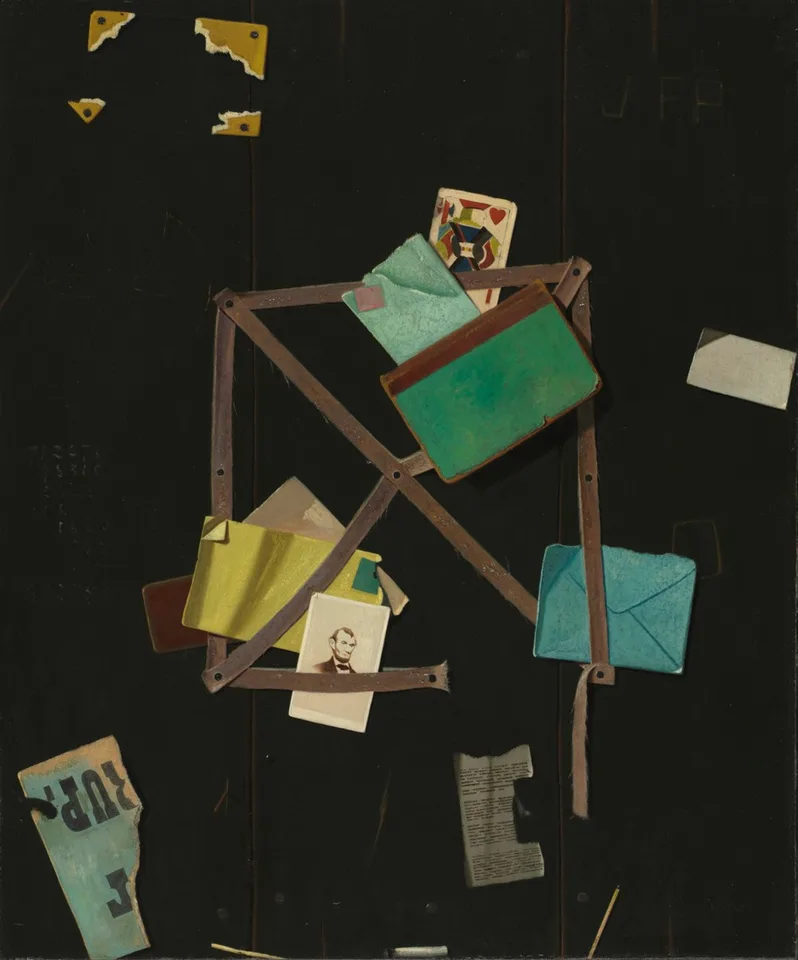
Depth made through overlap
The crossed straps pass in front of some papers and behind others. Their shallow layering creates an illusion of real objects close to the viewer, while the identity and personal significance of every item remain unresolved.
Carry this question: Which paper seems closest, and what overlap produces that effect?
Open the artwork ↗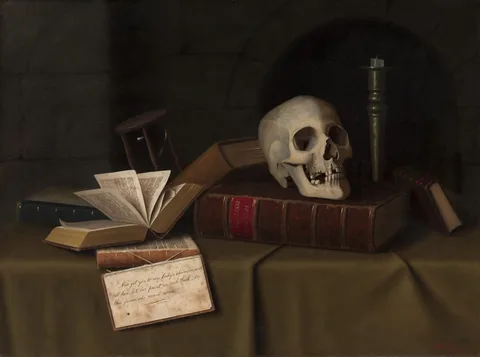
A pale object with a stated meaning
The skull stands out against the dark books. Unlike an arbitrary guess about every paper on Peto’s rack, the museum explicitly connects this object with mortality and the still life’s memento mori theme.
Carry this question: How do light and placement make the skull prominent?
Open the artwork ↗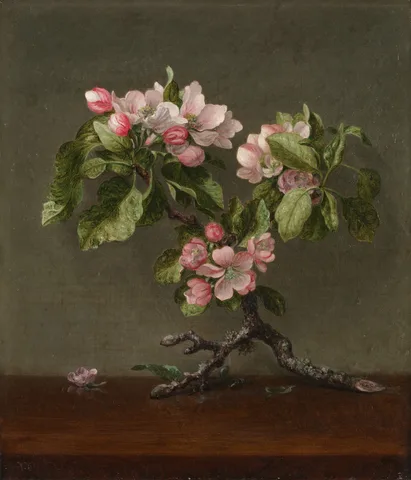
Balance without a vase
The gnarled lower branch helps support the floral arrangement. Its rough dark structure is as necessary to the composition as the delicate blossoms, while the isolated fallen bloom has no securely prescribed symbolic meaning.
Carry this question: What holds the display in its apparent balance?
Open the artwork ↗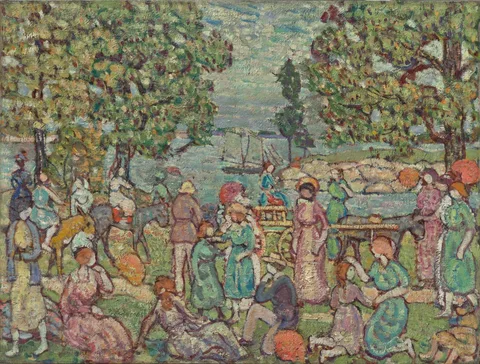
People within a painted rhythm
The green garments break into small touches of colour similar to those across the crowd and foliage. The museum’s tapestry comparison describes this visual effect; the actual object is an oil painting.
Carry this question: Where do separate figures begin to merge into the surface pattern?
Open the artwork ↗Read with the sources
Historical context follows the individual museum records linked on each artwork page. These routes make original comparisons of visible form; resemblance alone is not evidence of shared meaning or direct influence.