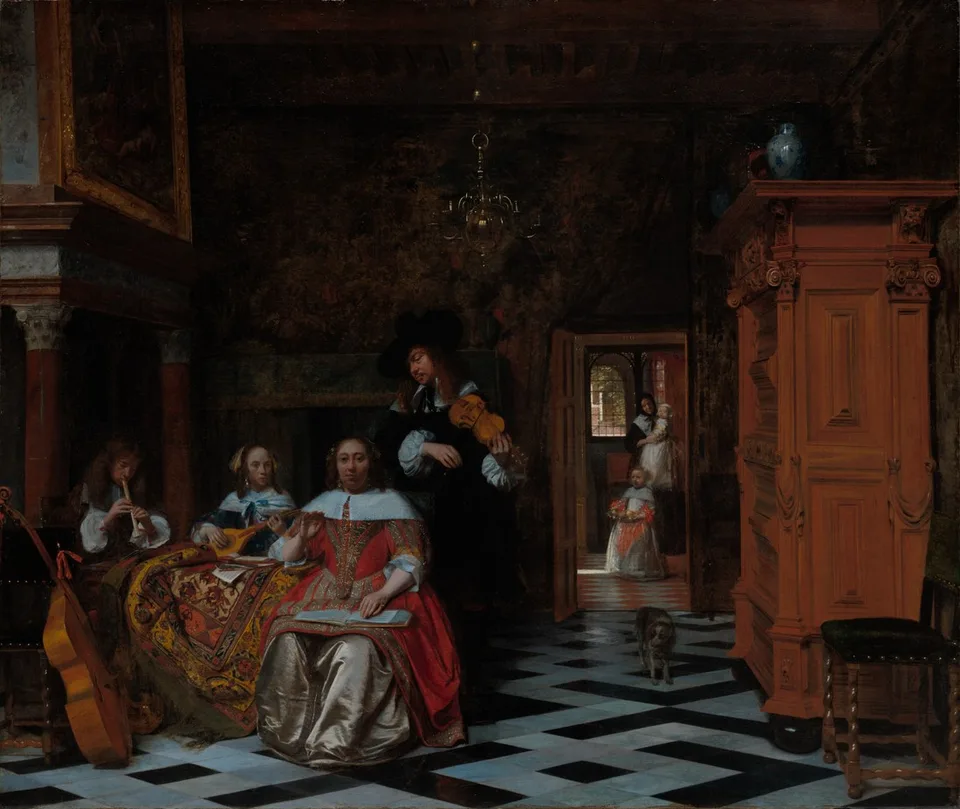
The music gathers a family together, while a tiled passage and imported furnishings tell another story about the room’s wealth.
The musicians cluster around the table, where bright sleeves and polished instruments stand out against the darker room. To their right, a tiled path recedes through an open doorway toward another woman and child. The near group and the distant figures share an interior but occupy different depths. A small dog stands between these zones, giving the passage a living scale.
The family’s identity is unknown. The museum reads its expensive floor, mantelpiece, silk clothes, and furnishings as signs of considerable wealth. It identifies a Transylvanian prayer rug on the table and Chinese ceramics and Japanese lacquer among the objects at the right, connecting domestic display with Dutch trade across regions. Music can also suggest family harmony in this context. That symbolic reading should remain separate from evidence of the household’s actual relationships: the painting presents a harmonious arrangement, not an independently verified report of private life.
The sitters remain unnamed, and musical harmony does not prove that their relationships were harmonious. Imported possessions reveal wealth and trade connections without documenting each object’s route.