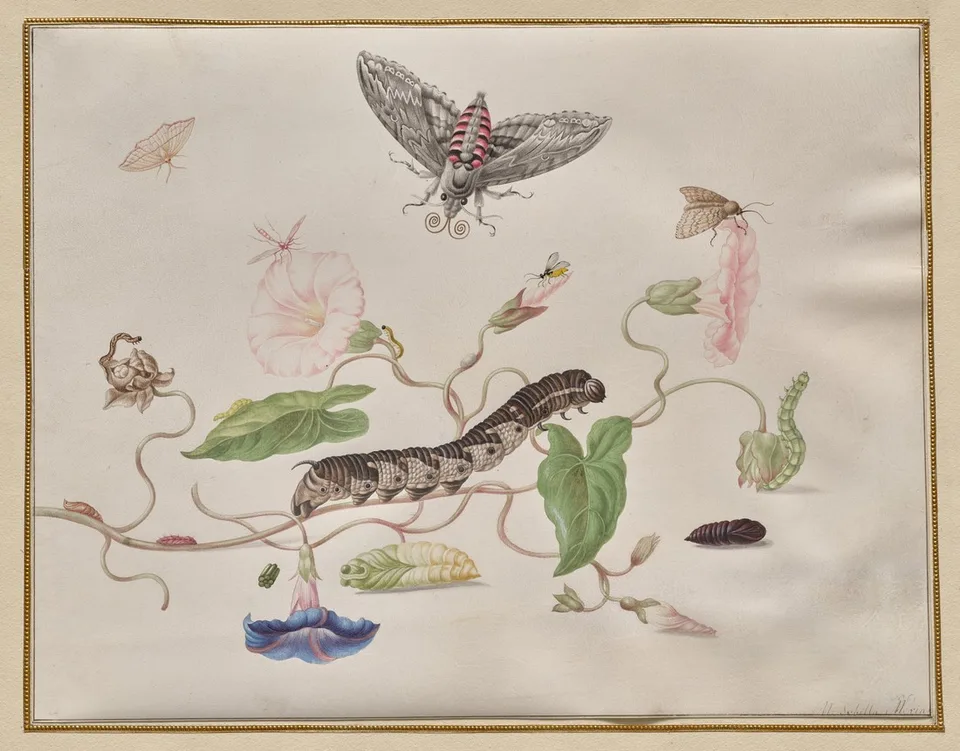
A moth, caterpillars, flowers, and a pupa turn one sheet into a visual account of change across a life cycle.
The largest moth sits above the plant rather than within a surrounding landscape. Below it, a long caterpillar follows a curved stem, while smaller forms occupy the remaining open spaces. Leaves and flowers change direction throughout the sheet, giving the insects supports without crowding their outlines. The pale background makes both minute legs and broad wings available to the eye.
Maria Sibylla Merian combined training as a miniature painter with sustained study of insects, including caterpillars she reared herself. The museum identifies this sheet with the European pink-spotted hawk moth and its morning-glory food plant. It also notes that she added other caterpillar species to improve the composition. That qualification prevents us from assuming that every insect shown is a stage of the same animal. The page brings observation and arrangement together: it teaches us to notice transformation while remaining an intentionally composed image rather than an untouched slice of habitat.
Not every caterpillar belongs to the hawk moth’s life cycle; the museum identifies additions of other species. Their simultaneous appearance is a composed presentation, not a single observed moment.
Why should every caterpillar not be labeled as the same species?
Practise looking at Convolvulus and Metamorphosis of the Convolvulus Hawk Moth →