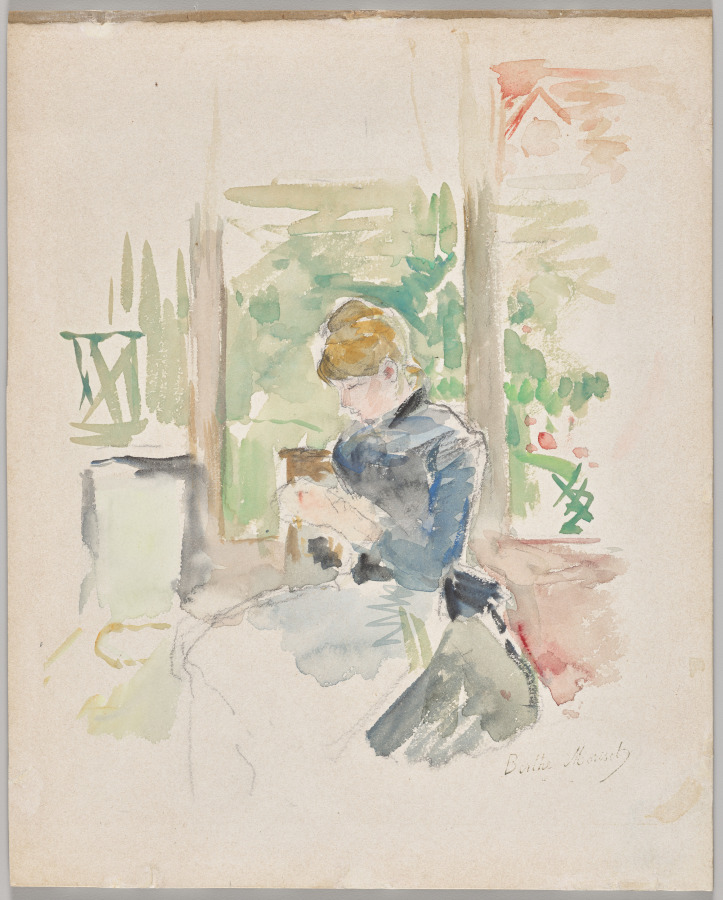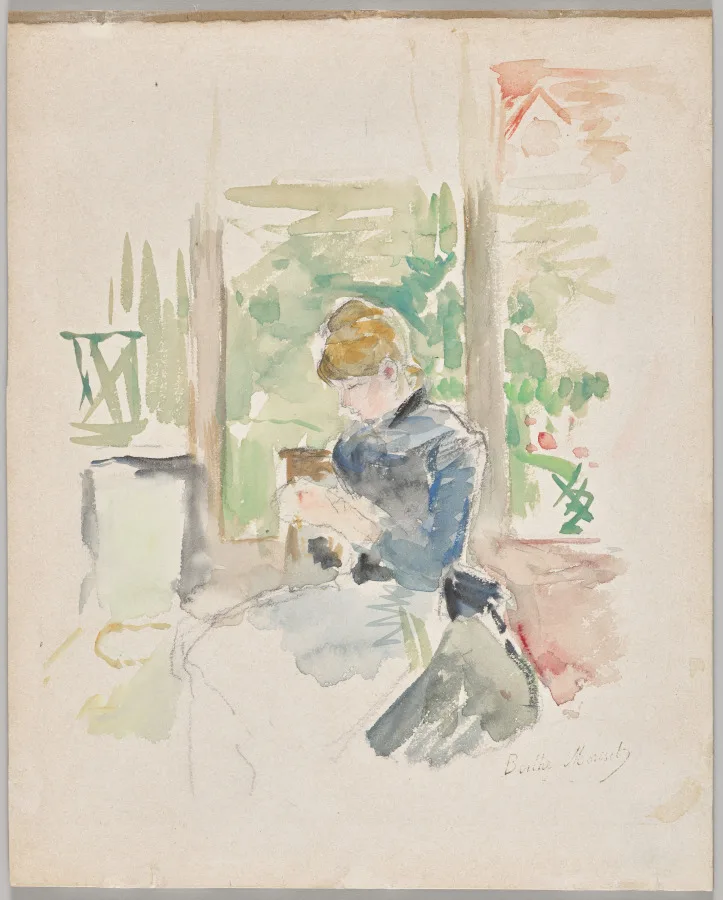
Follow the clustered hands, then the empty paper: this sewing scene leaves the process of finding a composition visibly open.
The hands draw us into a small, concentrated task. Around them, color becomes increasingly airy: blue clothing is broken into separate washes, the skirt fades into pencil lines, and light paper helps construct the window. The museum identifies the sitter as Euphrasie, known as Pasie, the nanny of Morisot’s daughter Julie. She is shown sewing in the artist’s apartment rather than performing a formally posed public role.
Morisot used this watercolor while developing another composition, later adding Julie and cropping the scene more tightly in a painting. That relationship gives the open areas an additional interest, but unfinished-looking passages should not automatically be treated as accidental omissions. Watercolor could serve Morisot both as preparation and as a finished medium. Compare the concentrated figure with the broad window structure: the image establishes a place and an activity using surprisingly few marks, allowing the paper itself to carry much of the room’s light.
The later painting’s additional figure does not belong to this watercolor. Pasie’s identity and the preparatory relationship come from the museum; the light handling alone would not establish either fact.