Read the
Picture
An open collection
Mexico, Guerrero, Olmec · Sculpture

Kneeling Figure

Maker unrecorded · c. 1200–600 BCE

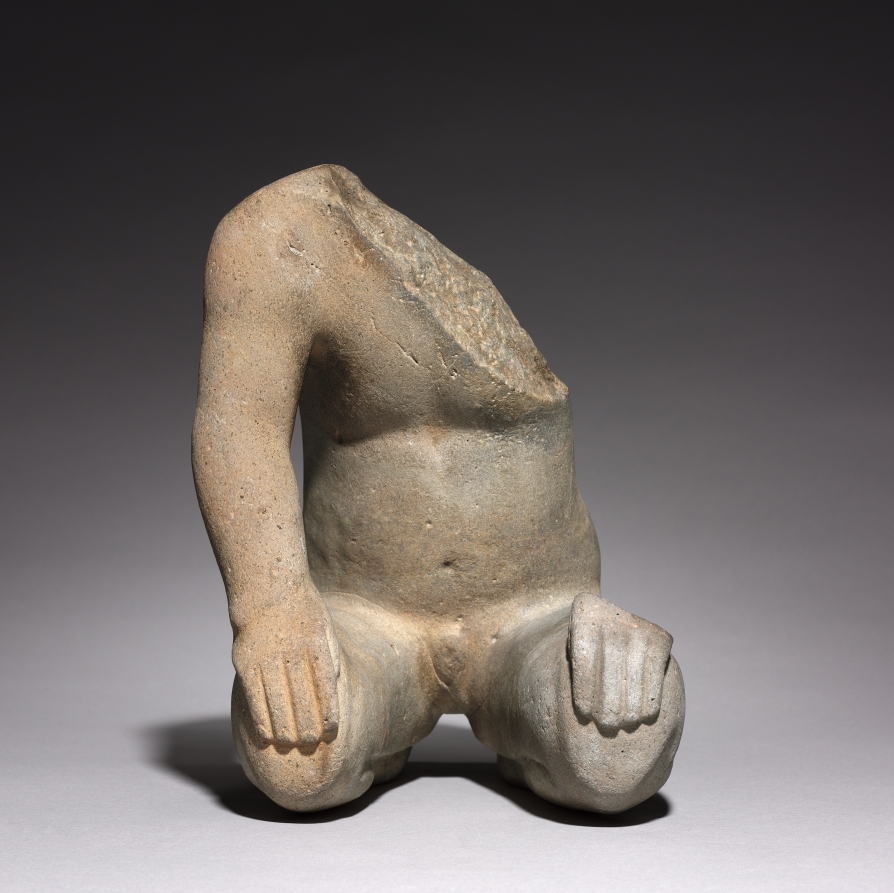
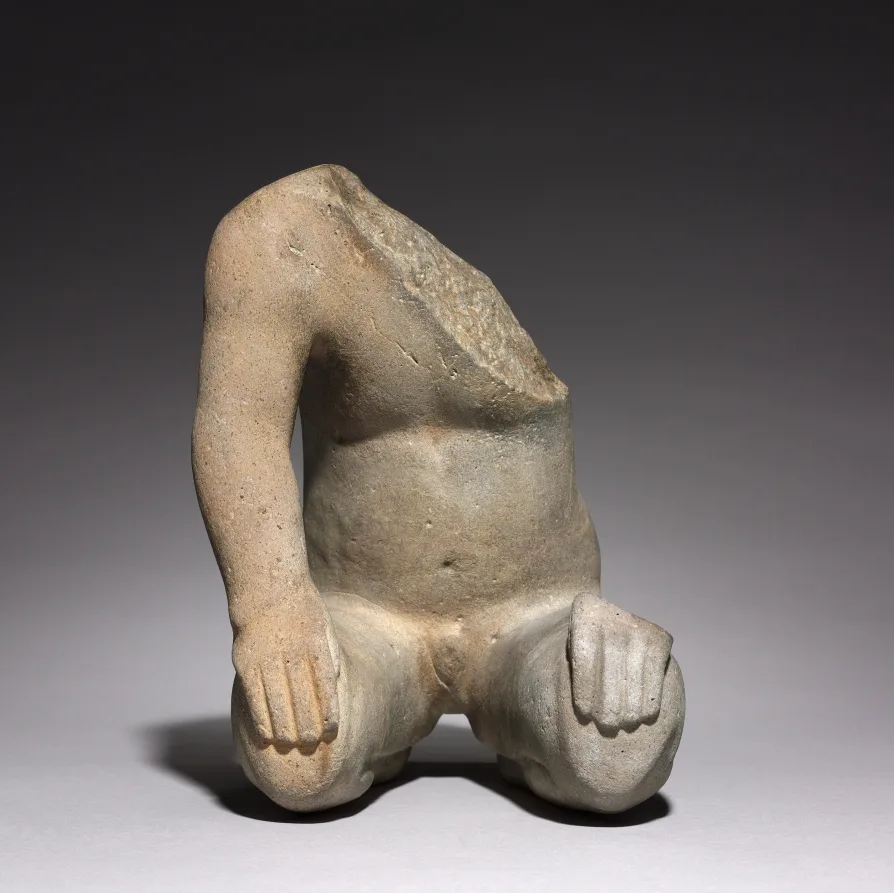
A pale stone human figure survives from the upper torso downward, with the head and upper chest broken away. The body kneels with rounded thighs and hands resting on the knees. Individual fingers are carefully separated. One arm runs continuously from shoulder to hand, while the other side is more fragmentary; a diagonal break crosses the upper torso.
100%

Drag to move · Pinch or +/− to zoom · Arrow keys to pan · 0 to reset

The Cleveland Museum of Art · 1951.179 · Image: CC0Museum image ↗
A little context

Hands resting on bent knees preserve minute anatomical care, even though the head and much of the upper body are missing.

The loss at the top is impossible to miss, but the surviving hands invite a very different scale of attention. Fingers separate cleanly over rounded knees, and the abdomen changes subtly between chest and hips. The figure's present state joins a large interruption with many small intact decisions about the human body.

The museum identifies an Olmec carving from Guerrero and emphasizes the close observation of muscles and nails. It also records a later recovery of the left knee-and-hand fragment, which was reunited with the sculpture. The body we see is therefore not simply the exact fragment as first collected, nor is it an arbitrary modern completion. A documented rejoining restored an original relationship. The sitter's identity and original use are not established by the short record. We can appreciate the anatomical precision while resisting the temptation to name a ruler, deity or ritual solely from a kneeling posture.

A careful reading

The head and upper body are incomplete, and the sitter's identity and original purpose are not established here. The reunited knee-and-hand fragment is documented, unlike an imagined reconstruction of the missing head.
Try your eye

What distinguishes the restored relationship at one knee from an invented reconstruction?

Where this reading begins

  • Kneeling Figure: collection record — The Cleveland Museum of Art. Object identification, attribution, materials, historical context and stated uncertainties; observations independently checked against the museum photograph. Museum record updated 2026-05-29; accessed 2026-11-13.

Our observations describe the supplied museum photograph. Historical identifications and context follow the cited collection record; interpretive limits are stated above. This is an independent guide, not a museum endorsement.

Image rights & attribution

Kneeling Figure, c. 1200–600 BCE. Mexico, Guerrero, Olmec. Stone; overall: 26.3 x 20 x 21.3 cm (10 3/8 x 7 7/8 x 8 3/8 in.). The Cleveland Museum of Art, The Norweb Collection, 1951.179

Individual API record marked CC0; checked 2026-11-13. CC0 1.0 dedication. Record date: 2026-05-29 06:37:07.671000. Web JPEG downloaded unchanged; responsive WebP and zoom derivatives resized and recompressed; numbered annotation overlay separate from image.