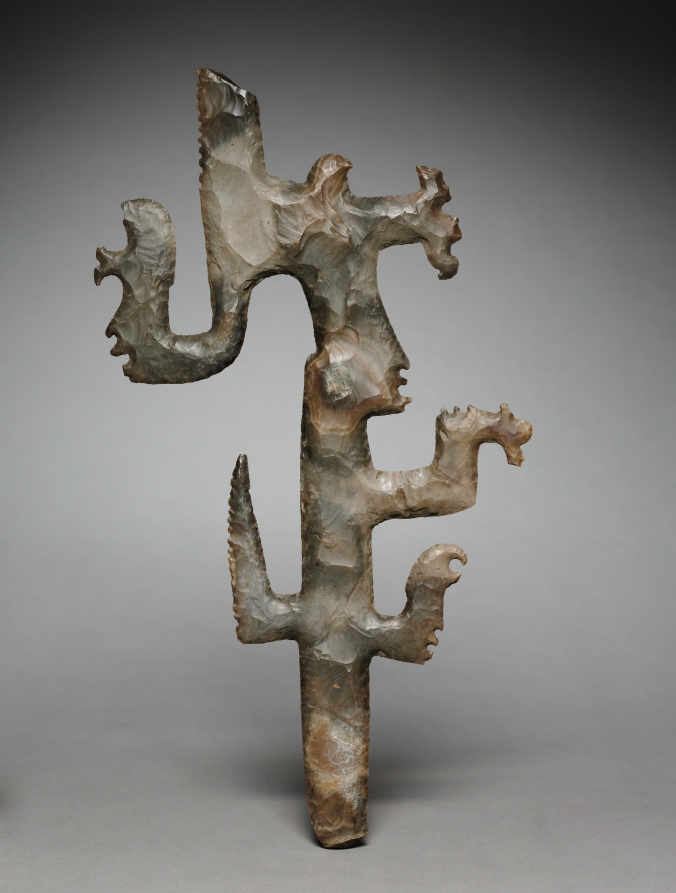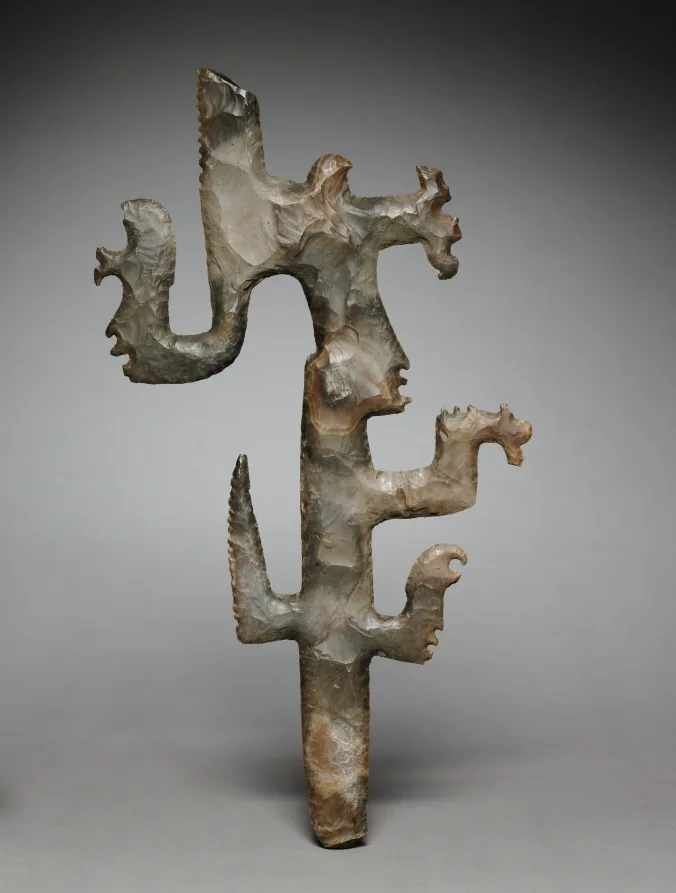
A chipped stone edge becomes a face, then several more faces, making removal of material the means of drawing an intricate silhouette.
Start at the central profile and follow the edge rather than the patches of color within the stone. A nose, lips and forehead emerge from controlled changes in the silhouette. Other protrusions carry smaller faces, making the object multiply its imagery without turning into a flat painted scene. Removed stone is as important as what remains.
The museum identifies the main figure with K'awil, a deity closely associated with Maya rulers, through the smoking torch at the forehead. Such unusually shaped flints are called eccentric flints today. Some may have served as scepters, while others were deposited as offerings beneath buildings and sculptures. Those possibilities should not be reduced to one certain history for this particular object. The material and recognizable attributes make it explorable, even while original handling and placement remain incompletely known. Its achievement lies in joining a demanding stoneworking process with a complex, readable divine outline.
Possible scepter use and deposited-offering contexts describe the broader object type; the cited description does not establish one exact use for this piece. The deity identification depends on the specific forehead attribute.