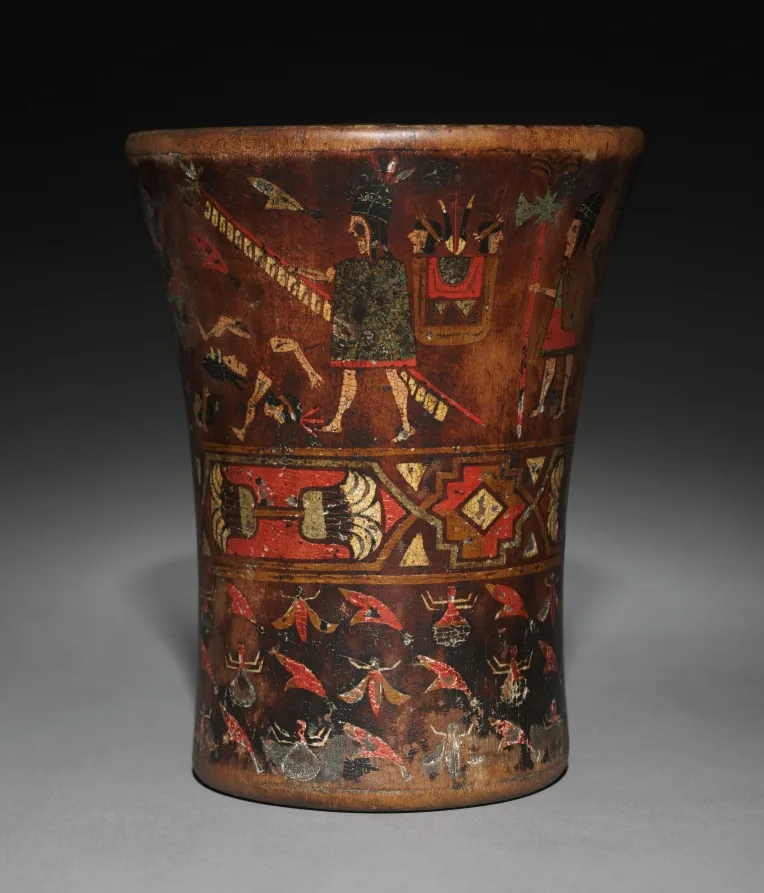
A waisted wooden cup carries armed figures, geometric bands and smaller motifs, joining drinking with a layered historical image.
The cup's narrowed waist provides a natural place for a dividing band. Above it, armed figures occupy a larger narrative zone; below, smaller motifs repeat across another field. The decoration follows the vessel's shape while continuing around its unseen sides. Reading only the visible front would give an incomplete account of the scene.
The museum identifies a colonial-period Inka-style kero, used for chicha, a maize beer. Keros traditionally worked in pairs and participated in relationships of reciprocity and statecraft; their use continued after Spanish conquest. The shared museum description discusses two examples from separate pairs, and this photographed cup is the narrative one, with converging armies. The opponents' identity is uncertain. The object therefore records continuity and change without providing a simple eyewitness history of one named battle. Its material, drinking function and colonial date are more secure than a complete reconstruction of the depicted conflict.
The museum's shared description covers two separate keros; only this narrative example is pictured here. The opposing group's identity is tentative, and the surviving cup should not be described as one complete original pair.