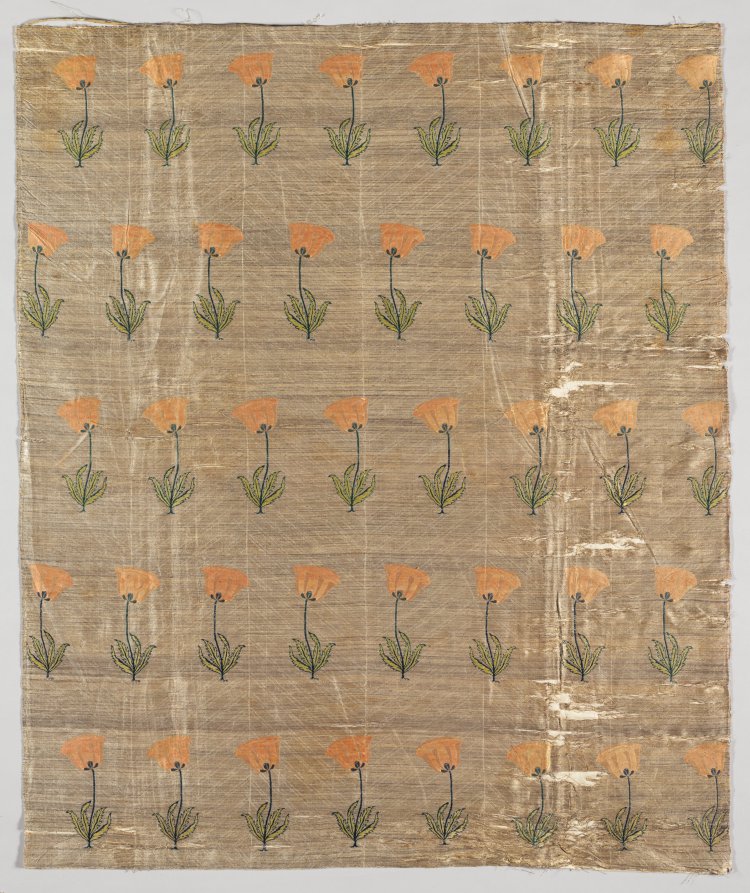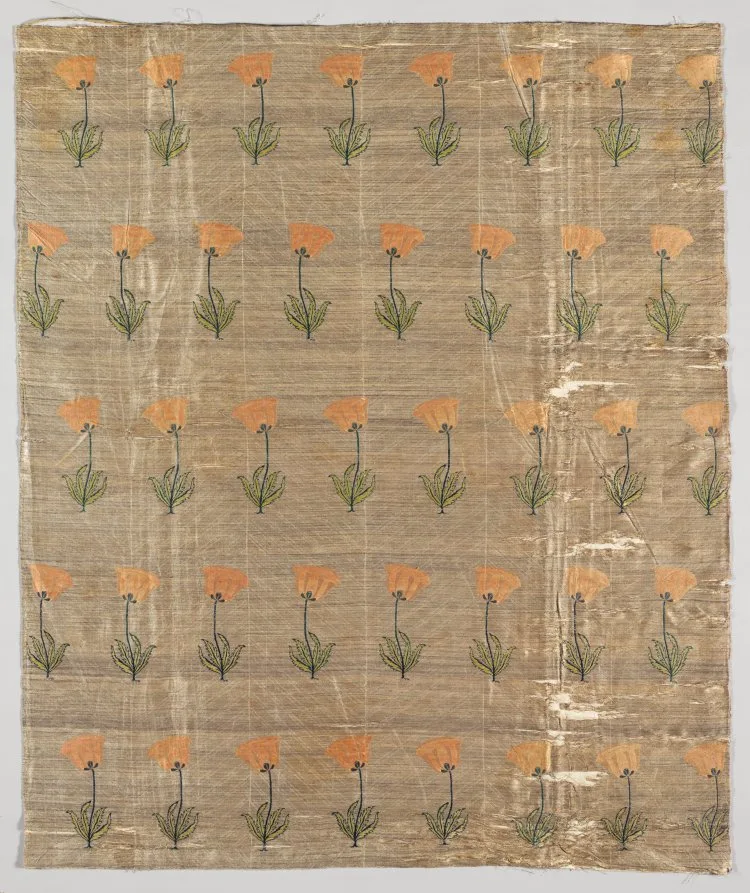
Alternating flower heads introduce movement into a regular field, while silk and metal thread make the background part of the design.
Each poppy stands apart, yet the rows do not feel entirely still. Flower heads incline in alternating directions, allowing a small difference to animate a repeated arrangement. The long green stems remain separated by broad areas of gold, so the ground is an active part of the pattern. The museum also describes subtle chevrons within that ground, adding a second, quieter rhythm beneath the flowers.
The textile combines silk with gilt-metal thread. The museum explains that peach and green threads form the poppies through discontinuous wefts, producing a relatively smooth, lightweight cloth. Those material facts help distinguish a woven design from an image simply painted onto a surface. The record places the fabric within exchange between Safavid Iran and Mughal India, whose courtly consumers valued textiles from both regions. Its present worn state makes the surviving pattern legible, but the photograph cannot fully reproduce how metal thread and silk would respond to changing light or movement.
The museum dates the fragment broadly, and its original complete form or wearer is not established here. Current colour, wear and photographed lighting should not be mistaken for an exact reconstruction of its original appearance.
What introduces movement into the repeated poppy pattern?
Practise looking at Textile with field of poppies on a golden ground →