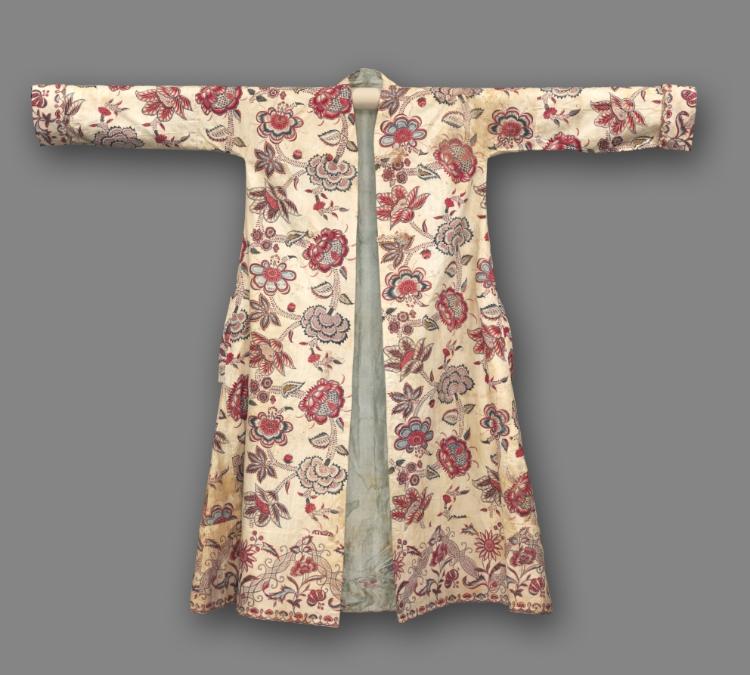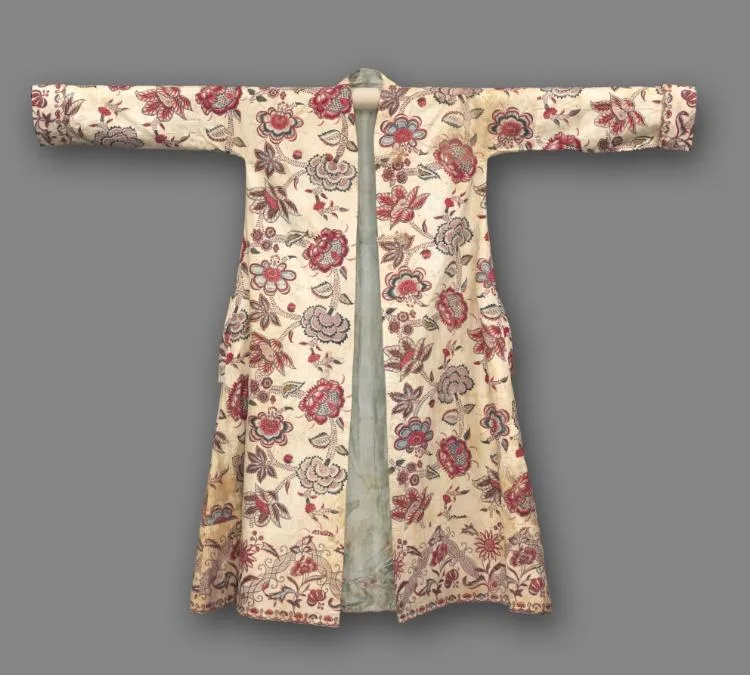
A floral garment links Indian textile production with an aristocratic French market, carrying evidence of exchange in something made to be worn.
The extended sleeves make the garment’s structure easy to grasp before the flowers draw us closer. Long front panels frame an opening, and floral stems turn across the cream ground without forming a single centred picture. The museum records a cotton fabric decorated through resist-dyeing processes and applied gold leaf. What appears at first as a colourful coat combines several kinds of labour in one wearable surface.
The museum identifies this as an Indian product made for an aristocratic French market. Its flowers relate to southern Indian textiles known as palampores, while gilding and burnishing added further luxury. The garment therefore complicates an easy equation between place of manufacture and place of use. It belongs to the history of Indian textile skill and international demand at the same time. Look at the relationship between cut and pattern: the recognisable coat shape accommodates a dense field of plant forms rather than presenting a separate decorative panel.
The record identifies the intended French market but does not name the person who wore this coat. A photograph can show pattern and cut more readily than it can demonstrate every dyeing or gilding stage.