Textiles as designed worlds
A garment and a carpet both organise a surface, but they meet the body differently. Follow embroidered cosmology, a coat’s opening, repeated poppies, and mirrored carpet forms. Material and construction change how pattern is experienced, so a screen view should not erase the difference between something worn and something spread beneath or before a viewer.
Begin the journey ↓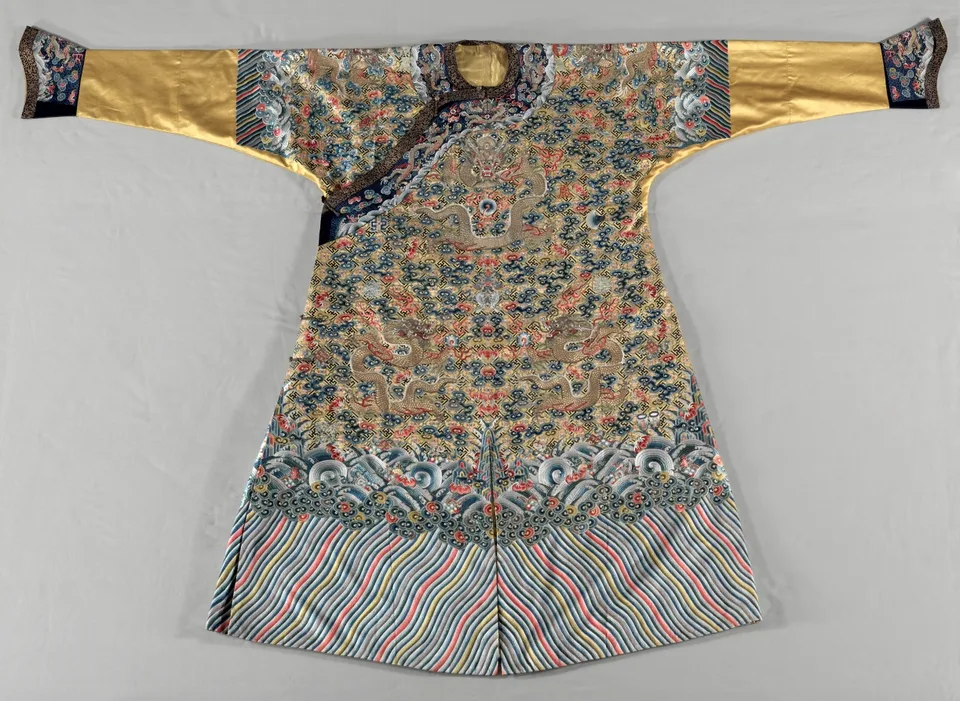
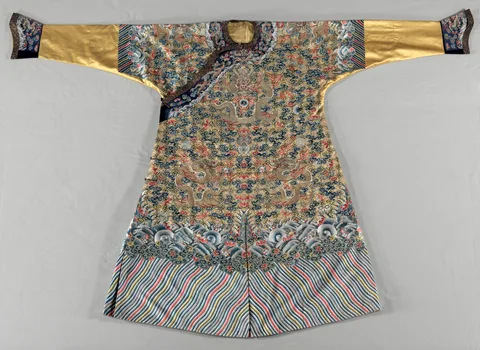
A universe arranged around a body
Waves, rocks, clouds, and dragons occupy ordered zones on the robe. The museum connects that structure with Qing imperial authority and distinguishes the garment’s court category from major ritual dress.
Carry this question: What changes when this flat display is imagined on a moving body?
Open the artwork ↗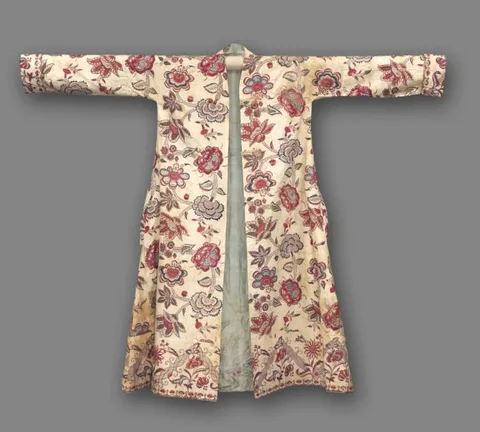
The opening sets the pattern
The front opening and sleeves make the textile a wearable object. Follow the floral design through those structural changes rather than reading the whole coat as one uninterrupted rectangular picture.
Carry this question: Where does the garment’s construction interrupt or redirect the pattern?
Open the artwork ↗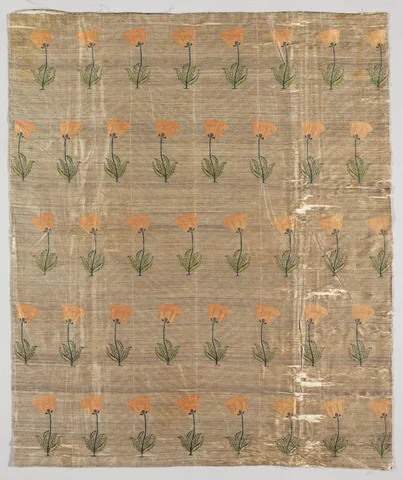
A flower repeats without becoming identical
Look at a tilted poppy against the gold ground, then compare its neighbours. Repetition creates a field, while surviving wear reminds us that material history can alter the pattern’s present appearance.
Carry this question: What varies within the repeated floral rhythm?
Open the artwork ↗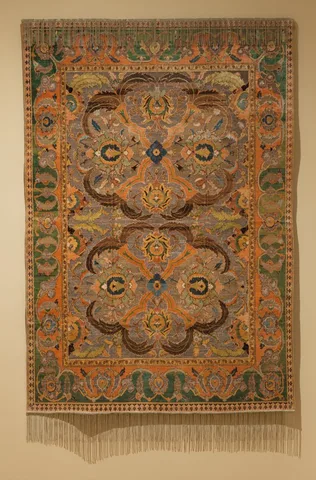
A field contained by a border
The carpet’s mirrored forms and surrounding border create different scales of repetition. Follow the field outward to its edge, then distinguish structural fringe from a motif painted inside a picture.
Carry this question: How does the border change the way you read the central field?
Open the artwork ↗Look at a pair more closely
- Wearing a patterned world
A Qing court robe and an Indian export coat
Read with the sources
Historical context follows the individual museum records linked on each artwork page. These routes make original comparisons of visible form; resemblance alone is not evidence of shared meaning or direct influence.