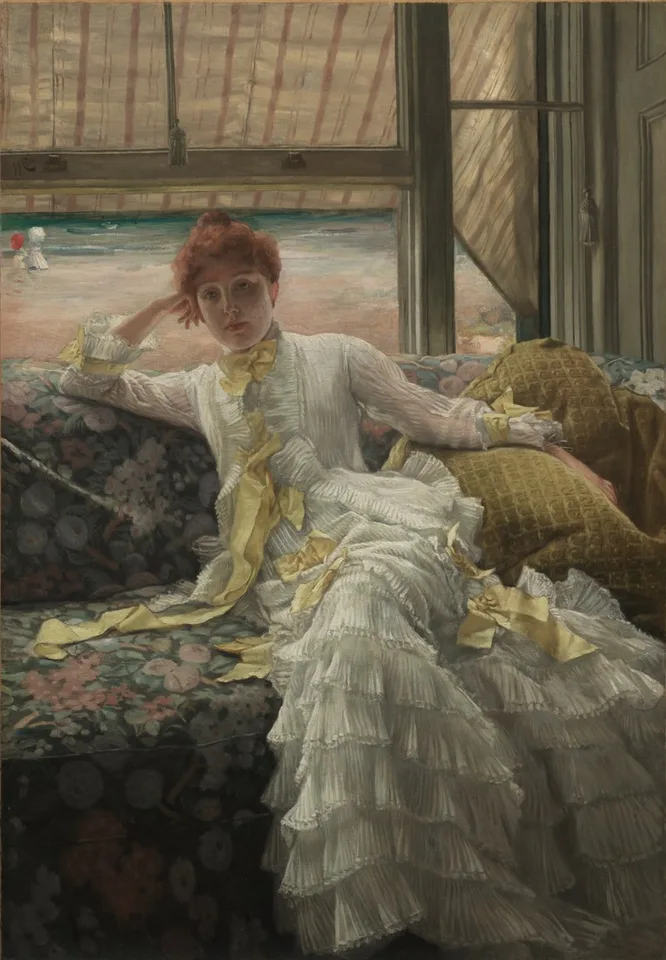
An awning reduces the beach to a narrow glimpse while layers of white fabric make indoor leisure the main spectacle.
The reclining woman occupies nearly the whole lower picture. Ruffles and yellow ribbons cascade across her skirt, echoing the abundance of pattern in the sofa and cushions. Behind her, the awning blocks much of the window, leaving a narrow band of beach and water. The outside world is present, but the painting makes it something filtered through a comfortable interior.
The model was Kathleen Newton, Tissot’s partner and frequent sitter during his London years. The museum describes the work as conveying the languor of a summer afternoon rather than narrating a particular incident. That distinction helps us resist inventing a conversation or event to explain her pose. The clothing, furniture, and controlled light are already active subjects. Comparing the narrow outdoor strip with the extensive fabric surfaces reveals how the painting constructs leisure through enclosure, softened illumination, and the visible availability of comfort.
Kathleen Newton is identified, but the picture does not establish a particular afternoon’s events. Her reclining pose and the painting’s summer mood cannot disclose her private thoughts.
How is the seaside setting presented?
Practise looking at Seaside (July: Specimen of a Portrait) →