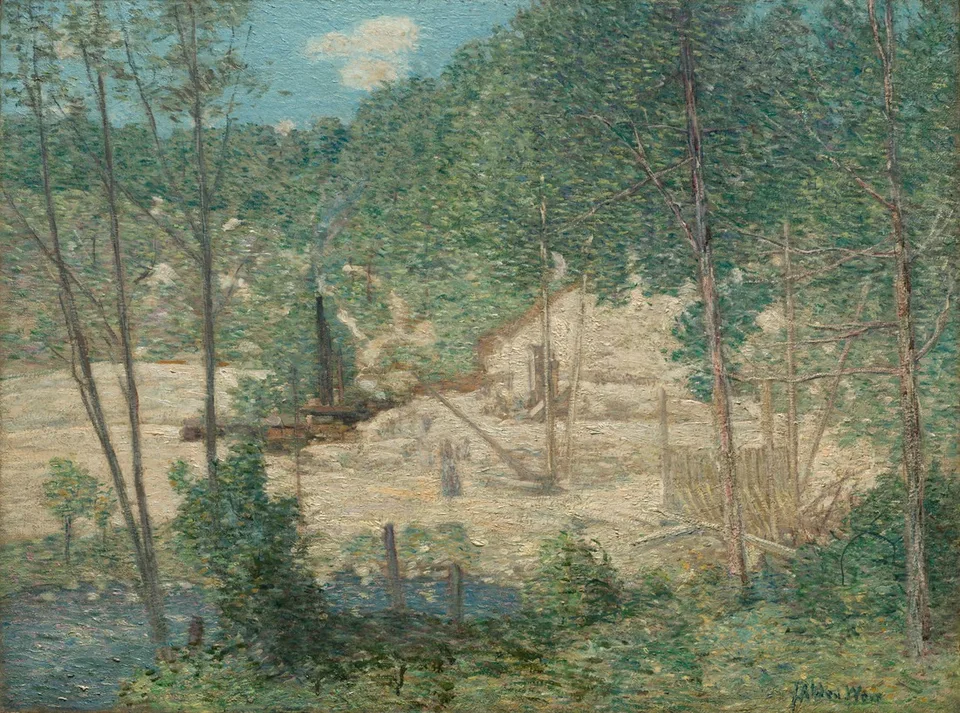
Thin tree trunks screen a construction site, making an energy project appear through a landscape that still competes for our attention.
Julian Alden Weir painted the construction of Scotland Dam on Connecticut’s Shetucket River. The work took place between 1907 and 1909 near his summer home, and the museum notes that his own family benefited from the energy supply it secured. The subject was therefore not an abstract encounter with industry. It represented a changing local landscape in which the painter had a personal stake.
The construction remains partly screened by trees. Slender trunks create repeated vertical divisions, while pale exposed ground and upright structural elements occupy the clearing beyond. Small broken touches of colour give vegetation and worksite a shared painted texture. Rather than presenting a monumental dam from an unobstructed viewpoint, Weir makes us look through a living foreground toward an unfinished project. The picture does not supply an engineering plan or settle the project’s wider environmental effects. It records one carefully chosen visual relation between energy infrastructure, trees, water and the artist’s immediate surroundings.
The painting is a selective view of construction, not an engineering record or a complete assessment of the dam’s effects. The artist’s personal benefit is documented by the museum.