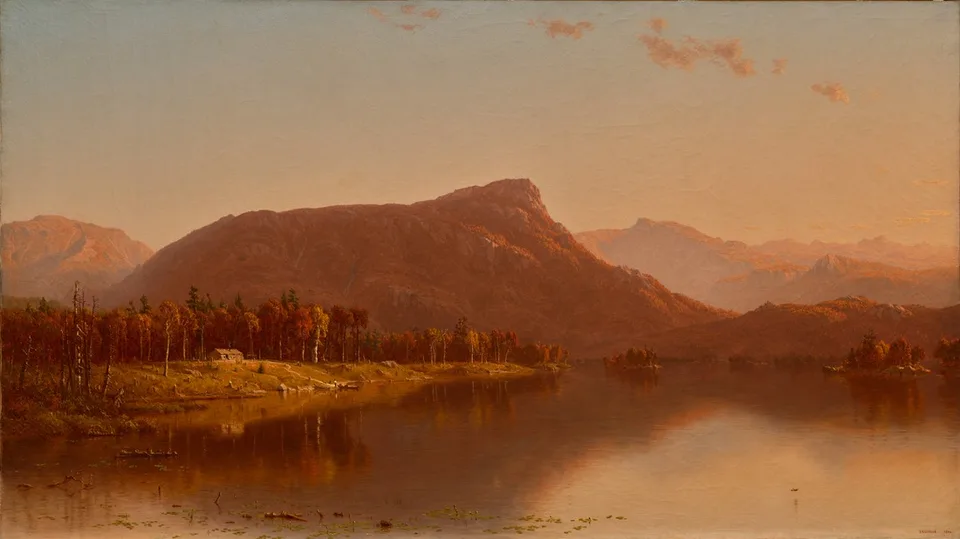
A tiny cabin and a row of stumps interrupt a glowing lakeside view, making human settlement visible only after the landscape’s light draws us in.
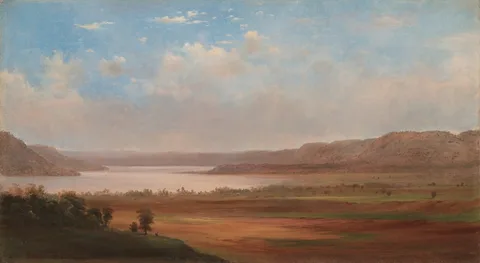
Sanford Robinson Gifford’s view of Mount Hayes in New Hampshire includes a new home within a recently cleared riverbank. The museum identifies a cabin, cut tree stumps and figures greeting a man arriving by canoe with supplies. The title’s wilderness is therefore already shaped by settlement, transport and labour. The small size of those details can make them easy to miss beneath the painting’s broad atmosphere and mountain silhouette.
The light spreads across water and sky, while the central mountain holds a darker, more solid shape. On the left, the cleared patch has a different texture from the dense trees behind it. Following that boundary brings the cabin and stumps into focus. The canoe then connects the dwelling with routes beyond the picture, countering any impression of total isolation. The painting offers a warm, composed view of this encounter, but its visual calm is not a complete account of the land’s history or of settlement’s consequences.
The painting’s peaceful atmosphere does not provide a complete history of the land or settlement. Its title should not be taken to prove that the region was previously empty of people.