A narrow route between fire and water turns the distance from danger to paradise into something the eye can follow.
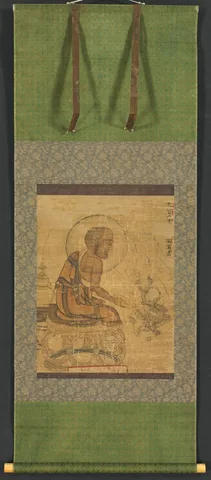
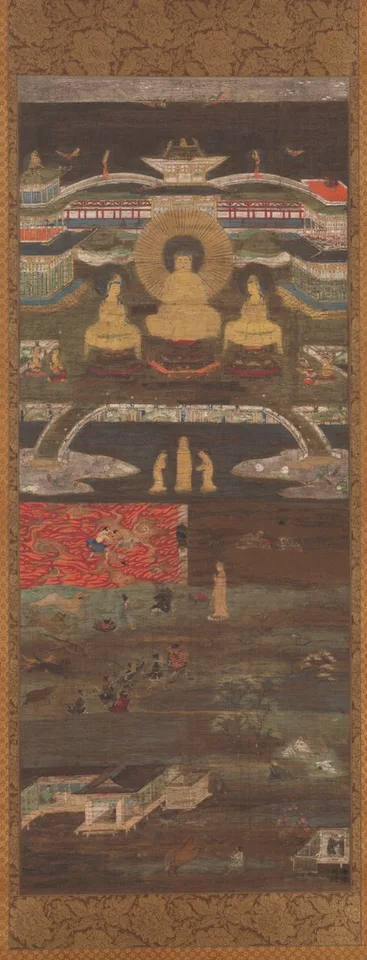
The painting asks the eye to move upward. Small figures and places occupy the lower zones, a dangerous passage interrupts the middle, and a larger seated Buddha presides above. The contrast of red fire and dark water makes the crossing visually urgent. A narrow path offers a connection between these areas without making the journey look easy.
The museum relates the image to a teaching attributed to the Chinese monk Shandao. The traveller seeks Amida’s Pure Land by following a path between rivers of fire and water, escaping the six realms of rebirth. This is a visual account of spiritual danger and guidance rather than a map to a physical destination. Its many small scenes should be understood within that larger structure. The scroll’s vertical arrangement allows obstacles and hoped-for arrival to remain present together, making a teaching available through looking as well as through words.
This is a religious teaching image, not literal geography. Small figures in the lower zones cannot all be identified confidently from this photograph without further specialist interpretation.