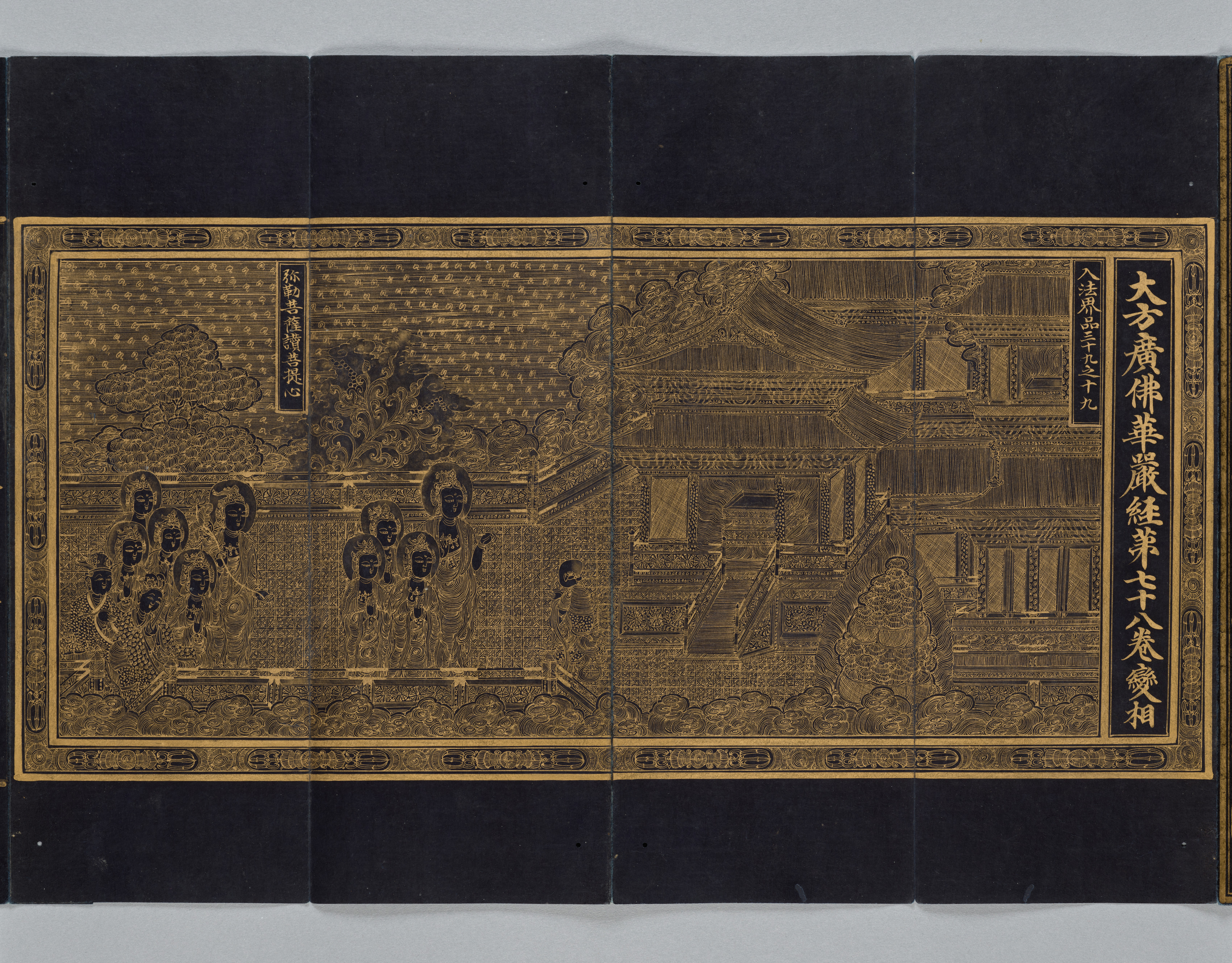
Gold lines turn dark paper into a radiant world of figures, buildings and words, making the act of copying visibly precious.
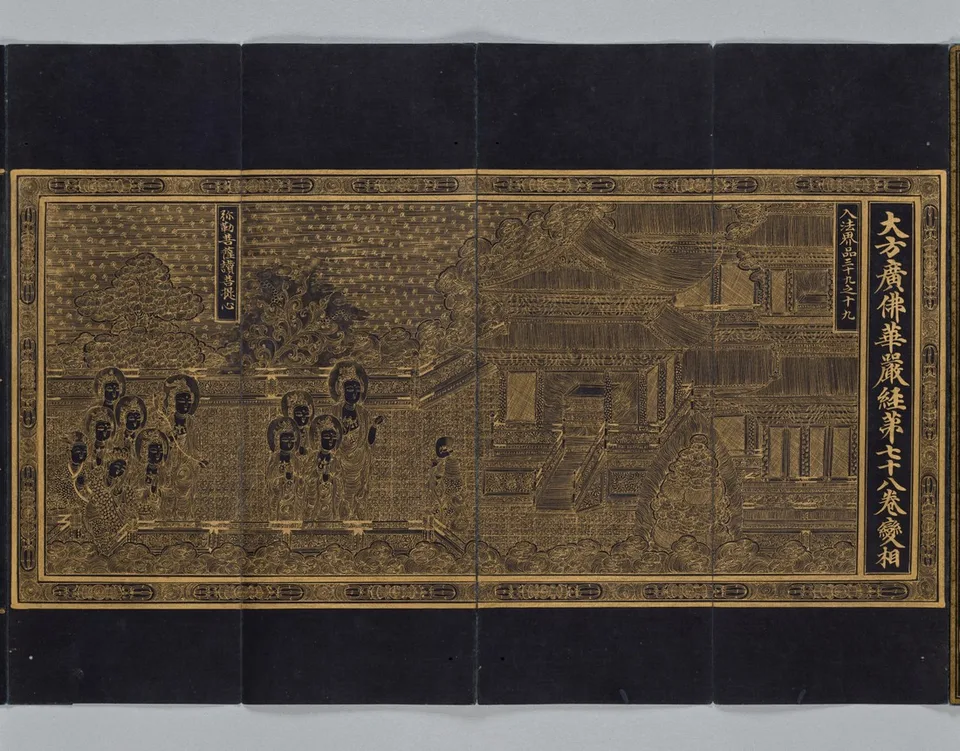
Gold supplies both the figures and the world around them. Fine lines describe robes, architecture, trees and clouds against dark indigo paper, while a larger vertical title panel establishes a different rhythm at the right. The folds remain visible, reminding us that this richly worked image belongs to a manuscript designed to open in sections. This photograph shows one illuminated opening, not the entire extended volume.
The manuscript contains part of the Avatamsaka, or Flower Garland, sutra. The museum connects this portion with the encounter between Maitreya and the pilgrim Sudhana, who seeks instruction about awakening. Gold ink on dyed mulberry paper makes the production itself materially demanding. The unusually good condition leads the museum to emphasise devotional making rather than frequent reading. That is an interpretation of the object’s survival, not a way to recover every occasion on which it was handled.
The selected museum photograph shows one illuminated opening of a much longer manuscript. The interpretation of limited use rests on condition, not a complete record of historical handling.