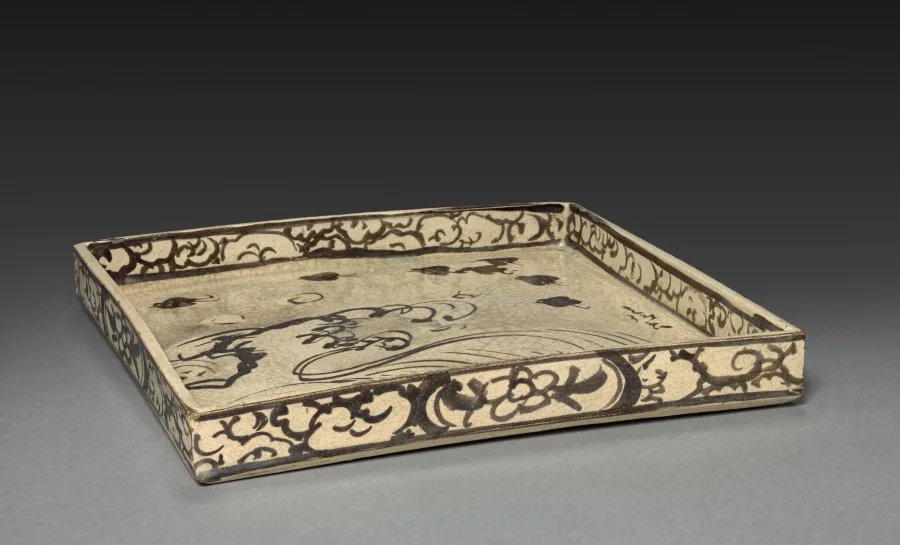
 Japan, Edo period (1615–1868) · c. 1700
Square Dish with Design of Plovers over Waves
Ogata Kōrin (Japanese, 1658–1716); Ogata Kenzan (Japanese, 1663–1743)
Glazed stoneware with iron oxide underglaze slip
These ceramic dishes turn different motifs into serving surfaces. Compare the open centre and framing edge, then distinguish documented collaboration in one work from the plant-based ornamental organisation of the other.
Japan, Edo period (1615–1868) · c. 1700Ogata Kōrin (Japanese, 1658–1716); Ogata Kenzan (Japanese, 1663–1743)
Glazed stoneware with iron oxide underglaze slip
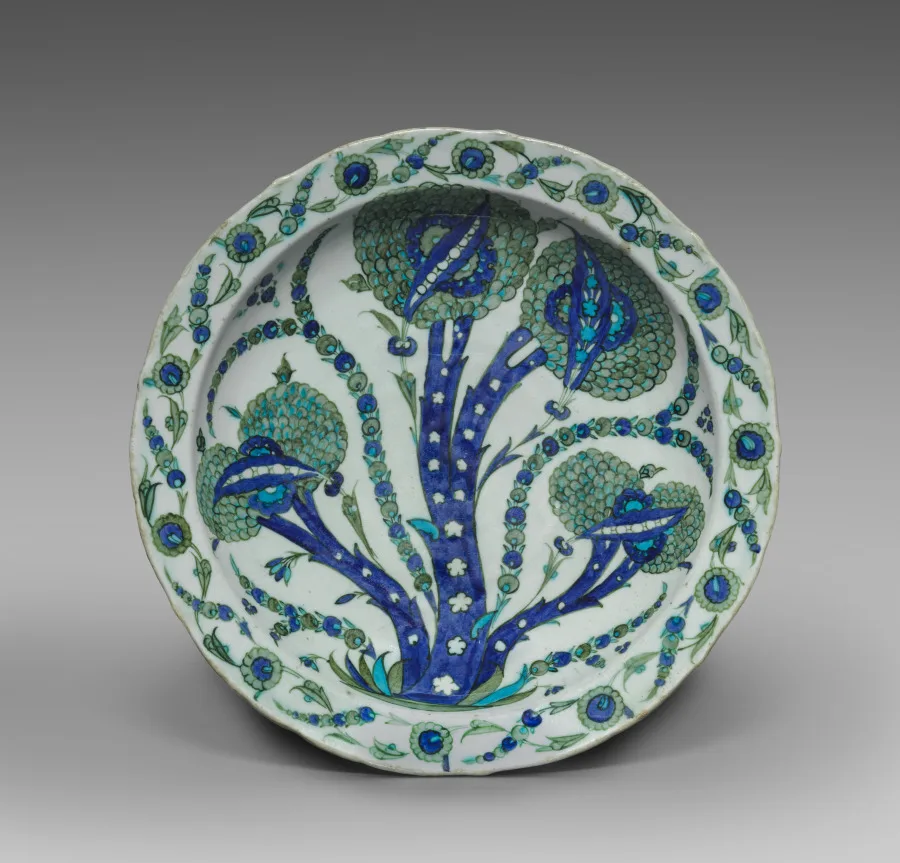 Turkey, Iznik, Ottoman period (1299–1922) · c. 1535–40
Maker unrecorded
fritware with underglaze-painted design
Small plovers cross above curling waves on the square dish. Large artichoke-like forms organise the round one. The available field changes how motifs are distributed and how much open surface remains between them.
The square dish’s raised patterned walls enclose the scene. The round dish’s rim garland creates another boundary. Edges frame a usable surface rather than functioning only as decorative borders in a flat picture.
A signature beside the Japanese design participates in a documented collaboration between two brothers. The Ottoman saz leaf belongs to its ornamental vocabulary. Maker evidence and motif recognition answer different questions about an object.
The pairing does not establish direct influence between these particular dishes. Their motifs, production histories, and original serving settings require their own museum records.
The comparison of visible choices is our own reading. Follow either artwork page for its full context, uncertainty note and image-rights record.
Incision, glaze, inlay, painting, and useful form.
A scroll, a screen, a dish, and a lamp organise looking differently.