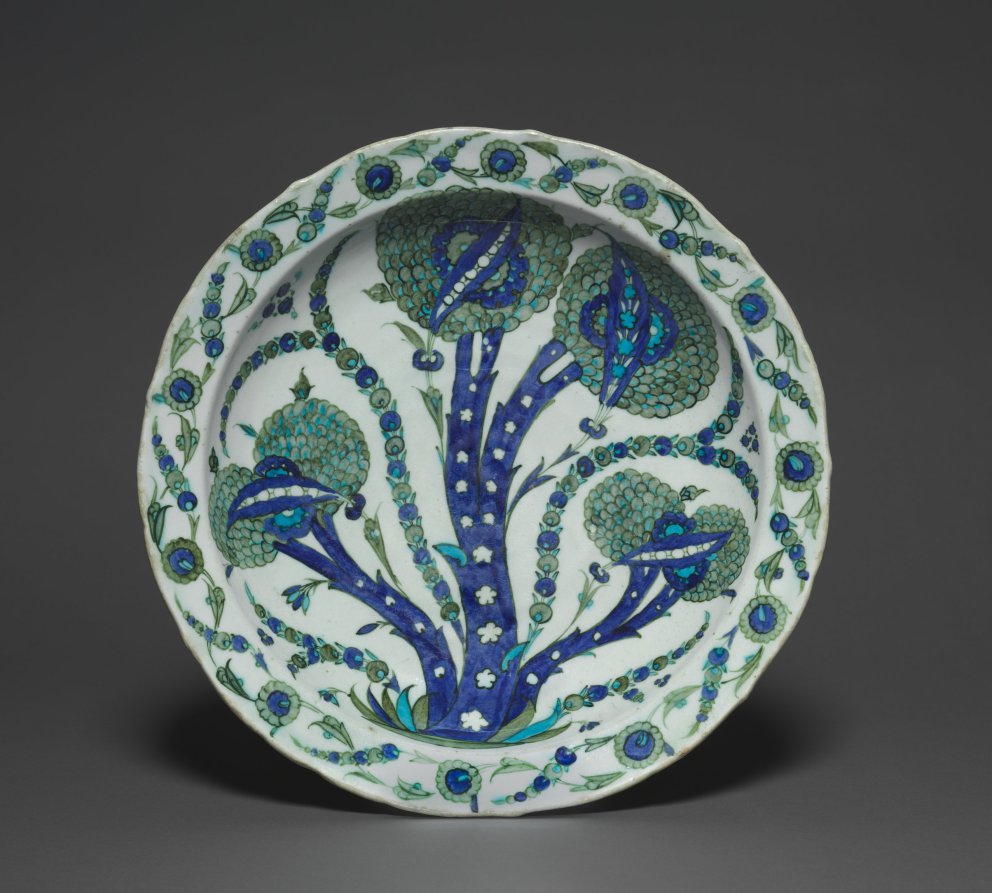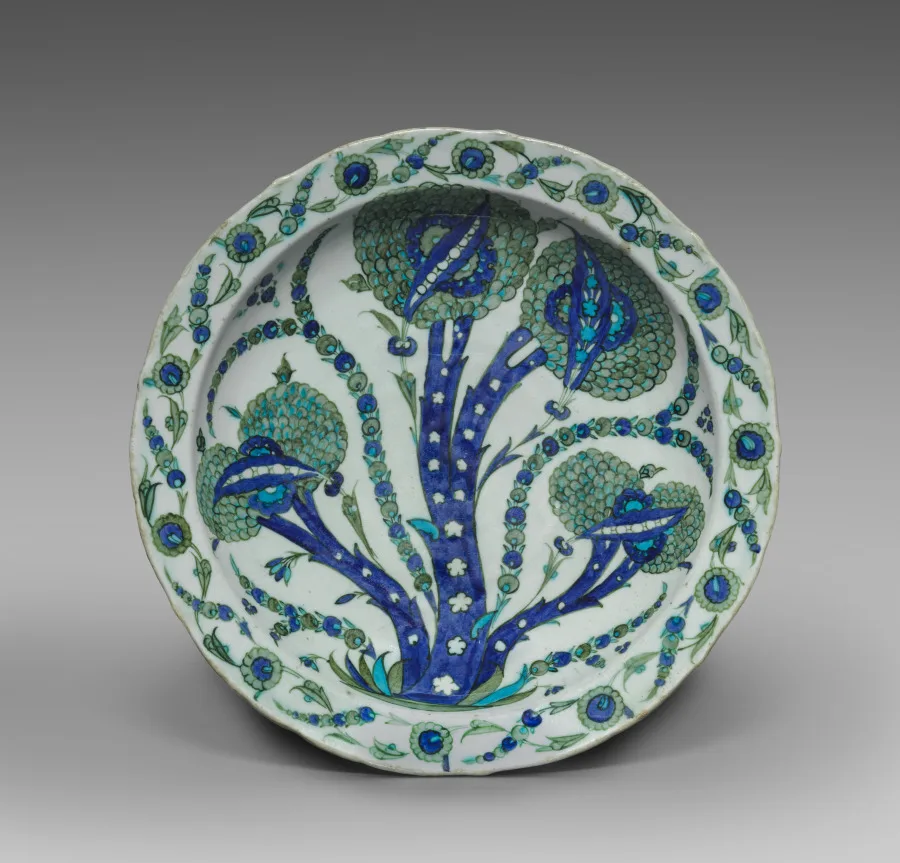
Blue stems and scale-like buds turn a dish into a dense plant design that may remember luxury woven textiles.
The blue stems climb from the lower centre, splitting into large buds with tightly patterned surfaces. Between them, long serrated leaves and small rosettes fill the white ground. The museum identifies the main motif as artichokes and describes the pointed foliage as saz leaves. The composition is dense, but distinct plant shapes and changes of direction prevent it from reading as one undifferentiated patch of colour.
Made in Iznik for the Ottoman artistic world, the dish uses a fritware body with painting beneath the glaze. The museum proposes that the artichoke motif drew on luxurious Italian textiles imported to the court. That is a qualified explanation of a design relationship, not proof that this vessel copies a particular surviving cloth. Compare the branching centre with the separate garland around the rim: each answers a different part of the circular shape. The dish brings ideas of plant ornament and material exchange into an object made for a table.
The proposed connection with Italian textiles is qualified in the museum record. These are stylised plant motifs, so their decorative arrangement should not be treated as a botanical diagram or a universal code of symbolic meanings.