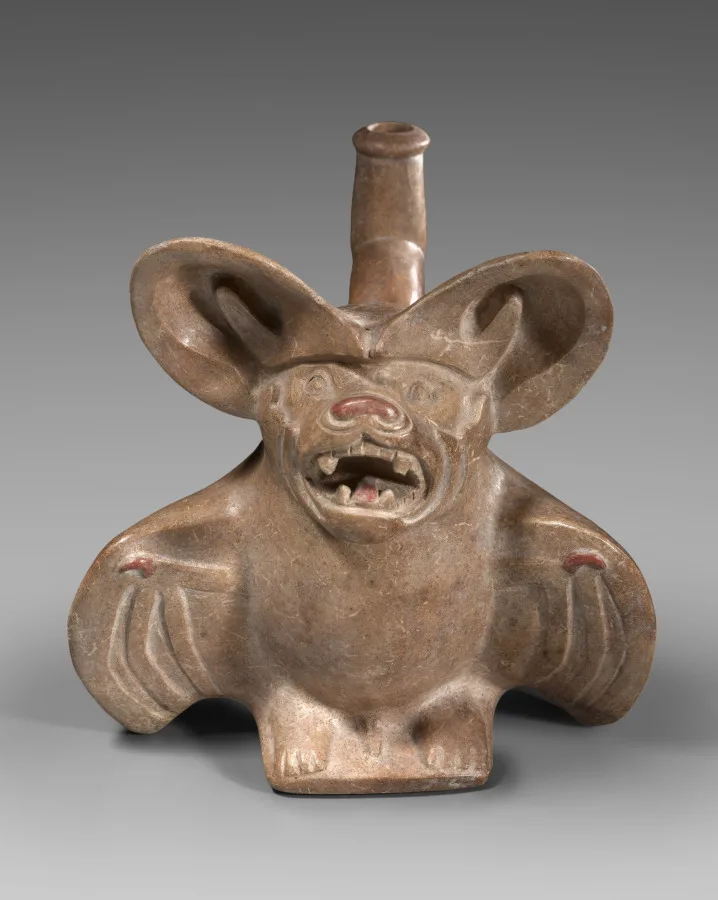
 Central Andes, North Coast, Moche people · 200–850 CE
Big-Eared Brown Bat Vessel
Maker unrecorded
ceramic, slip
These objects ask you to read animal form and physical function together. Both come from the Andes, but they belong to distinct cultures and periods. The first useful question is what the visible openings and modeled bodies allow the objects to do.
Central Andes, North Coast, Moche people · 200–850 CEMaker unrecorded
ceramic, slip
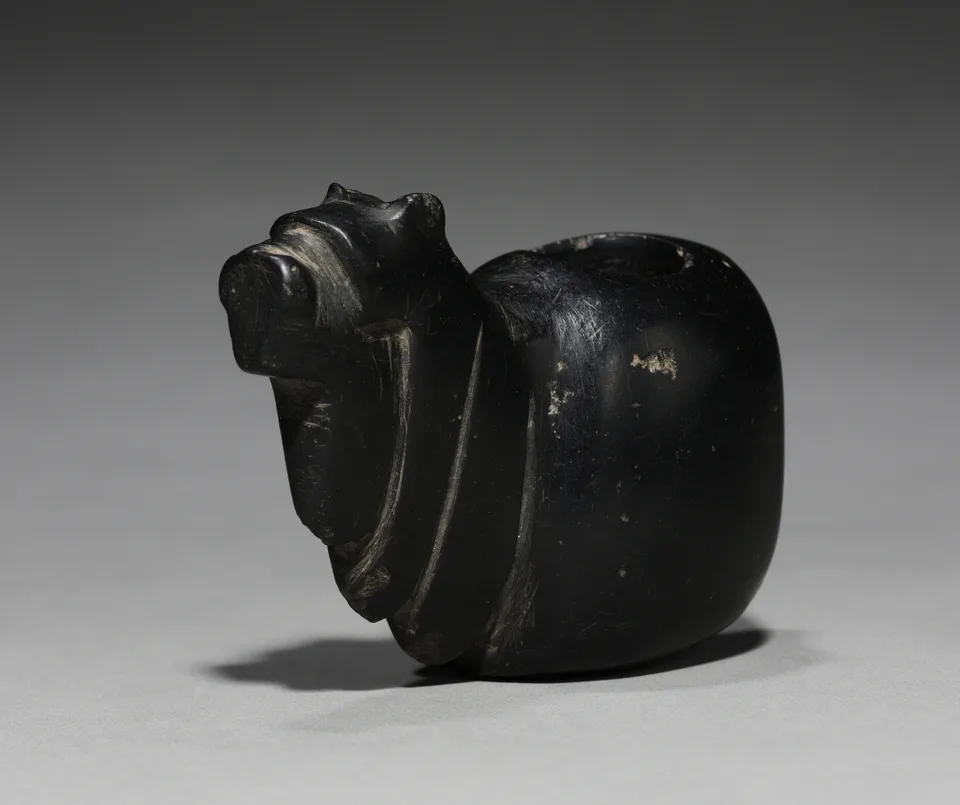 Peru, Inka style (1400-1532) · 1400–1532
Maker unrecorded
stone
The bat vessel exaggerates broad ears around a compact face; the canopa draws attention to a long neck and projecting muzzle. Compare which features carry the identification. The museum titles the stone animal an alpaca but also calls it a llama in its short description, so the photograph alone should not settle its precise species.
Locate the vessel’s spout and the canopa’s cavity. These are structural features, not incidental damage. They distinguish the objects from freestanding animal representations, while museum documentation helps establish their different uses.
Compare the bat’s modeled wing supports with the canopa’s rounded stone flank. Highlights and edges suggest volume, but each photograph offers a limited angle. The front views do not reveal every hidden surface or the complete interior of either container.
Andean geography does not imply a single shared ritual system. The objects’ specific cultural and chronological labels remain essential.
The comparison of visible choices is our own reading. Follow either artwork page for its full context, uncertainty note and image-rights record.
Flowers, birds and animals change meaning with context.
Let the material change the questions you ask.