Made, not just shown
A silver pot, a woodblock print and a painted tile produce images in very different ways. Start by asking what was added, removed, cast, fired or printed. A photograph can reveal edges, marks and reflections, but it cannot supply weight, texture or a complete view. This journey turns attention from subject alone to the decisions involved in making an object.
Begin the journey ↓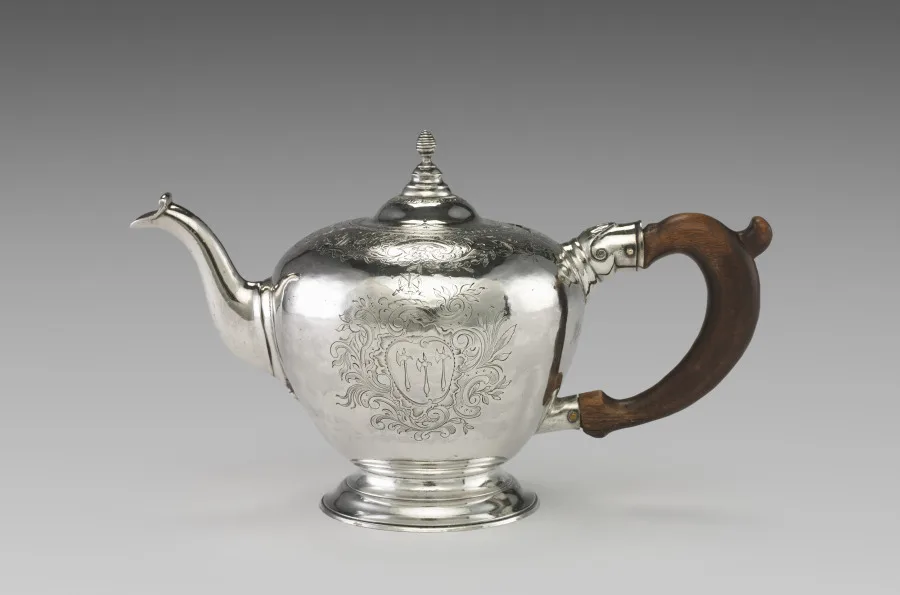
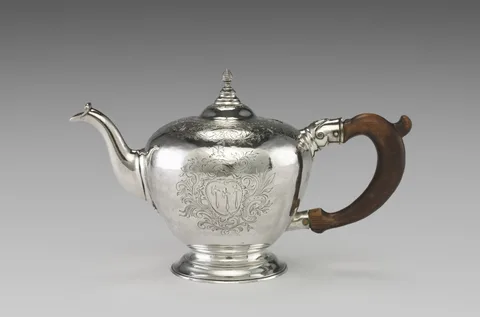
Reflection is part of the design
Notice how light describes the metal body and how handle, spout and lid organise use. Compare the object with the portrait of its maker elsewhere in the collection to reconnect material skill with a person.
Carry this question: Which features serve pouring, and which make the object a display of skill?
Open the artwork ↗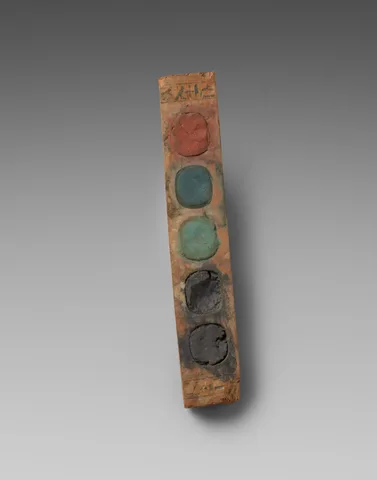
The tools behind the image
Five compartments keep different pigments separate within a compact wooden board. Conservators identified their minerals through X-ray diffraction. Counting the wells and noticing their colours are visual observations; naming their chemical composition requires other evidence.
Carry this question: What can the arrangement tell you about use, and what requires scientific analysis?
Open the artwork ↗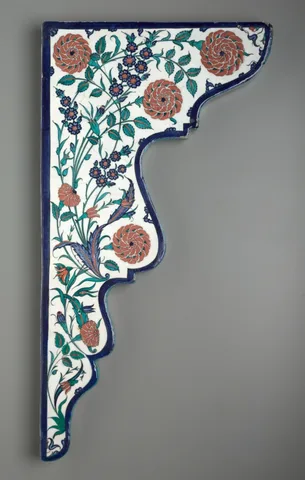
A fragment shaped for architecture
The tile panel’s outline is part of the evidence. Floral decoration occupies an architectural space rather than an independent rectangular picture. Consider how repeatable ceramic units and painted forms work together.
Carry this question: What in the outline points beyond the museum display to a building?
Open the artwork ↗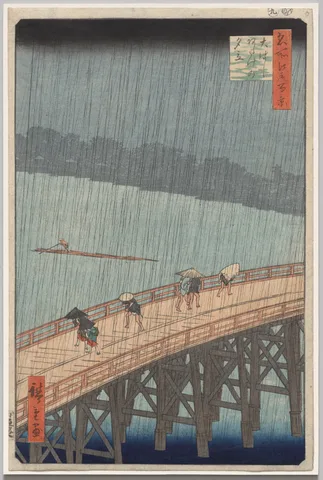
Rain made from lines
Look for the rain’s fine diagonals and the crisp transitions in colour. A woodblock print builds an atmospheric event through planned layers and repeatable marks.
Carry this question: Which marks describe rain, and which describe the people reacting to it?
Open the artwork ↗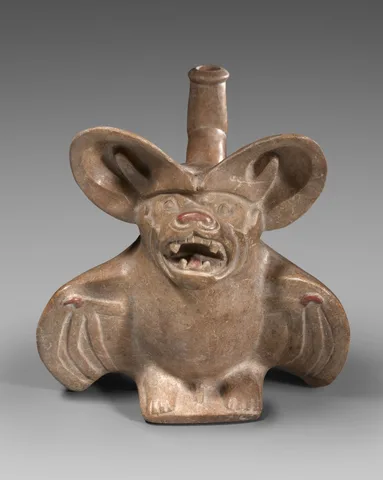
A body made into a container
The animal form and vessel structure work together. Follow the modeled body toward the tubular spout behind the bat’s head. Its opening identifies a container while the ears and wing supports retain the animal’s distinctive form.
Carry this question: Where does the animal’s body become the container’s body?
Open the artwork ↗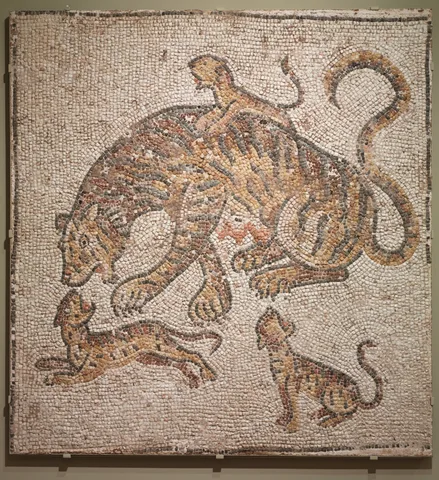
Curves made from little stones
Trace the curling tail through rows of small tesserae. Rigid pieces can produce fluid lines when their placement follows a curve. The mosaic’s animal bodies and pale background both depend on these repeated units, so technique is present throughout the scene.
Carry this question: How do the rows turn around a tail without becoming a sharp corner?
Open the artwork ↗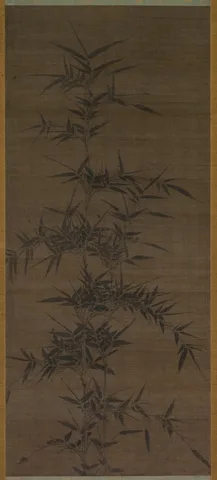
Marks that describe and perform
Follow the directions of the leaves and stems. Ink painting invites attention to the movement and density of a mark as well as the plant it describes. Distinguish visible brush effects from claims about the maker’s intention.
Carry this question: Which marks appear swift, and which seem more sustained?
Open the artwork ↗Look at a pair more closely
- Making atmosphere visible
Hiroshige’s rain and Turner’s fire-lit atmosphere
- A maker beside his work
Nathaniel Hurd’s portrait and silver teapot
- Plants and the marks that make them
Ink bamboo and Van Gogh’s plane trees
Read with the sources
Historical context follows the individual museum records linked on each artwork page. These routes make original comparisons of visible form; resemblance alone is not evidence of shared meaning or direct influence.
- Teapot — museum collection record
- Paint Box of Vizier Amenemope — museum collection record
- Tile Spandrel with Floral Sprays — museum collection record
- Sudden Shower over Shin-Ōhashi Bridge and Atake, from One Hundred Famous Views of Edo — museum collection record
- Big-Eared Brown Bat Vessel — museum collection record
- Mosaic of Tigress and Cubs — museum collection record
- Ink Bamboo — museum collection record