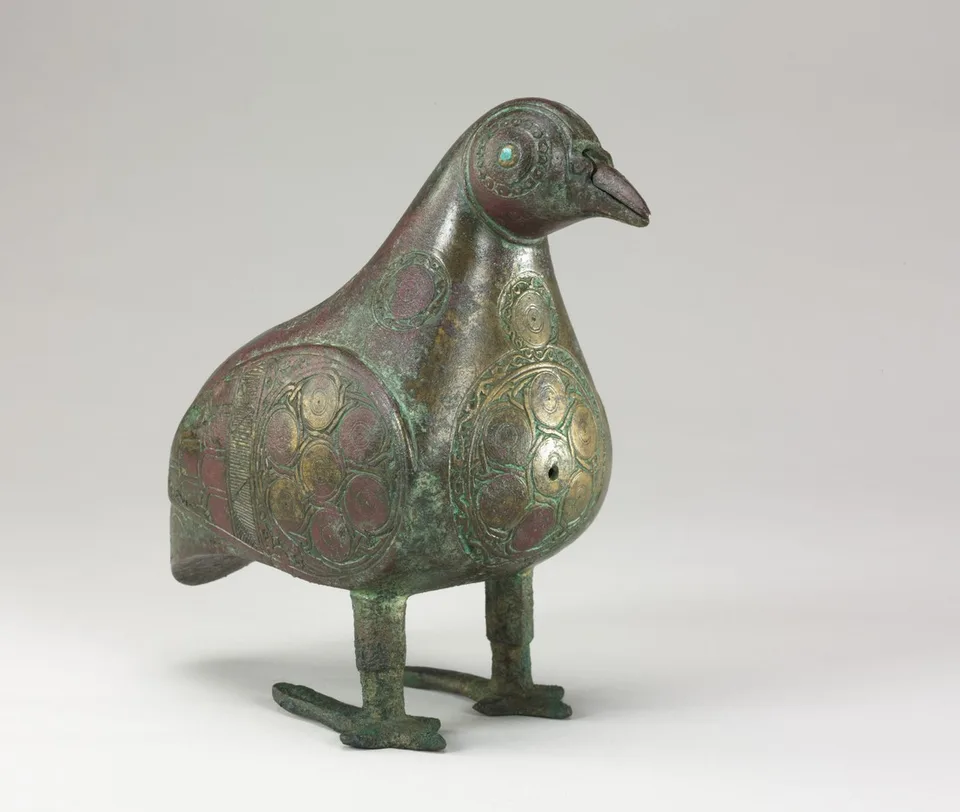
 Iran, Seljuq period (1037–1194) · 1100s
Bird-shaped Vessel
Unknown maker
bronze, cast, with chased and chiseled decoration; eyes inlaid with blue glass
A bird’s beak can suggest an outlet, but the evidence differs between these works. One is a bronze object interpreted as a possible handwashing vessel. The other is a manuscript design for an automaton whose actual construction is uncertain.
Iran, Seljuq period (1037–1194) · 1100sUnknown maker
bronze, cast, with chased and chiseled decoration; eyes inlaid with blue glass
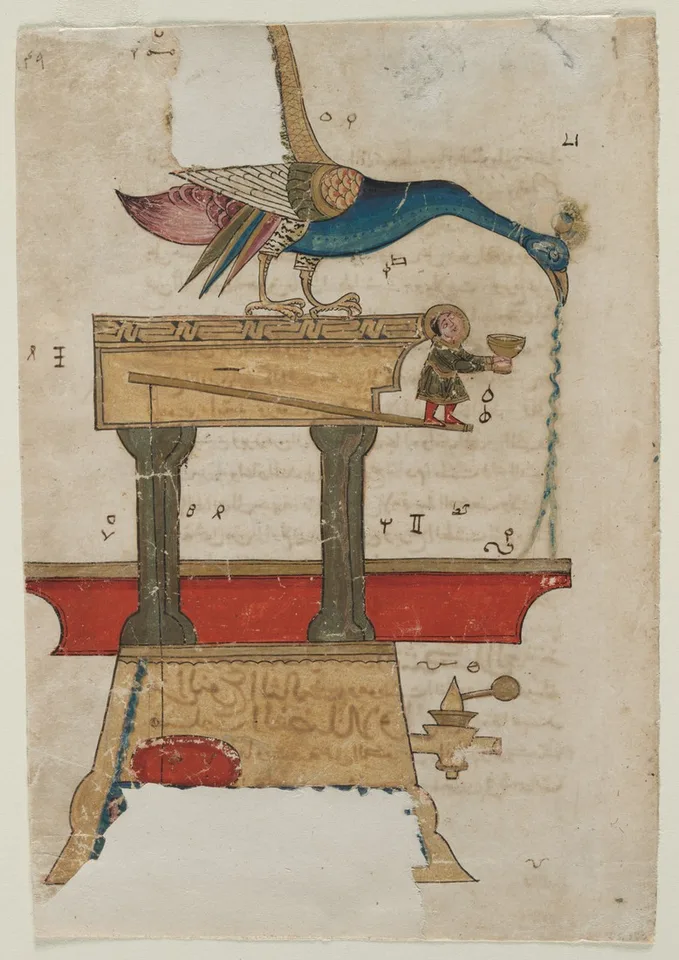 Syria, Damascus, Mamluk Period, 14th Century · 1315
Unknown manuscript artist
opaque watercolor and gold on paper
The bronze bird’s hinged beak could pour water in the museum’s reconstruction. The manuscript explicitly draws a stream descending from the peacock’s beak. A physical opening and a depicted operation support related but different kinds of inference.
The bronze chest opening is proposed as an inlet. The drawn housing exposes parts of an intended device. Both prompt functional questions, but neither allows the photograph alone to establish every step of a complete working mechanism.
A blue glass eye gives the bronze bird a vivid material accent, with possible protective significance. A miniature attendant in the manuscript offers service within the imagined operation. Each work makes usefulness visually engaging through features beyond the water channel itself.
The vessel’s function is proposed, and the automaton’s construction is unproven. The comparison does not demonstrate identical engineering, shared ritual use or a direct relationship between the objects.
The comparison of visible choices is our own reading. Follow either artwork page for its full context, uncertainty note and image-rights record.
Animal vessels, courtly sport and deliberately unstable forms.
Good wishes, coloured figures, a mechanical diagram and unread signs.