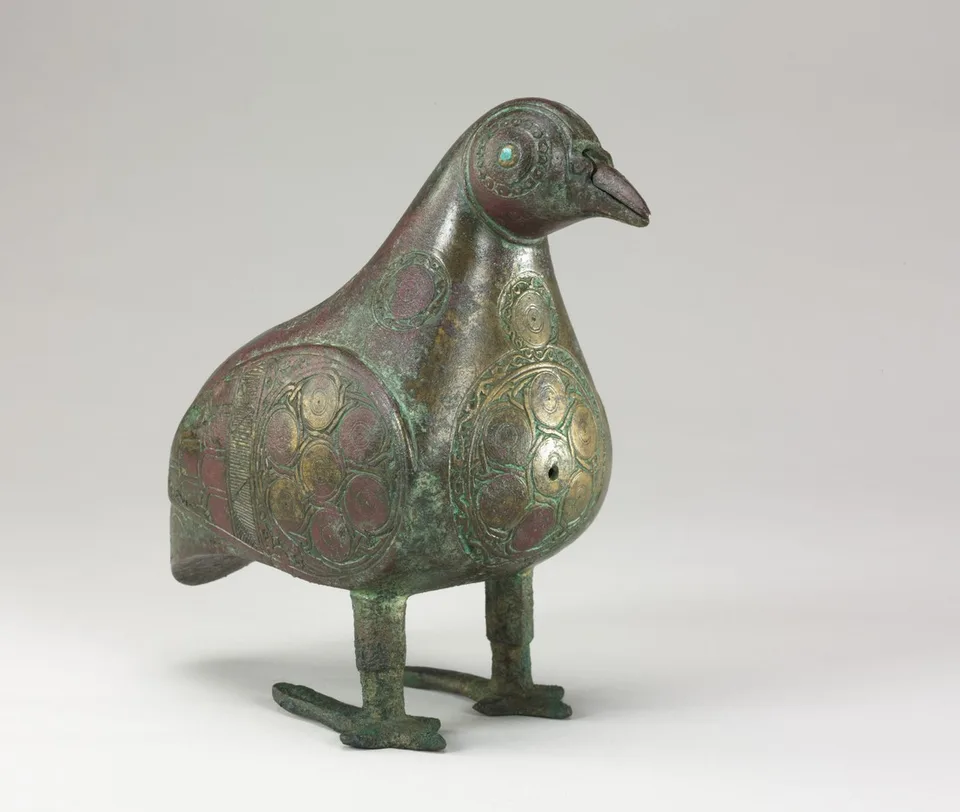
Follow the bird from its small chest opening to its hinged beak.
This bronze bird combines an animal silhouette with the structure of a container. Its round breast provides volume, its legs lift the body, and its beak offers a possible outlet. The museum suggests that it may have been an aquamanile, a vessel used to pour water for washing hands. In that account, water entered through the chest and could leave through the hinged beak. The function remains a proposal, which matters when looking at an object without its original setting or accessories.
The decoration adds a second way to follow the body. Rather than recording feathers closely, circular motifs cover the flank, breast and neck. The eye introduces blue glass into the bronze surface, producing a small but striking change of material and colour. The museum discusses possible protective associations for these coloured eyes; it does not establish that explanation as certain for this vessel. Begin with what the photograph securely shows—the opening, the patterned metal and the glass inlay—then consider how use and meaning might have met in the hands of an earlier owner.
Its use for handwashing and the possible protective meaning of the coloured eyes remain qualified interpretations. A photograph cannot demonstrate how the hinged beak operated or what liquid it held.