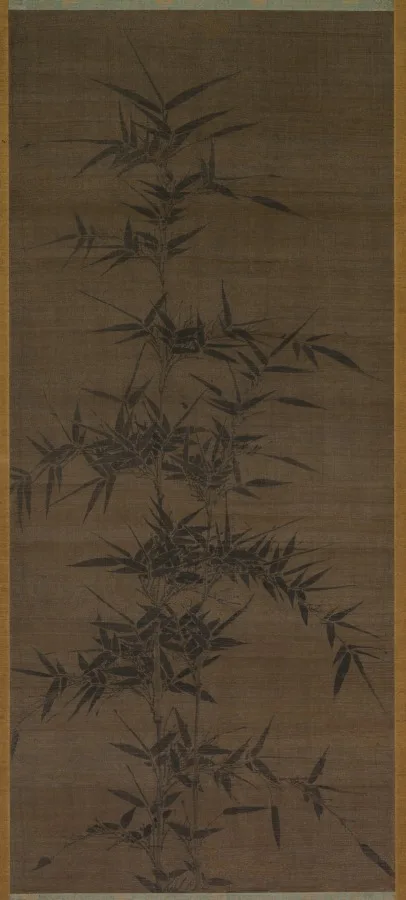
 China, Southern Song dynasty (1127-1279) · 1200s
Ink Bamboo
Maker unrecorded
hanging scroll; ink on silk
A plant can be both a subject and a structure for marks. Compare how stems, trunks and leaves organise an image, and notice what happens when you stop naming things long enough to attend to the strokes themselves.
China, Southern Song dynasty (1127-1279) · 1200sMaker unrecorded
hanging scroll; ink on silk
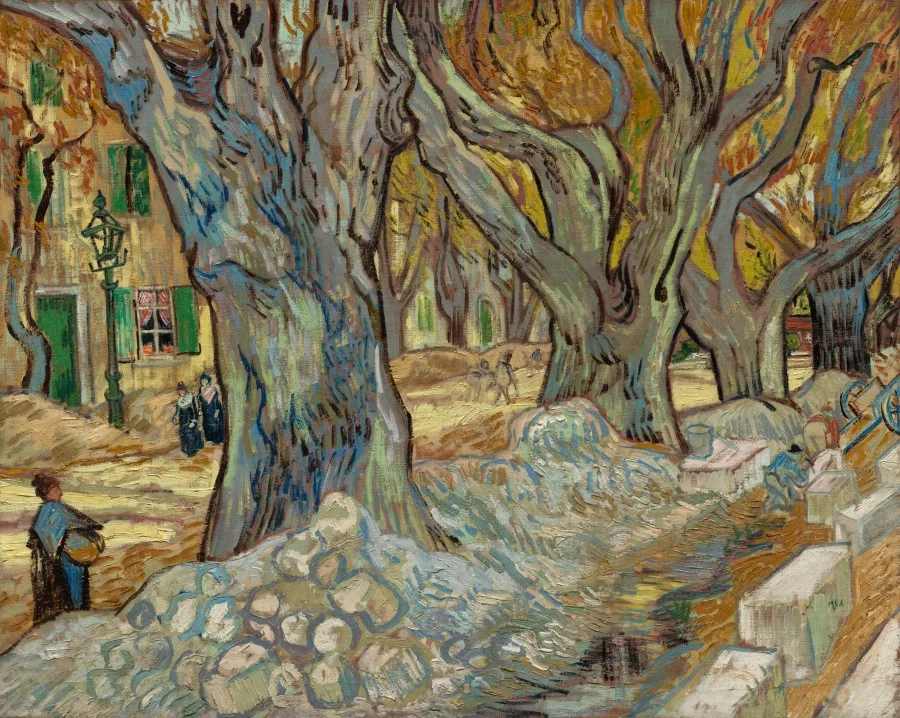 Netherlands · 1889
Vincent van Gogh (Dutch, 1853–1890)
oil on fabric
Bamboo stems and the plane trees’ trunks establish strong directions. Repetition helps organise the picture before every leaf or figure becomes clear. Notice where a curve interrupts that structure.
Look at the pale separations between dark bamboo leaves, then at the short strokes defining stones beneath Van Gogh’s trees. Both passages keep individual marks legible while describing forms. Ink on silk and oil on fabric make those effects through different materials and methods.
An opening in the bamboo foliage allows sparse leaves to stand apart. In Van Gogh’s painting, a gap beyond a large trunk reveals a tiny human figure. These intervals do different work: one varies the rhythm of leaves, while the other adds human scale and a glimpse of village life.
Visual resemblance is not evidence of a direct influence between these particular works. Nor can brushwork by itself establish a maker’s private emotional state.
The comparison of visible choices is our own reading. Follow either artwork page for its full context, uncertainty note and image-rights record.
Let the material change the questions you ask.
Practise leaving room for what you do not know.