The art of looking again
Good looking is not a race to the correct label. An unfamiliar attribute, a partial view or an uncertain identification can be the beginning of a better question. These six works reward a second pass: first describe the visible evidence, then read the context, then return to the detail that changed your understanding.
Begin the journey ↓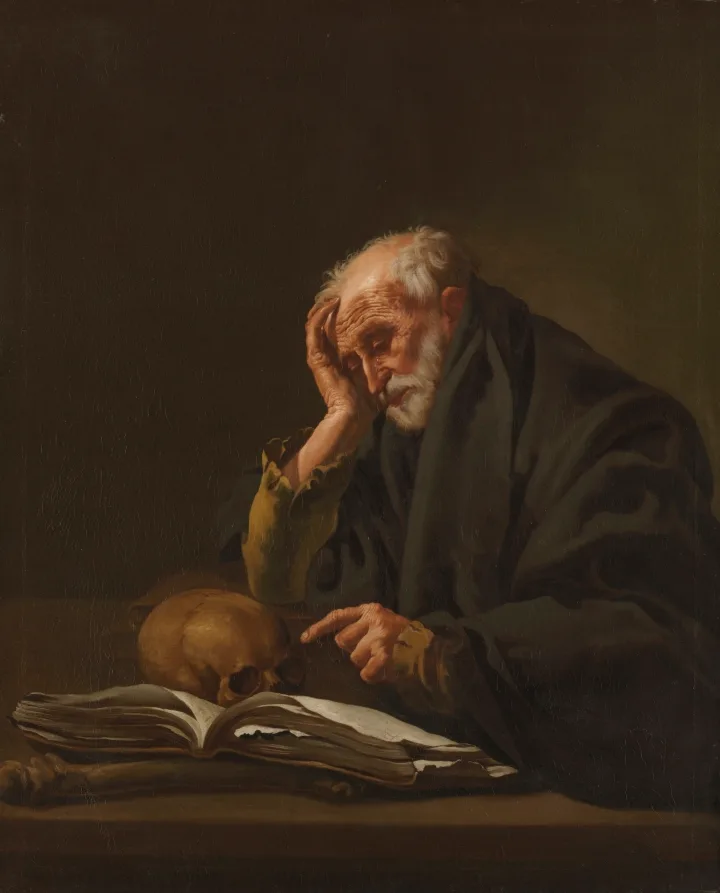
An identification can change
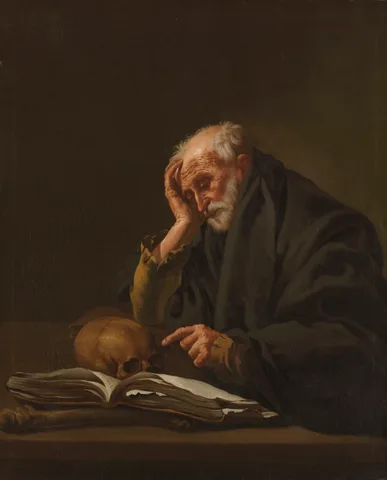
The museum once identified the weeping man as Heraclitus. It now identifies Saint Jerome, supported by the book and skull and by the absence of Heraclitus’s usual globe. This is a change in identification, not a claim that the current title is merely an outdated label.
Carry this question: Why are the nearby objects stronger evidence than tears alone?
Open the artwork ↗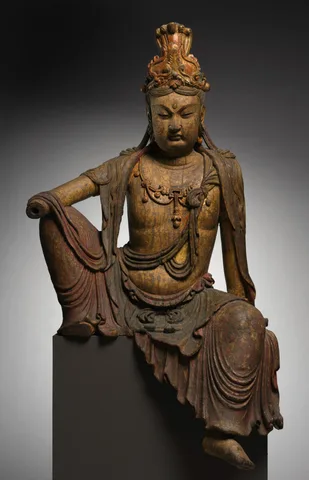
A body with an identified role
Observe the seated posture and surviving details before reading the religious identification. The museum’s attribution helps distinguish a named bodhisattva from a generic category of Buddhist sculpture.
Carry this question: Which facts come from seeing, and which come from the collection record?
Open the artwork ↗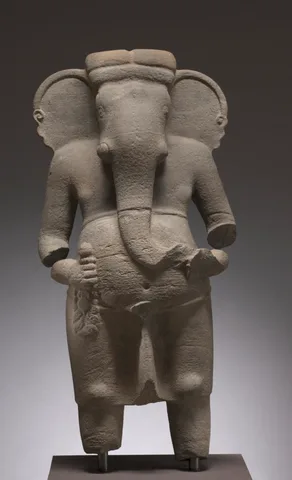
Recognisable and locally specific
The elephant head makes an immediate impression. Look again at the body and short wrapped garment, then consider the museum’s attribution to southern Cambodia or Vietnam. Recognition is a starting point; it does not erase the particular Southeast Asian setting or the record’s qualified location.
Carry this question: What would be lost if the label said only ‘elephant-headed figure’?
Open the artwork ↗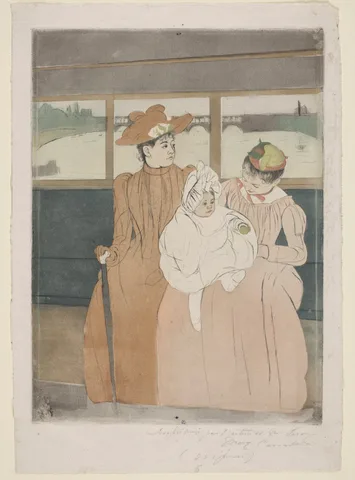
Closeness without certainty
Cassatt places people together within a confined interior. Look at their gestures and directions of attention. Physical proximity does not by itself reveal a private relationship or a person’s thoughts.
Carry this question: What can you say about the figures’ arrangement without inventing their conversation?
Open the artwork ↗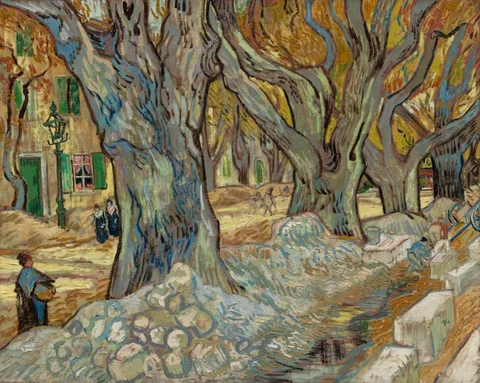
A surface records choices
Begin with the short strokes describing heaps of stone in the foreground, then find the workers farther along the road. Van Gogh’s letter identifies road repairs among the trees. The painted marks connect the material task on the street with the way the whole image is built.
Carry this question: How do the stone heaps lead your eye from the foreground toward the work on the road?
Open the artwork ↗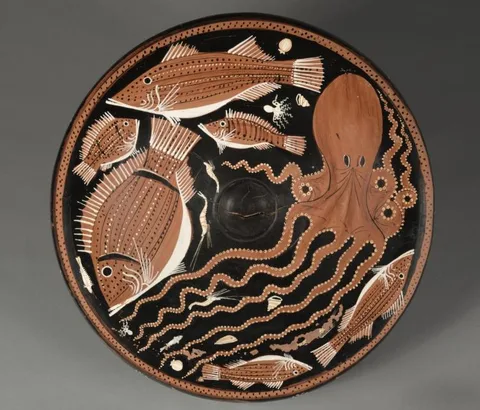
A subject shaped by a surface
The fish occupy a circular field whose centre and rim organise the design. Look at their orientations and the plate’s shape. Neither decoration nor object type alone proves the circumstances of its original use.
Carry this question: How would the composition change on a rectangular surface?
Open the artwork ↗Look at a pair more closely
- Plants and the marks that make them
Ink bamboo and Van Gogh’s plane trees
- Together in a small space
Cassatt’s omnibus and David’s Cupid and Psyche
Read with the sources
Historical context follows the individual museum records linked on each artwork page. These routes make original comparisons of visible form; resemblance alone is not evidence of shared meaning or direct influence.
- Saint Jerome — museum collection record
- Seated Guanyin — museum collection record
- Ganesha — museum collection record
- In the Omnibus — museum collection record
- The Large Plane Trees (Road Menders at Saint-Rémy) — museum collection record
- Red-Figure Fish Plate: Octopi, Mullet, Bream, Shellfish — museum collection record