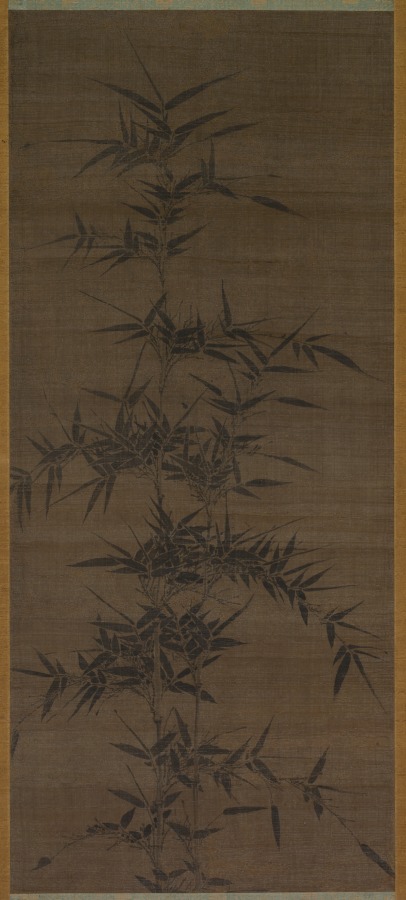
Two stems and a shifting density of leaves show how much a painter can do with ink, silk, and carefully preserved space.
This painting asks for close attention to small differences. Two bamboo stems rise through the long silk field, with clusters of leaves branching outward at different heights. Dark ink makes some leaves assertive, while paler ones recede. Look where one leaf crosses another: the museum notes that unpainted silk outlines some foreground leaves, keeping them distinct even inside a dense cluster.
The plant is also a cultural subject. The museum relates bamboo in traditional Chinese culture to resilience and flexibility, qualities valued in the ideal gentleman. That context can enrich the painting without replacing observation. The visual work happens through spacing, ink tone, and the changing pressure and direction implied by the marks. At one height the foliage is sparse; lower down it becomes a close weave. Rather than searching for a hidden code in every leaf, follow how a limited set of forms sustains movement along the scroll. The maker’s name is not recorded in the current catalogue.
Bamboo’s associations with resilience belong to a specific cultural history, not to every image of the plant. The artist is unrecorded, and the present brown tone of the silk is not evidence of its exact original appearance.