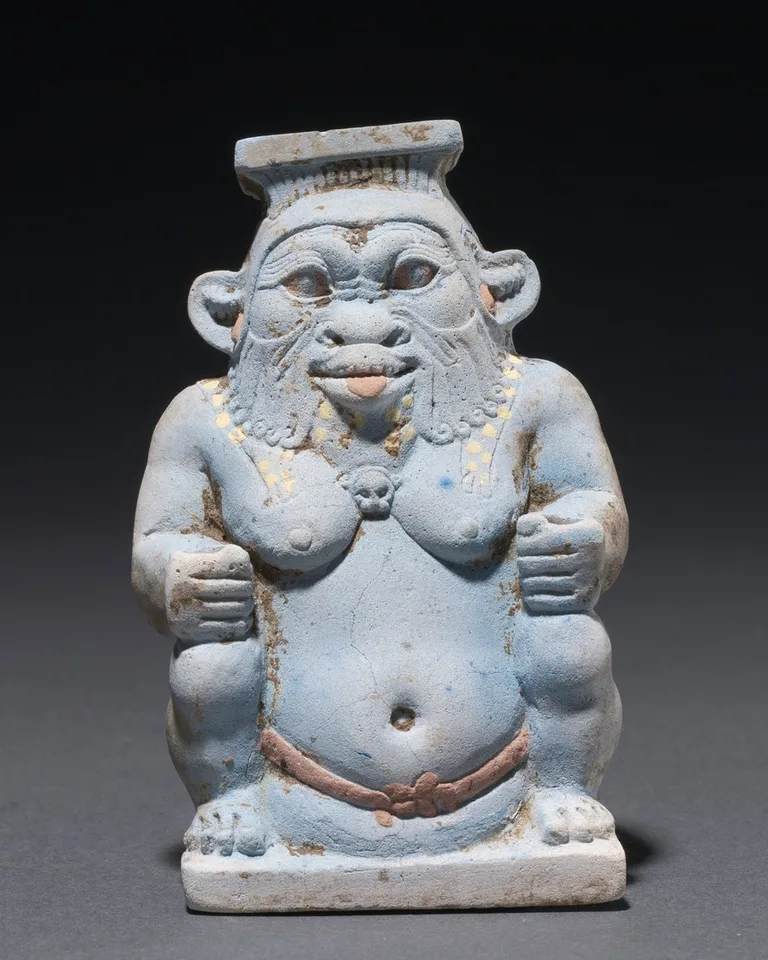
 Egypt, Late period (715–332 BCE), Dynasty 26 · 664–525 BCE
Cosmetic Jar in the Form of the God Bes
Maker unrecorded
Egyptian blue
Both containers take the shape of a complete figure, yet their access points work differently. Bes has an opening above his head; the bear combines a hinged head, mouth-spout and suspension rings. Compare the visible mechanisms alongside the different contexts supplied by the museum.
Egypt, Late period (715–332 BCE), Dynasty 26 · 664–525 BCEMaker unrecorded
Egyptian blue
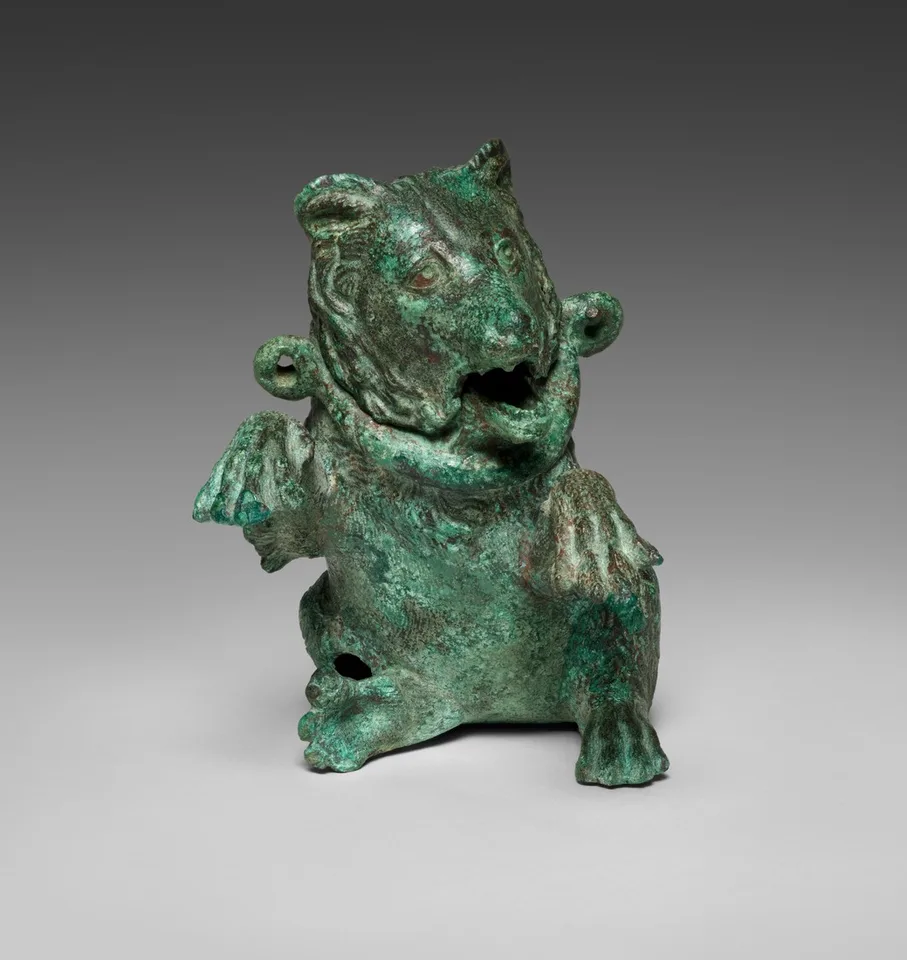 Italy, Roman · 200s CE
Maker unrecorded
bronze
The Bes jar’s neck rises openly above the face. The bear’s mouth forms a pouring point, with a hinged head used for filling according to the museum. In one, container and face remain adjacent; in the other, anatomy becomes a mechanism.
Bes confronts the viewer with a broad frontal face. The bear’s collar includes rings for a chain, turning an apparent animal accessory into carrying equipment. Their prominent upper details require different explanations despite the shared figural format.
Bes’s rounded belly supplies container volume between bent legs. The bear raises a front paw in a pose associated with human entertainment. One detail explains capacity; the other contributes to an animal scene surrounding a usable vessel.
Bes belongs to an Egyptian divine and cosmetic context; the bear relates to Roman entertainment and vessel design. Their similar format does not establish equivalent religious meanings.
The comparison of visible choices is our own reading. Follow either artwork page for its full context, uncertainty note and image-rights record.
Five ways to divide a modest object between image and practical use.
Animal vessels, an altered portrait, a roof tile and a reused bronze head.