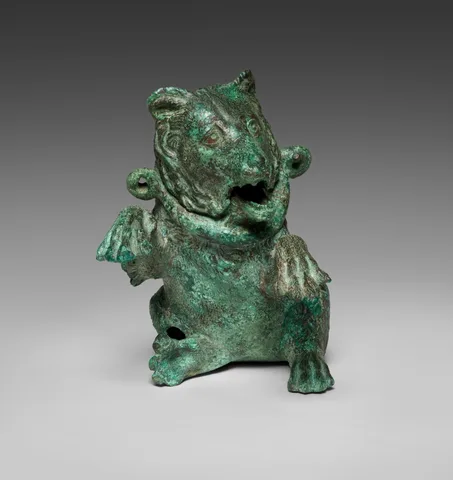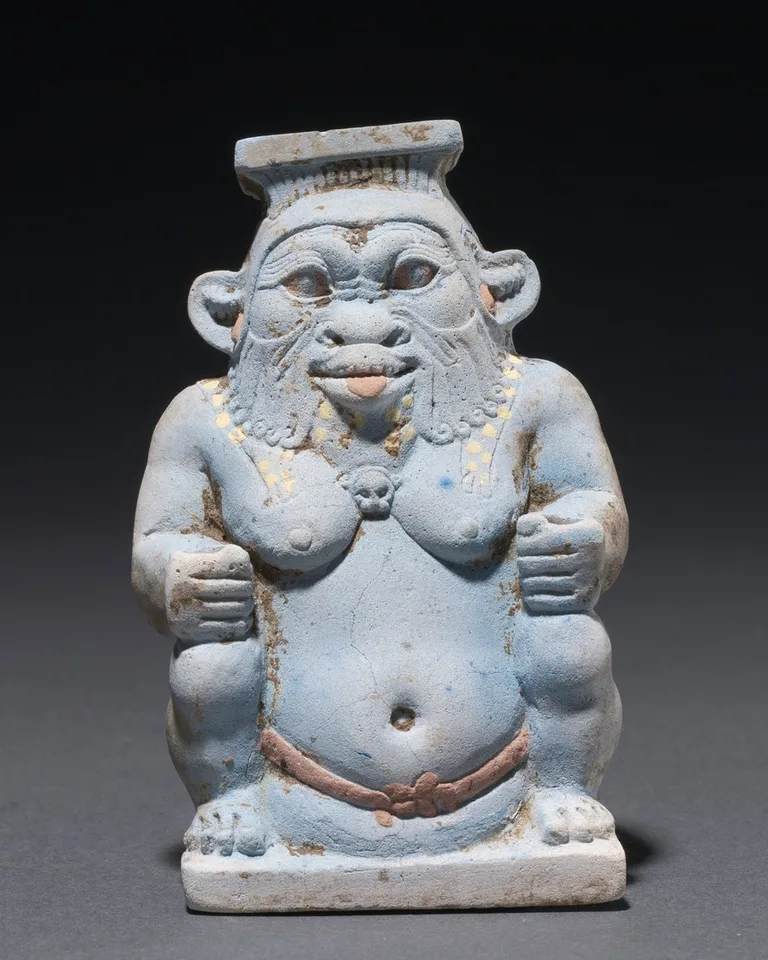
A broad grinning face and bent legs turn a container into Bes, while the open neck above his head preserves its practical purpose.
The museum identifies the figure as Bes, a deity associated here with cosmetics. Both men and women in ancient Egypt used costly oils, perfumes and unguents, and the containers for these substances could receive elaborate treatment. This jar’s material is Egyptian blue, giving the small body a distinctive pale colour. The container does not merely carry an added picture: its whole shape becomes the deity’s face, belly, arms and bent legs.
The opening above the head is the most direct reminder of use. Below it, strongly arched brows and a broad mouth command the front, while the rounded abdomen pushes toward the viewer. The bent legs and low base keep the figure compact. Traces of yellow and reddish colour interrupt the blue, suggesting a more varied surface than a single material label might imply. The museum’s cosmetics context supports a connection between represented deity and personal care, but does not identify what substance this particular jar originally contained.
The museum identifies Bes and the cosmetic context, but no particular contents or owner are recorded. Surface wear and surviving colour patches limit reconstruction of the original finish.
Which feature most directly reveals that the figure is also a container?
Practise looking at Cosmetic Jar in the Form of the God Bes →