Figures put to work
A face can be a political image, a protective architectural form or part of a pouring vessel. These six works demonstrate how figurative imagery can take on very different jobs. Follow openings, alterations and supporting structures as carefully as expressions, and distinguish the object’s original purpose from a later use when the evidence records a change.
Begin the journey ↓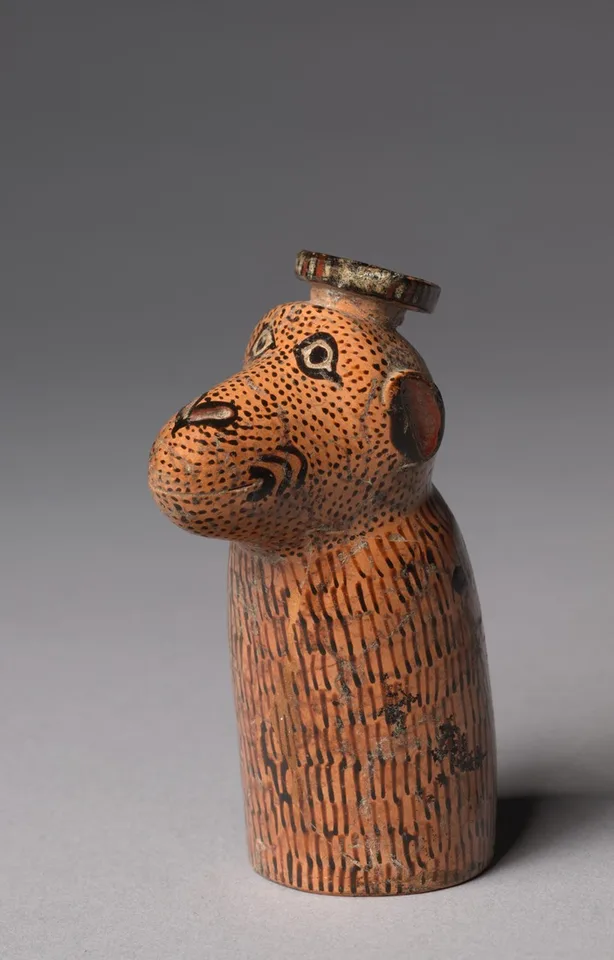
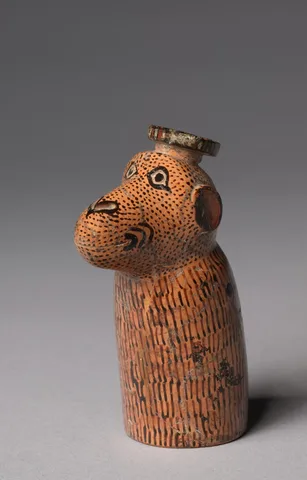
An opening above an animal
The short neck rises above the monkey’s modeled head, keeping the flask’s access visible. The animal form contains perfume or oil in the museum’s reading, rather than functioning only as a small sculptural figure.
Carry this question: Which part gives access to the contents?
Open the artwork ↗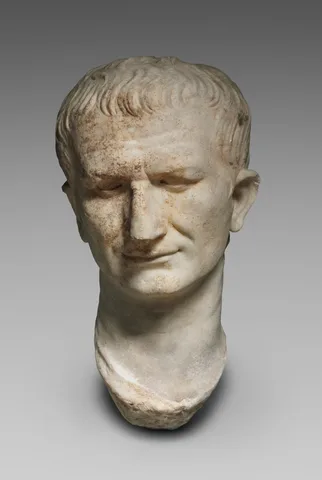
An older likeness survives
The head was recarved from Nero into Vespasian, but the museum identifies the receding lower lip as a surviving feature of Nero's portrait. The shortened hair leaves clearer evidence on the unseen back. This visible remnant shows how a new political identity could be carved without erasing the old one completely.
Carry this question: How does the lower lip sit beneath the upper lip and above the chin?
Open the artwork ↗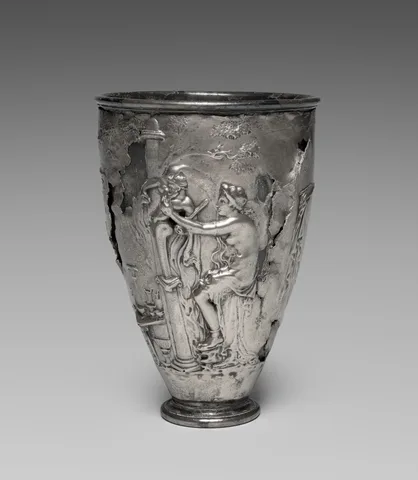
A gesture around a silver wall
The reaching arm connects a woman with a small shrine figure. The museum interprets the encounter as apparently animating Priapus, while the curved goblet prevents this photograph from showing the complete surrounding narrative.
Carry this question: Where does the gesture lead beyond the central figure?
Open the artwork ↗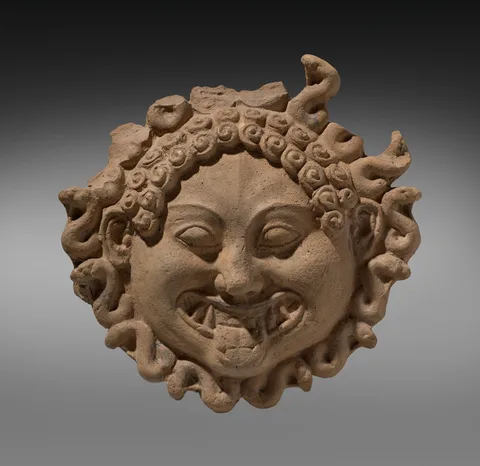
A face on the roof
The tongue and teeth make the face emphatic at a glance. Its architectural role and possible protective purpose distinguish it from a portrait; the original roof and full colour scheme are not recovered here.
Carry this question: Which exaggerated feature would remain legible at a distance?
Open the artwork ↗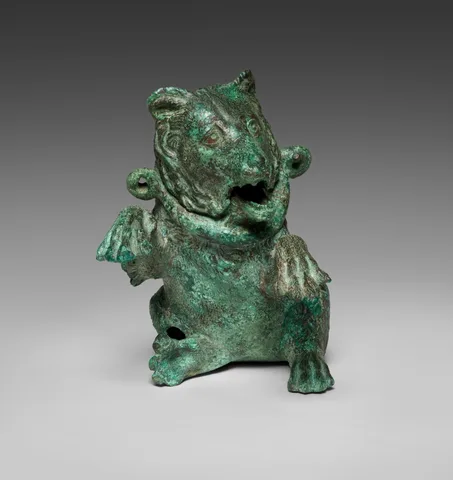
An expressive mouth that pours
The open mouth is also the outlet for liquid. Reading that dual role connects the animal’s pose with the vessel’s function, while the missing chain limits how its suspension can be reconstructed.
Carry this question: How does the mouth act as both image and mechanism?
Open the artwork ↗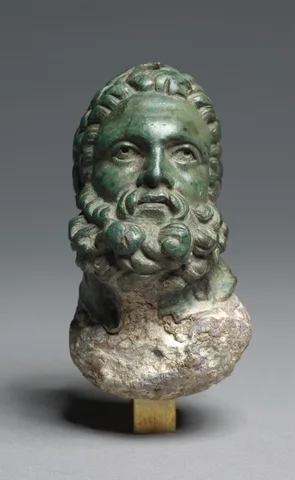
A hero with a second use
The uplifted face survives above an altered, filled lower mass. The museum identifies a later conversion into a weight, allowing the same bronze to retain an image while acquiring a different practical task.
Carry this question: What changes between the modeled face and the lower mass?
Open the artwork ↗Look at a pair more closely
- Portraits after revision
A recut emperor and a reused hero preserve more than one material life.
- Faces that pour
Bes and a Roman bear turn anatomy into container structure.
Read with the sources
Historical context follows the individual museum records linked on each artwork page. These routes make original comparisons of visible form; resemblance alone is not evidence of shared meaning or direct influence.
- Monkey-Shaped Aryballos (Oil Vessel) — museum collection record
- Portrait Head of Emperor Vespasian, Recut from Head of Nero — museum collection record
- The Vicarello Goblet — museum collection record
- Gorgoneion Antefix (Ornamental Roof Tile) — museum collection record
- Oil Ampulla in the Form of a Dancing Bear — museum collection record
- Head of Herakles Refashioned as a Weight — museum collection record